Haemodynamic effects of initial combination therapy in pulmonary arterial hypertension: a systematic review and meta-analysis
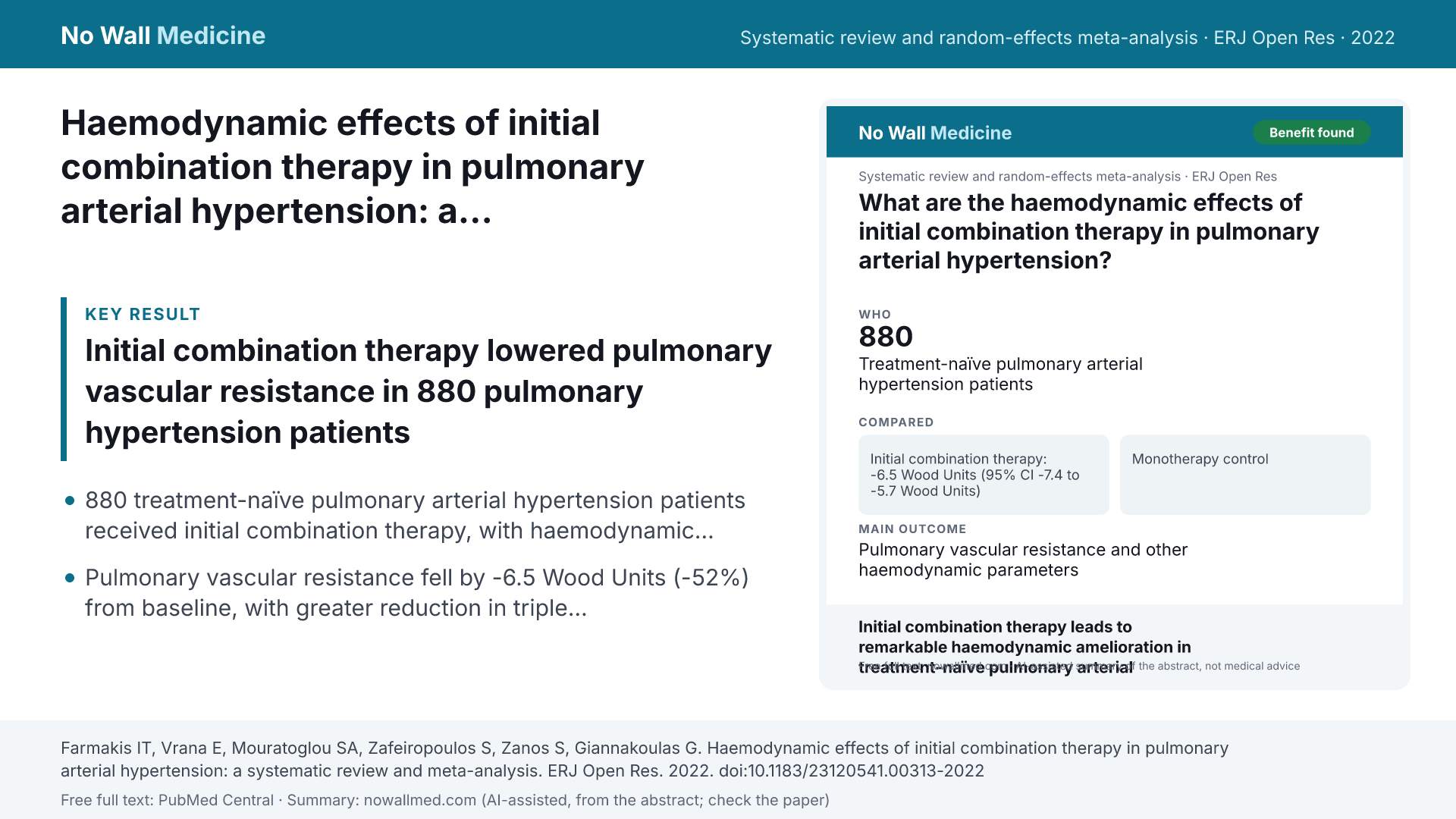
Key result: Initial combination therapy for pulmonary arterial hypertension is associated with improved blood flow measurements
Key points
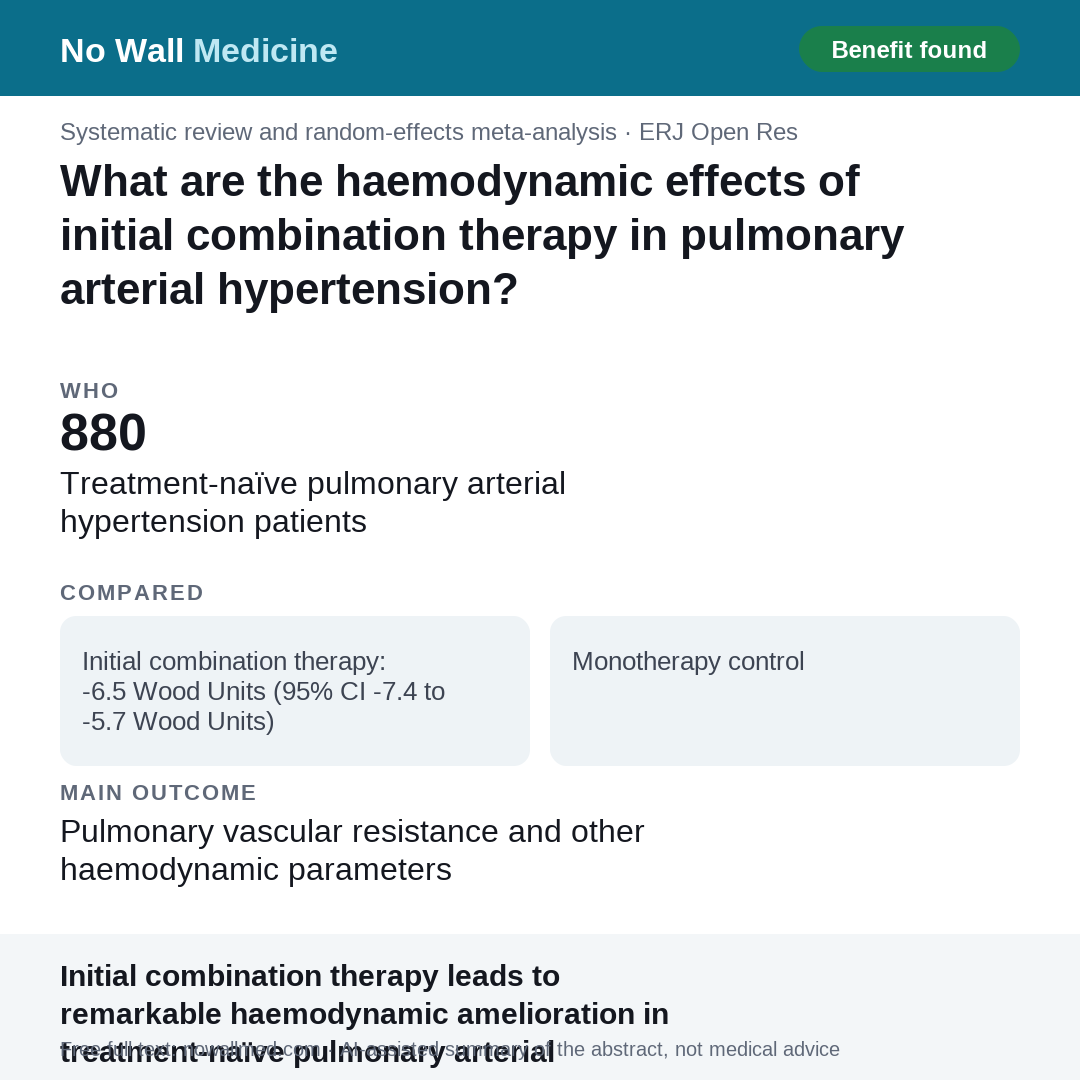
- Researchers analyzed 880 patients with pulmonary arterial hypertension who received initial combination therapy to measure changes in blood flow and pressure.
- Compared to baseline, pulmonary vascular resistance decreased by -6.5 Wood Units (-52%) and mean pulmonary artery pressure decreased by -12.2 mmHg.
- Triple therapy including a parenteral prostanoid was associated with a -67% reduction in pulmonary vascular resistance compared to -50% for other combinations.
Why it matters: Data regarding the specific effects of starting pulmonary arterial hypertension patients on multiple targeted therapies on their hemodynamic parameters was scarce.
Discussion prompts
- Would these patients look like yours? Who was left out?
- Is the main outcome one that matters to patients?
- Is the difference large enough to change what you do?
Cite: Farmakis IT, Vrana E, Mouratoglou SA, Zafeiropoulos S, Zanos S, Giannakoulas G. Haemodynamic effects of initial combination therapy in pulmonary arterial hypertension: a systematic review and meta-analysis. ERJ Open Res. 2022. doi:10.1183/23120541.00313-2022
Free full text: PubMed Central · Summary and visual abstract: nowallmed.com/a/haemodynamic-effects-of-initial-combination-therapy-in-pulmonary-cvya1a/ (AI-assisted from the abstract; check the paper before relying on it).