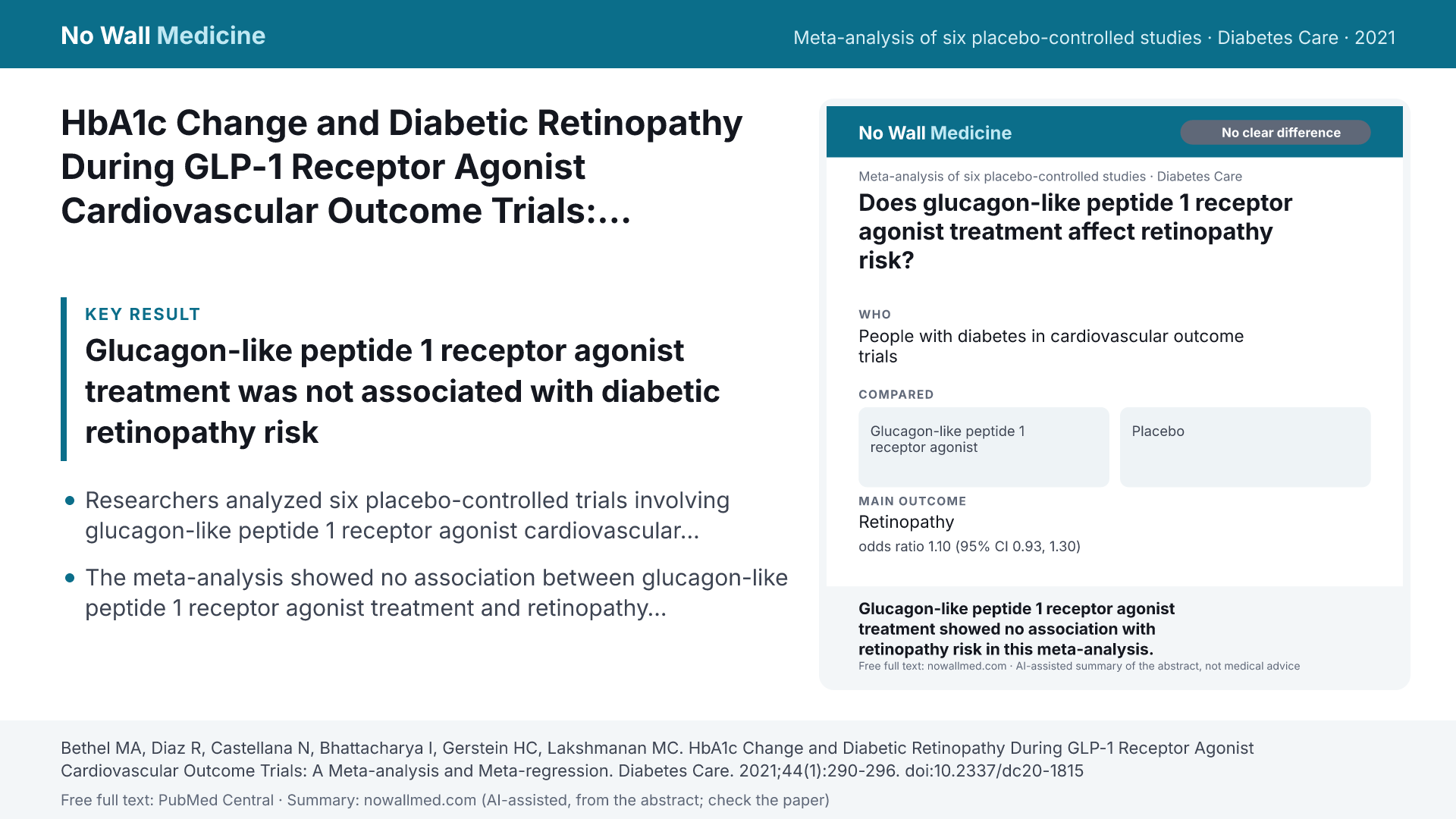
Glucagon-like peptide 1 receptor agonist treatment was not associated with diabetic retinopathy risk
HbA1c Change and Diabetic Retinopathy During GLP-1 Receptor Agonist Cardiovascular Outcome Trials: A Meta-analysis and Meta-regression
Meta-analysis of six placebo-controlled studiesNo clear difference
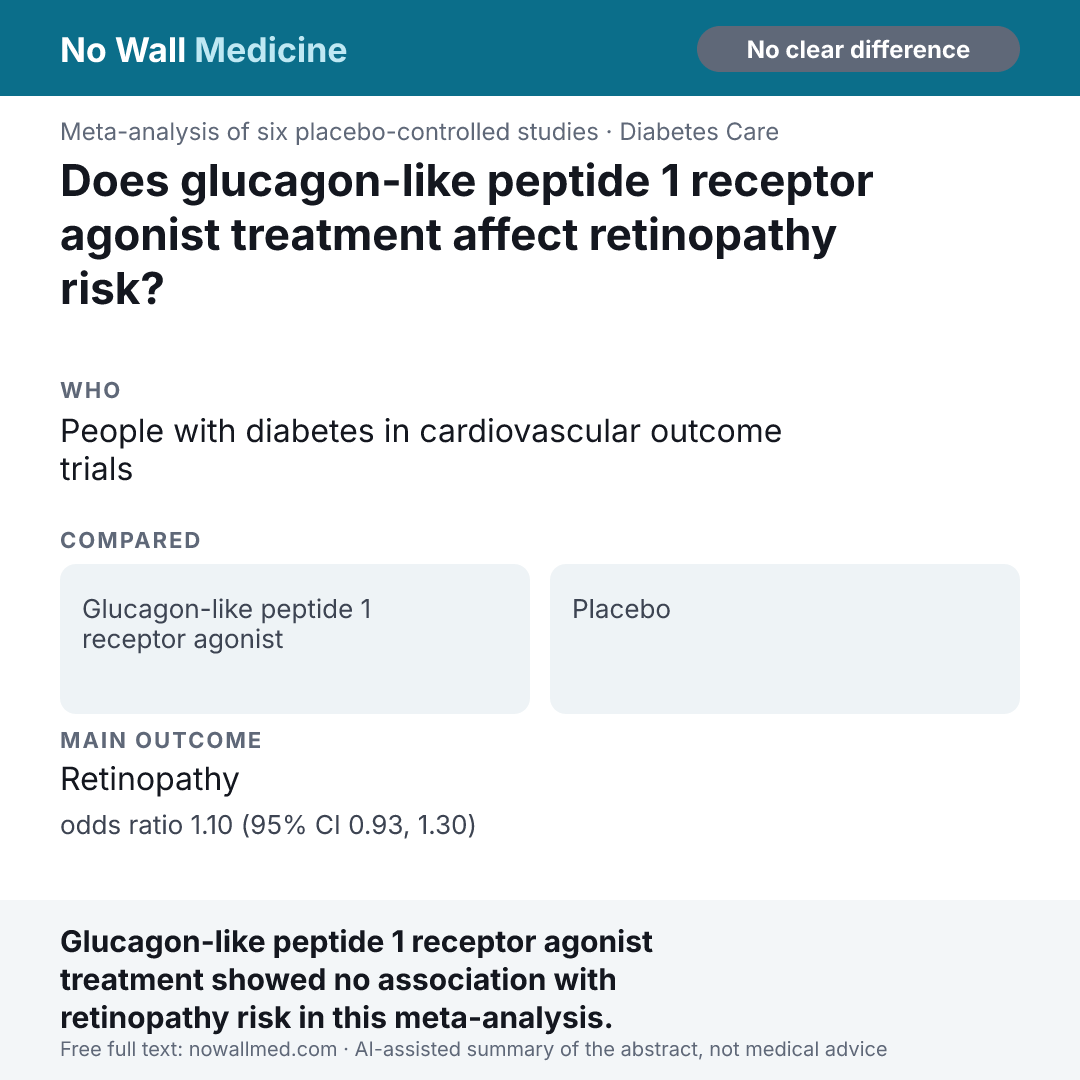
Does glucagon-like peptide 1 receptor agonist treatment affect retinopathy risk?
Who
People with diabetes in cardiovascular outcome trials
Compared
Glucagon-like peptide 1 receptor agonist
Placebo
Main outcome
Retinopathy
Result: odds ratio 1.10 (95% CI 0.93, 1.30)
Bottom line: Glucagon-like peptide 1 receptor agonist treatment showed no association with retinopathy risk in this meta-analysis.
Limitation: Trials were not powered for retinopathy and follow-up was short compared with retinopathy onset.
Diabetes Care · 2021-01-14 · Save PNG
Clinical question: Does glucagon-like peptide 1 receptor agonist treatment affect retinopathy risk?
Key points
- Researchers analyzed six placebo-controlled trials involving glucagon-like peptide 1 receptor agonist cardiovascular outcome trials to examine retinopathy, blood sugar, blood pressure, and weight.
- The meta-analysis showed no association between glucagon-like peptide 1 receptor agonist treatment and retinopathy (odds ratio 1.10; 95% CI 0.93, 1.30).
- A meta-regression showed that average reduction in HbA1c, a measure of long-term blood sugar, was associated with retinopathy risk.
Limitation the authors note: The cardiovascular outcome trials were not powered to assess retinopathy outcomes and had a median follow-up of 3.4 years, which is short compared with the onset of retinopathy.
Headline and key points written with AI from the paper’s abstract, with every number checked against it. Read the paper before relying on them.
Was this summary helpful?
Subject terms
Headline, design, result, key points, caveat and citation as plain text.
Cite this article
Bethel MA, Diaz R, Castellana N, Bhattacharya I, Gerstein HC, Lakshmanan MC. HbA1c Change and Diabetic Retinopathy During GLP-1 Receptor Agonist Cardiovascular Outcome Trials: A Meta-analysis and Meta-regression. Diabetes Care. 2021. doi:10.2337/dc20-1815
Spotted a mistake? Suggest a correction