Health Care Utilization Following Interventions to Improve Social Well-Being: A Systematic Review and Meta-analysis
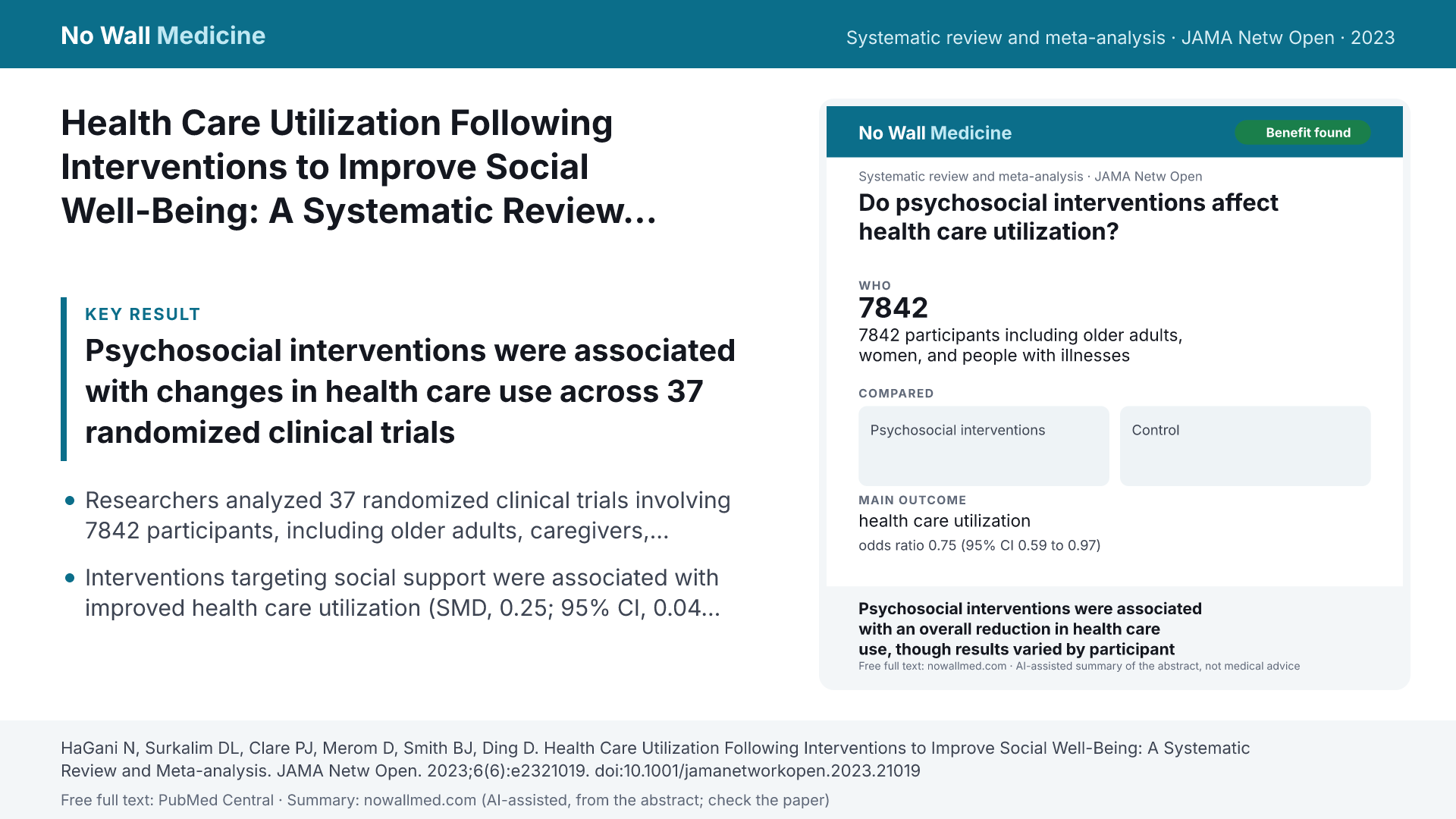
Key result: Psychosocial interventions were associated with changes in health care use across 37 randomized clinical trials
Systematic review and meta-analysisBenefit found
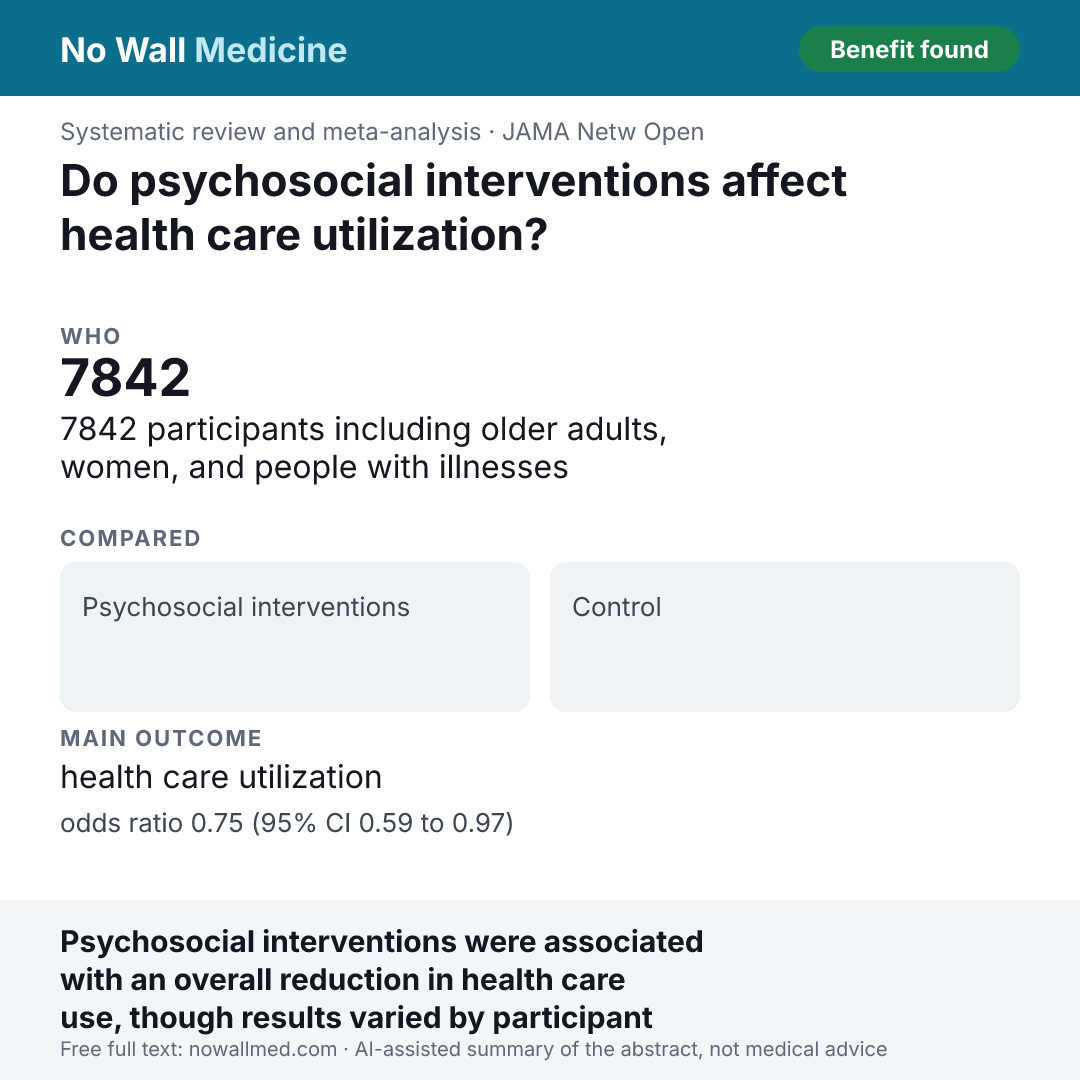
Do psychosocial interventions affect health care utilization?
Who
7842
7842 participants including older adults, women, and people with illnesses
Compared
Psychosocial interventions
Control
Main outcome
health care utilization
Result: odds ratio 0.75 (95% CI 0.59 to 0.97)
Bottom line: Psychosocial interventions were associated with an overall reduction in health care use, though results varied by participant and intervention type.
JAMA Netw Open · 2023-06-01 · Save PNG
Key points
- Researchers analyzed 37 randomized clinical trials involving 7842 participants, including older adults, caregivers, and people with mental or chronic illnesses.
- Interventions targeting social support were associated with improved health care utilization (SMD, 0.25; 95% CI, 0.04 to 0.45), while loneliness interventions showed no association.
- Psychosocial interventions were associated with a reduced number of emergency care visits (OR, 0.64; 95% CI, 0.43 to 0.96) and shorter inpatient visits (SMD, -0.35; 95% CI, -0.61 to -0.09).
Discussion prompts
- Would these patients look like yours? Who was left out?
- Is the main outcome one that matters to patients?
- Is the difference large enough to change what you do?
Cite: HaGani N, Surkalim DL, Clare PJ, Merom D, Smith BJ, Ding D. Health Care Utilization Following Interventions to Improve Social Well-Being: A Systematic Review and Meta-analysis. JAMA Netw Open. 2023;6(6):e2321019. doi:10.1001/jamanetworkopen.2023.21019
Free full text: PubMed Central · Summary and visual abstract: nowallmed.com/a/health-care-utilization-following-interventions-to-improve-social-1f4v60/ (AI-assisted from the abstract; check the paper before relying on it).