Participation rates and baseline characteristics of women in the Face-it randomized controlled trial
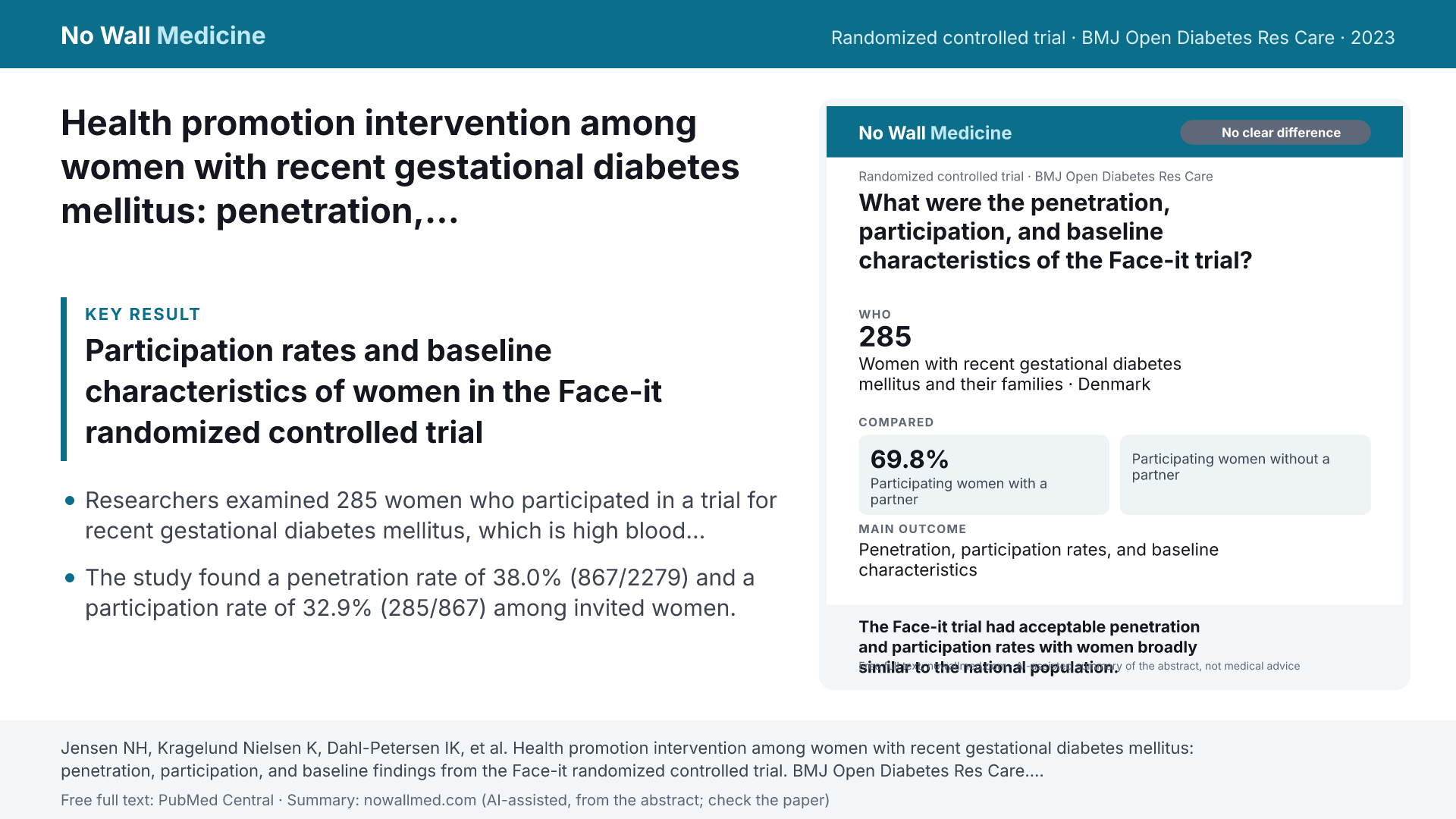
Health promotion intervention among women with recent gestational diabetes mellitus: penetration, participation, and baseline findings from the Face-it randomized controlled trial
Endocrinology & DiabetesAdult and pediatric
Randomized controlled trialNo clear difference
What were the penetration, participation, and baseline characteristics of the Face-it trial?
Who
285
Women with recent gestational diabetes mellitus and their families · Denmark
Compared
69.8%Participating women with a partner
Participating women without a partner
Main outcome
Penetration, participation rates, and baseline characteristics
Bottom line: The Face-it trial had acceptable penetration and participation rates with women broadly similar to the national population.
BMJ Open Diabetes Res Care · 2023-10-05 · Save PNG
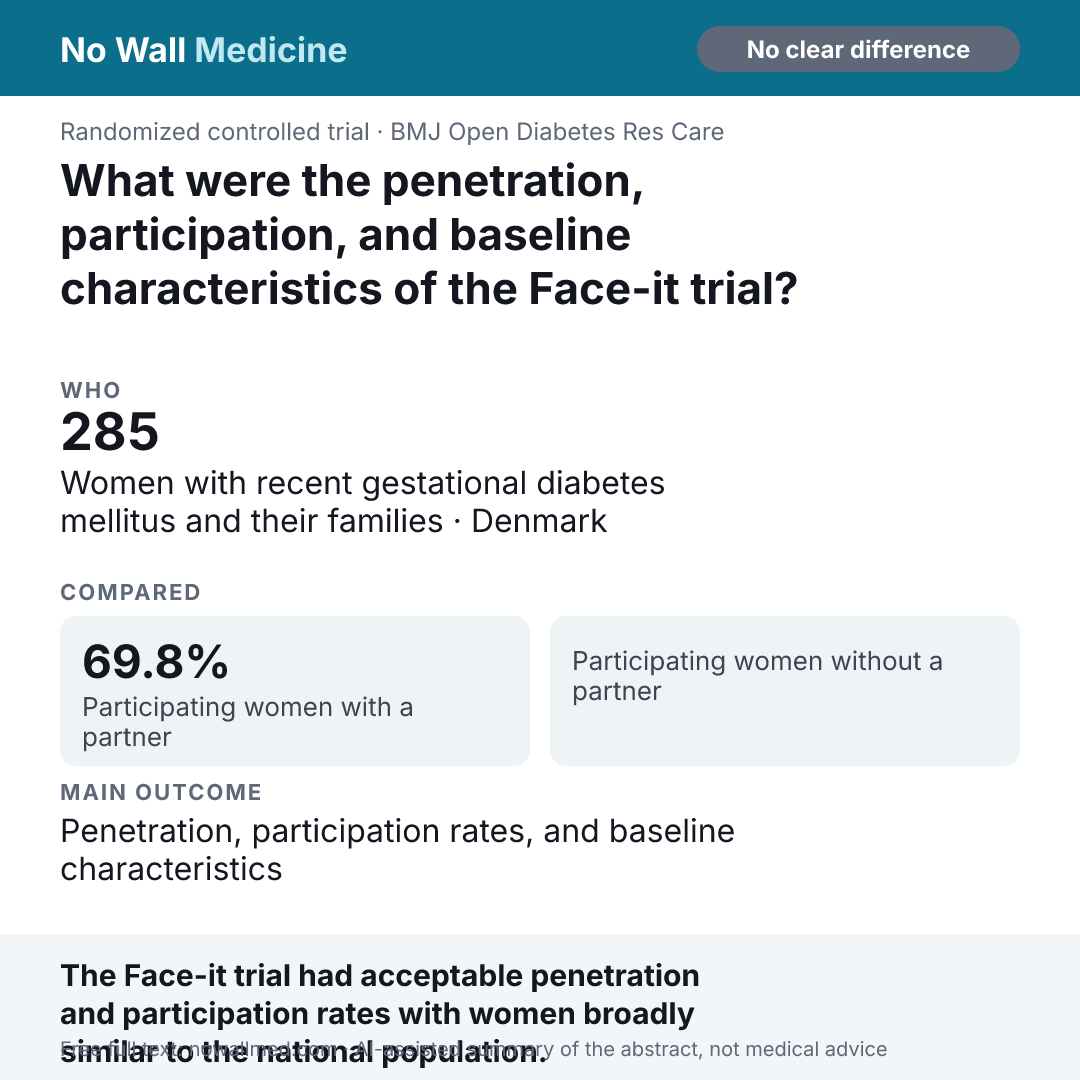
Clinical question: What were the penetration, participation, and baseline characteristics of the Face-it trial?
Key points
- Researchers examined 285 women who participated in a trial for recent gestational diabetes mellitus, which is high blood sugar during pregnancy.
- The study found a penetration rate of 38.0% (867/2279) and a participation rate of 32.9% (285/867) among invited women.
- Women participating with a partner were more often younger, born in Denmark at 82.8% compared to 68.2%, and had a body mass index of 24.9 kg/m2 or less at 35.7% compared to 21.2%.
Headline and key points written with AI from the paper’s abstract, with every number checked against it. Read the paper before relying on them.
Was this summary helpful?
Abstract
Introduction
Face-it is a randomized controlled trial for women with recent gestational diabetes mellitus (GDM) and their families designed to evaluate the effect of a health promotion intervention on type 2 diabetes mellitus (T2DM) risk and quality of life. This study examined (1) the penetration and participation rates for the Face-it trial, (2) the characteristics of the participating women and the potential differences in characteristics according to partner participation status, and (3) representativity of the women at baseline. Research design and methods
We identified women with GDM during pregnancy and invited them and their partners to a baseline examination 10-14 weeks after delivery. Representativity was assessed by comparing the baseline participants with non-participating women, the general population of women with GDM delivering in Denmark, and populations from other intervention trials. Results
The penetration rate was 38.0% (867/2279) and the participation rate was 32.9% (285/867). The 285 women who attended baseline had a mean age of 32.7 (±4.8) years and body mass index (BMI) of 28.1 (±5.4) kg/m2, and 69.8% had a partner who participated. The women participating with a partner were more often primiparous, born in Denmark (82.8% vs 68.2%), were younger, and more often had a BMI ≤24.9 kg/m2 (35.7% vs 21.2%) compared with women without a partner. Compared with the general population of women with GDM in Denmark, these women broadly had similar degree of heterogeneity, but had higher rates of primiparity and singleton deliveries, and lower rates of preterm delivery and prepregnancy obesity. Conclusions
The penetration and participation rates were acceptable. We found a high rate of partner participation. Overall, women participating with a partner were comparable with those participating without a partner. Participating women were broadly similar to the general national GDM population, however with prepregnancy obesity, multiparity, preterm delivery, and multiple pregnancy being less represented. Trial registration number
NCT03997773.
Abstract reproduced under the article’s CC BY NC licence.
Subject terms
Headline, design, result, key points, caveat and citation as plain text.
Cite this article
Jensen NH, Kragelund Nielsen K, Dahl-Petersen IK, et al. Health promotion intervention among women with recent gestational diabetes mellitus: penetration, participation, and baseline findings from the Face-it randomized controlled trial. BMJ Open Diabetes Res Care. 2023;11(5). doi:10.1136/bmjdrc-2023-003529
Spotted a mistake? Suggest a correction