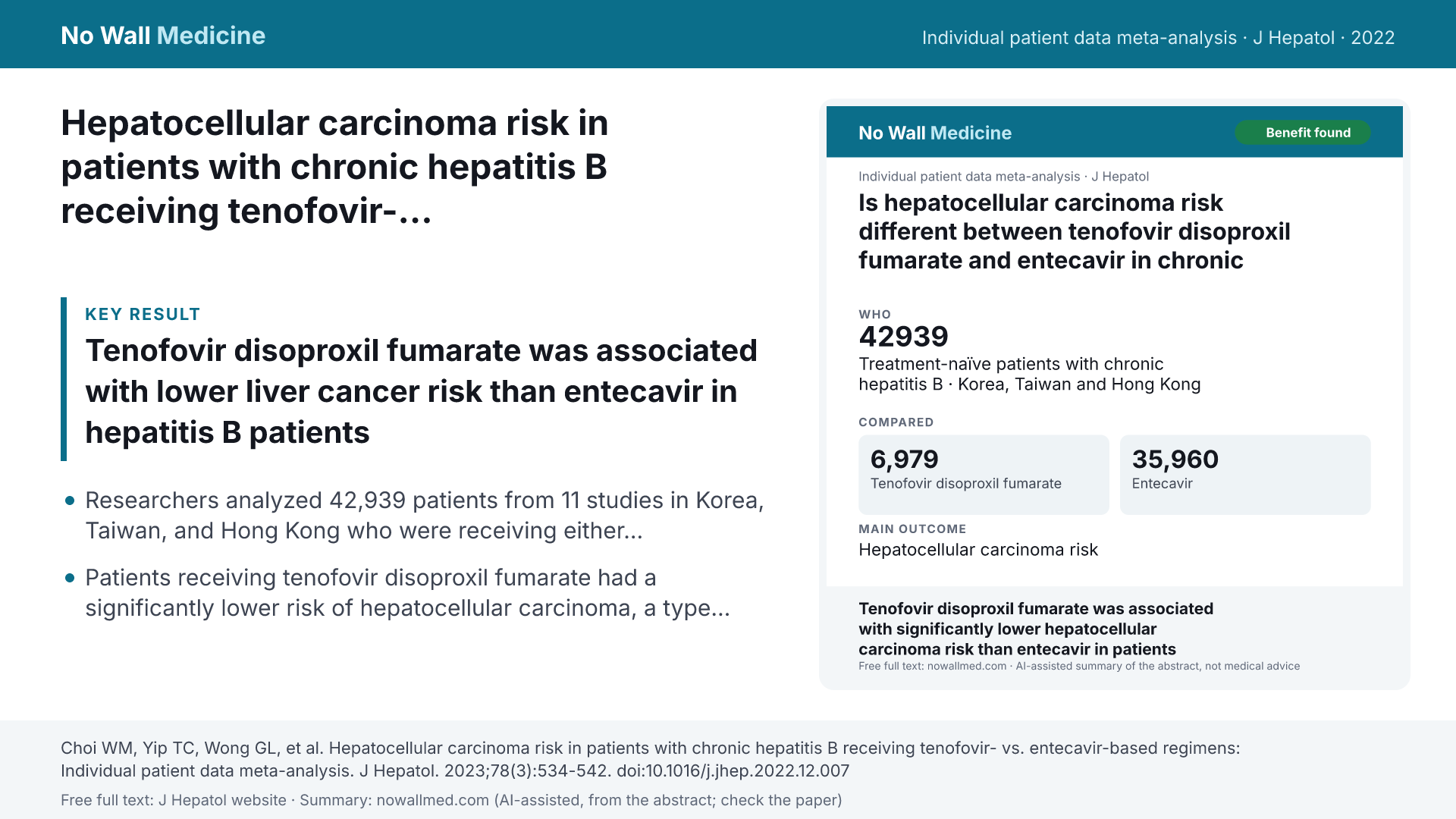
Tenofovir disoproxil fumarate was associated with lower liver cancer risk than entecavir in hepatitis B patients
Hepatocellular carcinoma risk in patients with chronic hepatitis B receiving tenofovir- vs. entecavir-based regimens: Individual patient data meta-analysis
Individual patient data meta-analysisBenefit found
Is hepatocellular carcinoma risk different between tenofovir disoproxil fumarate and entecavir in chronic hepatitis B?
Who
42939
Treatment-naïve patients with chronic hepatitis B · Korea, Taiwan and Hong Kong
Compared
6,979Tenofovir disoproxil fumarate
35,960Entecavir
Main outcome
Hepatocellular carcinoma risk
Result: adjusted hazard ratio 0.77 (95% CI 0.61-0.98)
Bottom line: Tenofovir disoproxil fumarate was associated with significantly lower hepatocellular carcinoma risk than entecavir in patients with chronic hepatitis B.
J Hepatol · 2022-12-23 · Save PNG
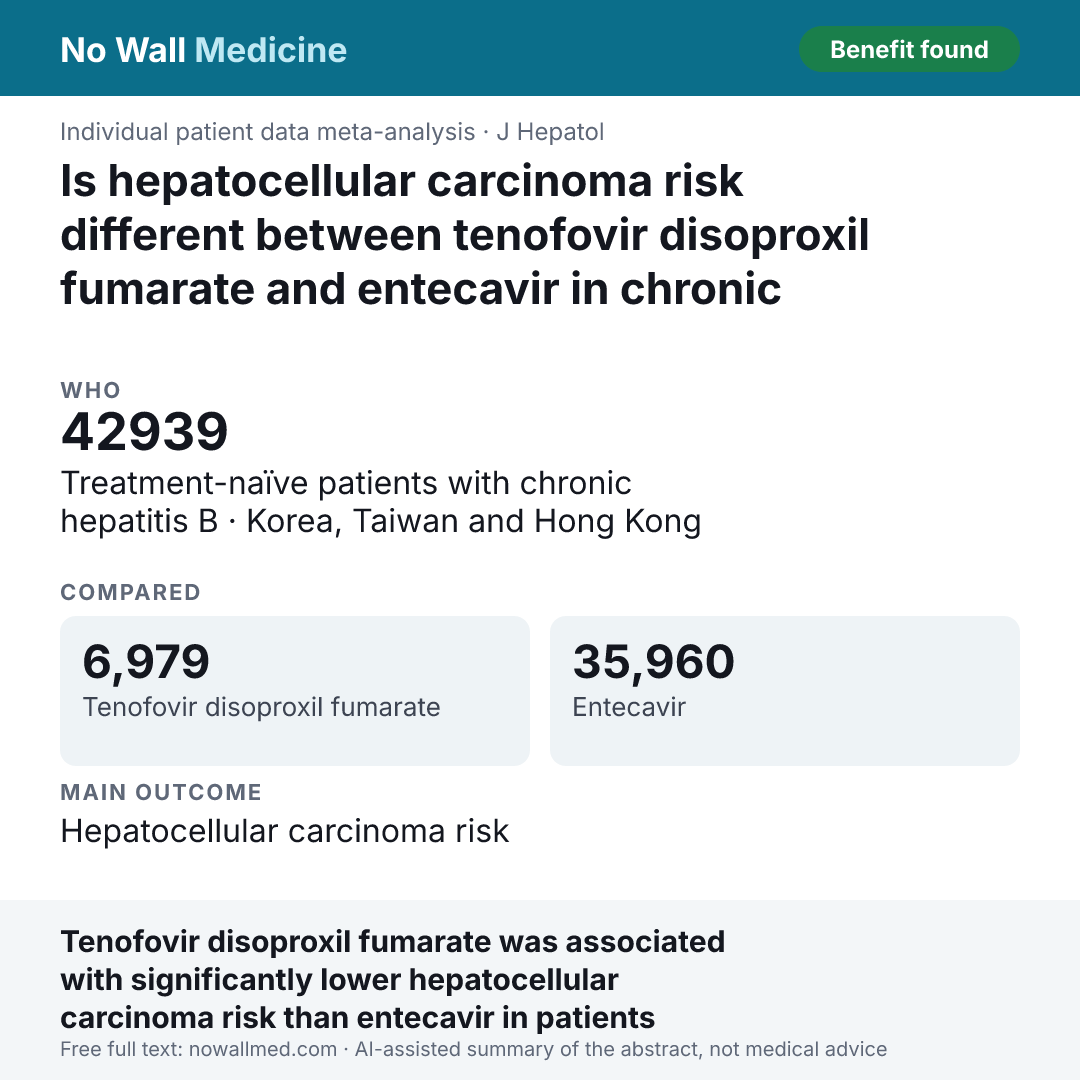
Clinical question: Is hepatocellular carcinoma risk different between tenofovir disoproxil fumarate and entecavir in chronic hepatitis B?
Why it matters: Previous meta-analyses using aggregate data reported inconsistent conclusions regarding whether tenofovir disoproxil fumarate or entecavir is more effective at reducing liver cancer risk.
Key points
- Researchers analyzed 42,939 patients from 11 studies in Korea, Taiwan, and Hong Kong who were receiving either tenofovir disoproxil fumarate or entecavir for chronic hepatitis B.
- Patients receiving tenofovir disoproxil fumarate had a significantly lower risk of hepatocellular carcinoma, a type of liver cancer, with an adjusted hazard ratio of 0.77.
- The lower risk was statistically significant in subgroups including males, patients aged ≥50 years, hepatitis B e-antigen-positive patients, and non-diabetic patients.
Headline and key points written with AI from the paper’s abstract, with every number checked against it. Read the paper before relying on them.
Was this summary helpful?
Subject terms
Headline, design, result, key points, caveat and citation as plain text.
Cite this article
Choi WM, Yip TC, Wong GL, et al. Hepatocellular carcinoma risk in patients with chronic hepatitis B receiving tenofovir- vs. entecavir-based regimens: Individual patient data meta-analysis. J Hepatol. 2023;78(3):534-542. doi:10.1016/j.jhep.2022.12.007
Spotted a mistake? Suggest a correction