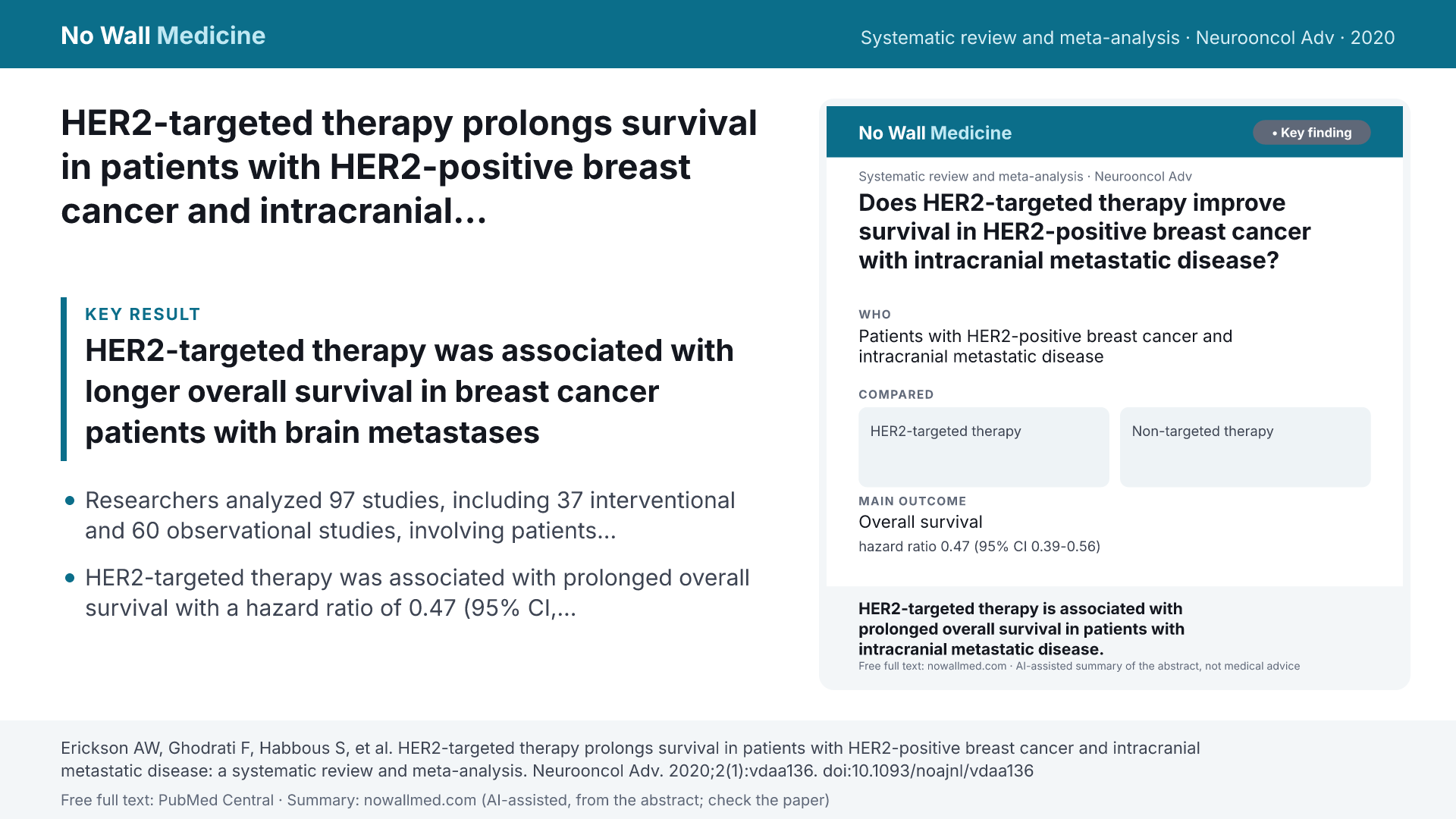
HER2-targeted therapy prolongs survival in patients with HER2-positive breast cancer and intracranial metastatic disease: a systematic review and meta-analysis
Key result: HER2-targeted therapy was associated with longer overall survival in breast cancer patients with brain metastases
Systematic review and meta-analysisKey finding
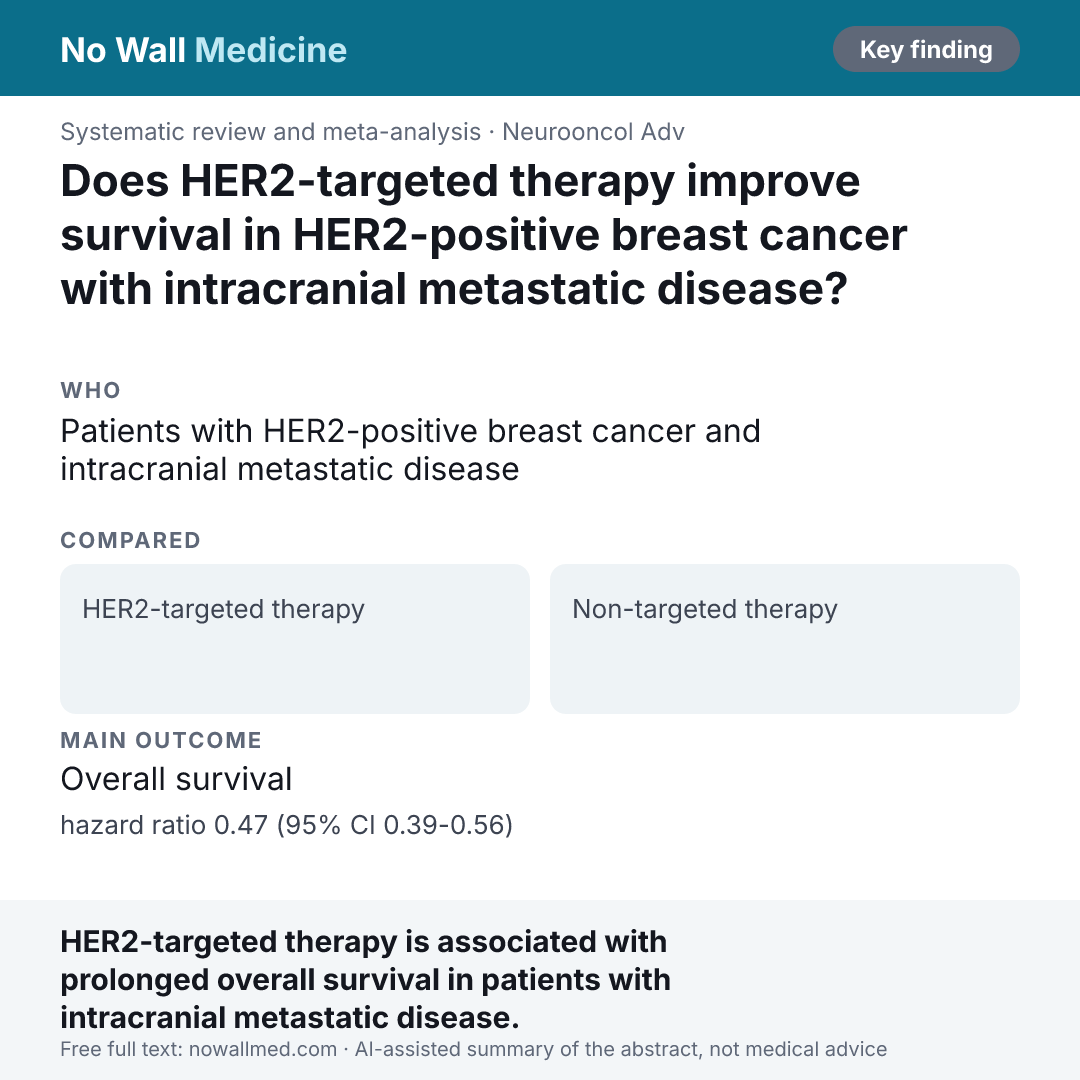
Does HER2-targeted therapy improve survival in HER2-positive breast cancer with intracranial metastatic disease?
Who
Patients with HER2-positive breast cancer and intracranial metastatic disease
Compared
HER2-targeted therapy
Non-targeted therapy
Main outcome
Overall survival
Result: hazard ratio 0.47 (95% CI 0.39-0.56)
Bottom line: HER2-targeted therapy is associated with prolonged overall survival in patients with intracranial metastatic disease.
Limitation: Risk of bias was high in 40% of studies.
Neurooncol Adv · 2020-10-14 · Save PNG
Key points
- Researchers analyzed 97 studies, including 37 interventional and 60 observational studies, involving patients with HER2-positive breast cancer and intracranial metastatic disease.
- HER2-targeted therapy was associated with prolonged overall survival with a hazard ratio of 0.47 (95% CI, 0.39-0.56), though progression-free survival was not significantly prolonged.
- The intracranial disease control rate was 62% (95% CI, 55-69%) and the rate of grade 3 or higher adverse events was 26% (95% CI, 11-45%).
Limitation the authors note: Risk of bias was high in 40% (39/97) of the included studies.
Discussion prompts
- Would these patients look like yours? Who was left out?
- Is the main outcome one that matters to patients?
- Is the difference large enough to change what you do?
Cite: Erickson AW, Ghodrati F, Habbous S, et al. HER2-targeted therapy prolongs survival in patients with HER2-positive breast cancer and intracranial metastatic disease: a systematic review and meta-analysis. Neurooncol Adv. 2020. doi:10.1093/noajnl/vdaa136
Free full text: PubMed Central · Summary and visual abstract: nowallmed.com/a/her2-targeted-therapy-prolongs-survival-in-patients-with-her2-1nhs0nf/ (AI-assisted from the abstract; check the paper before relying on it).