Heterogeneity of determining disease severity, clinical course and outcomes in systemic sclerosis-associated interstitial lung disease: a systematic literature review
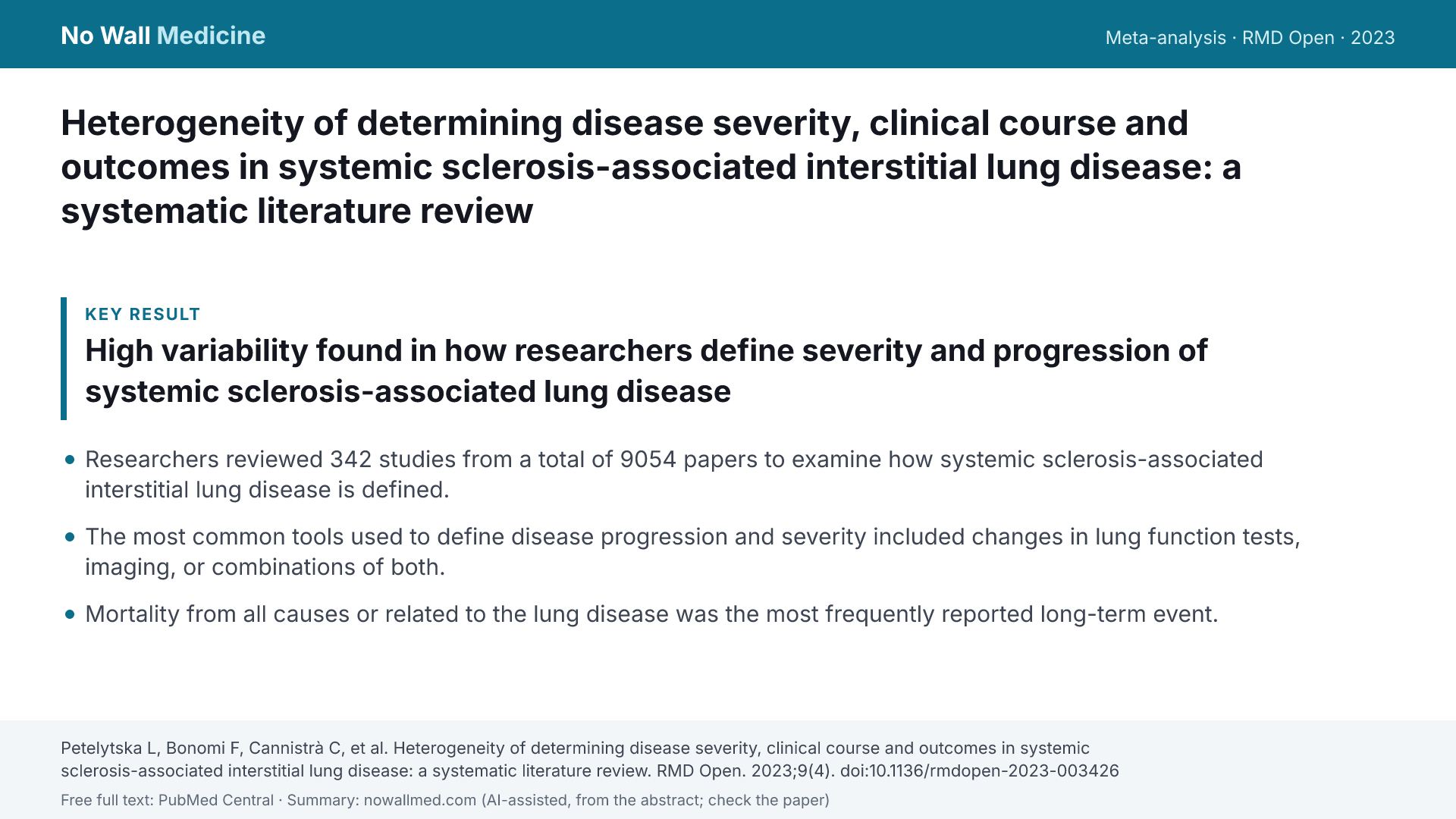
Key result: High variability found in how researchers define severity and progression of systemic sclerosis-associated lung disease
Key points
- Researchers reviewed 342 studies from a total of 9054 papers to examine how systemic sclerosis-associated interstitial lung disease is defined.
- The most common tools used to define disease progression and severity included changes in lung function tests, imaging, or combinations of both.
- Mortality from all causes or related to the lung disease was the most frequently reported long-term event.
Why it matters: Existing definitions for disease severity and progression in systemic sclerosis-associated interstitial lung disease are often based on different models and lack standardization.
Discussion prompts
- Would these patients look like yours? Who was left out?
- Is the main outcome one that matters to patients?
- Is the difference large enough to change what you do?
Cite: Petelytska L, Bonomi F, Cannistrà C, et al. Heterogeneity of determining disease severity, clinical course and outcomes in systemic sclerosis-associated interstitial lung disease: a systematic literature review. RMD Open. 2023;9(4). doi:10.1136/rmdopen-2023-003426
Free full text: PubMed Central · Summary and visual abstract: nowallmed.com/a/heterogeneity-of-determining-disease-severity-clinical-course-and-kyqt3z/ (AI-assisted from the abstract; check the paper before relying on it).