High-Dose Vitamin D Supplementation in Pregnancy and Neurodevelopment in Childhood: A Prespecified Secondary Analysis of a Randomized Clinical Trial
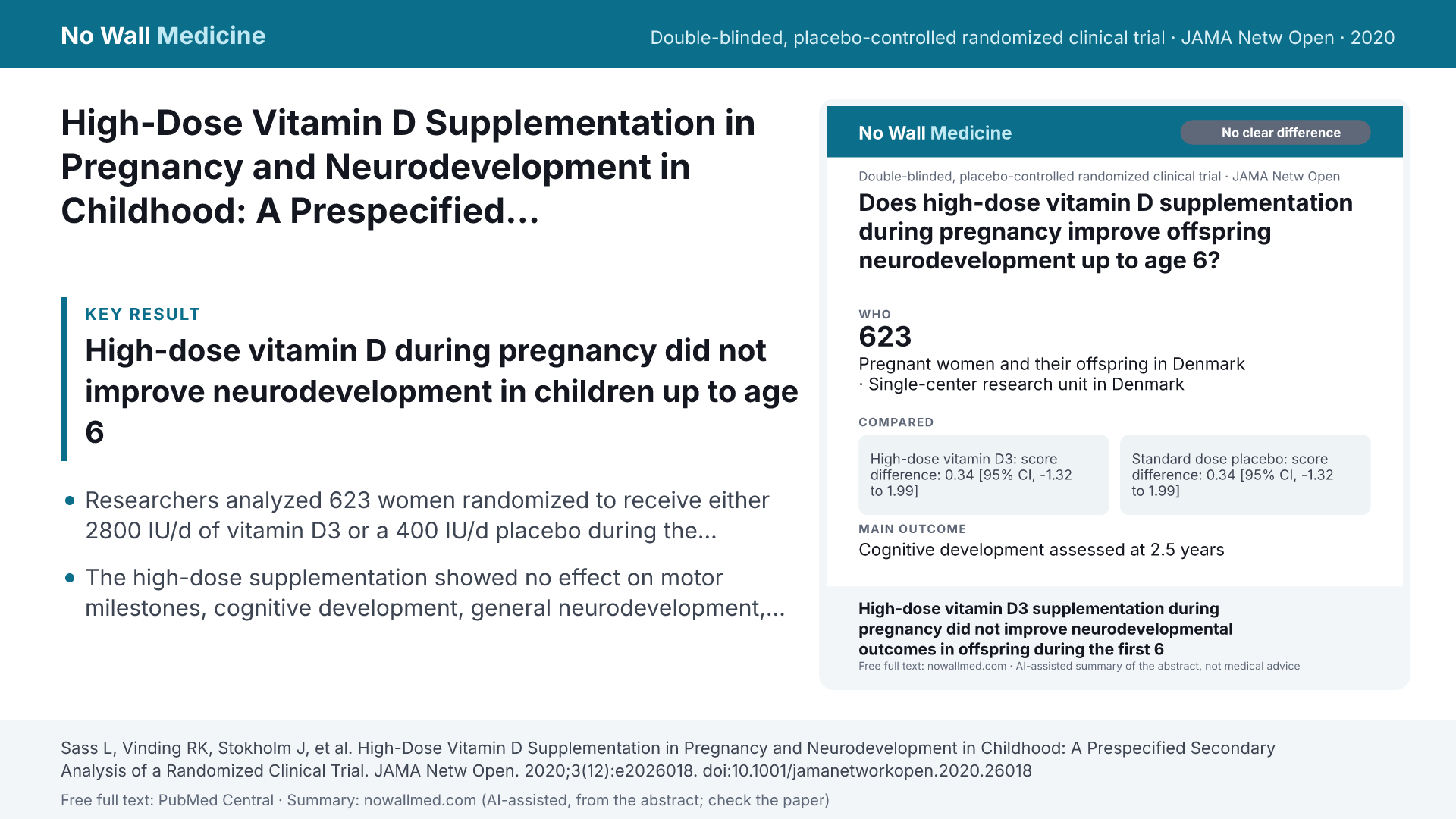
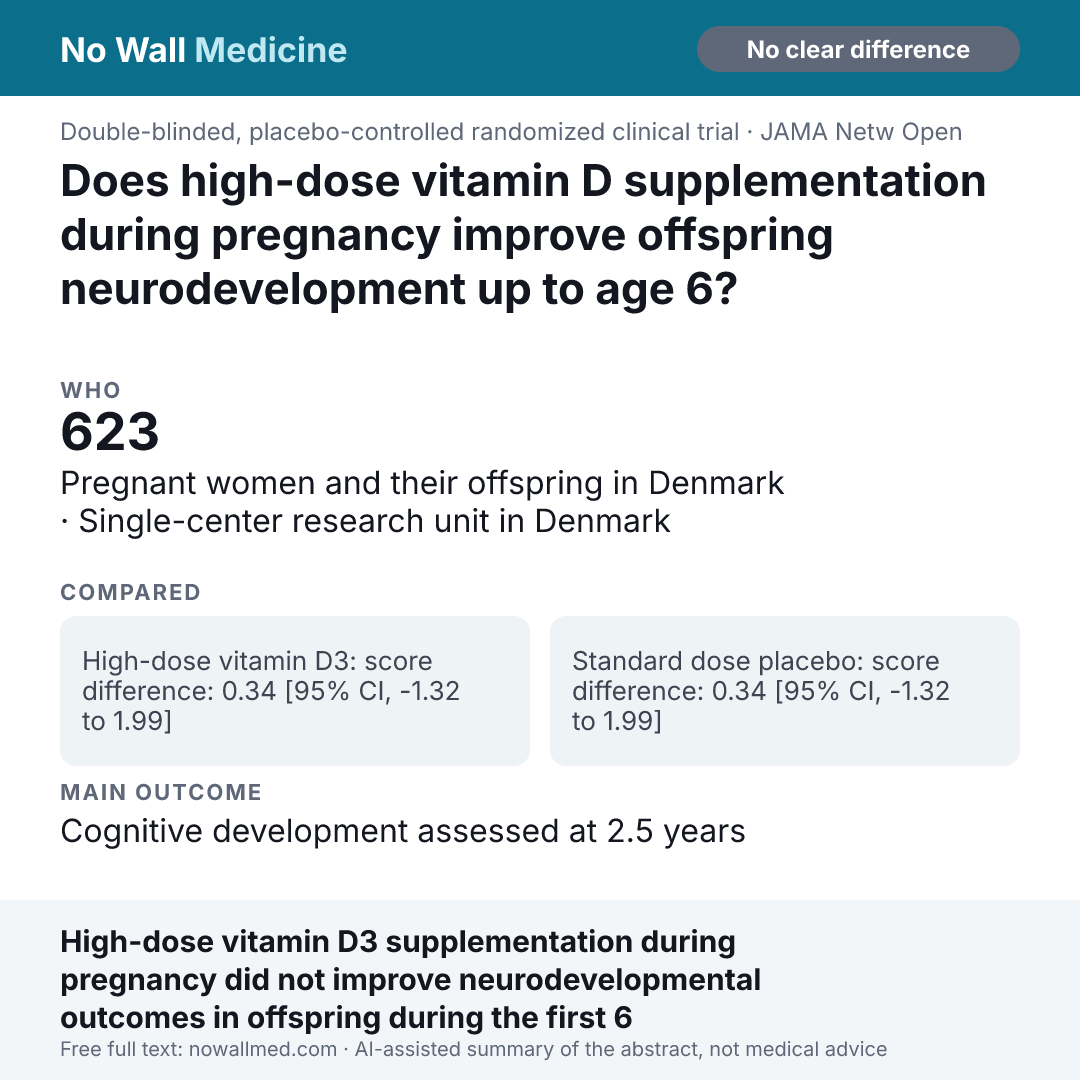
Key result: High-dose vitamin D during pregnancy did not improve neurodevelopment in children up to age 6
Key points
- Researchers analyzed 623 women randomized to receive either 2800 IU/d of vitamin D3 or a 400 IU/d placebo during the third trimester of pregnancy.
- The high-dose supplementation showed no effect on motor milestones, cognitive development, general neurodevelopment, or emotional and behavioral problems in the 551 children evaluated.
- At age 2 years, children in the high-dose group had a median of 232 words compared to 253 words in the standard dose group.
Why it matters: Observational studies suggested a link between high maternal vitamin D levels and improved neurodevelopment, but randomized clinical trials had not investigated this.
Discussion prompts
- Would these patients look like yours? Who was left out?
- Is the main outcome one that matters to patients?
- Is the difference large enough to change what you do?
Cite: Sass L, Vinding RK, Stokholm J, et al. High-Dose Vitamin D Supplementation in Pregnancy and Neurodevelopment in Childhood: A Prespecified Secondary Analysis of a Randomized Clinical Trial. JAMA Netw Open. 2020;3(12):e2026018. doi:10.1001/jamanetworkopen.2020.26018
Free full text: PubMed Central · Summary and visual abstract: nowallmed.com/a/high-dose-vitamin-d-supplementation-in-pregnancy-and-neurodevelopment-1krfv9p/ (AI-assisted from the abstract; check the paper before relying on it).