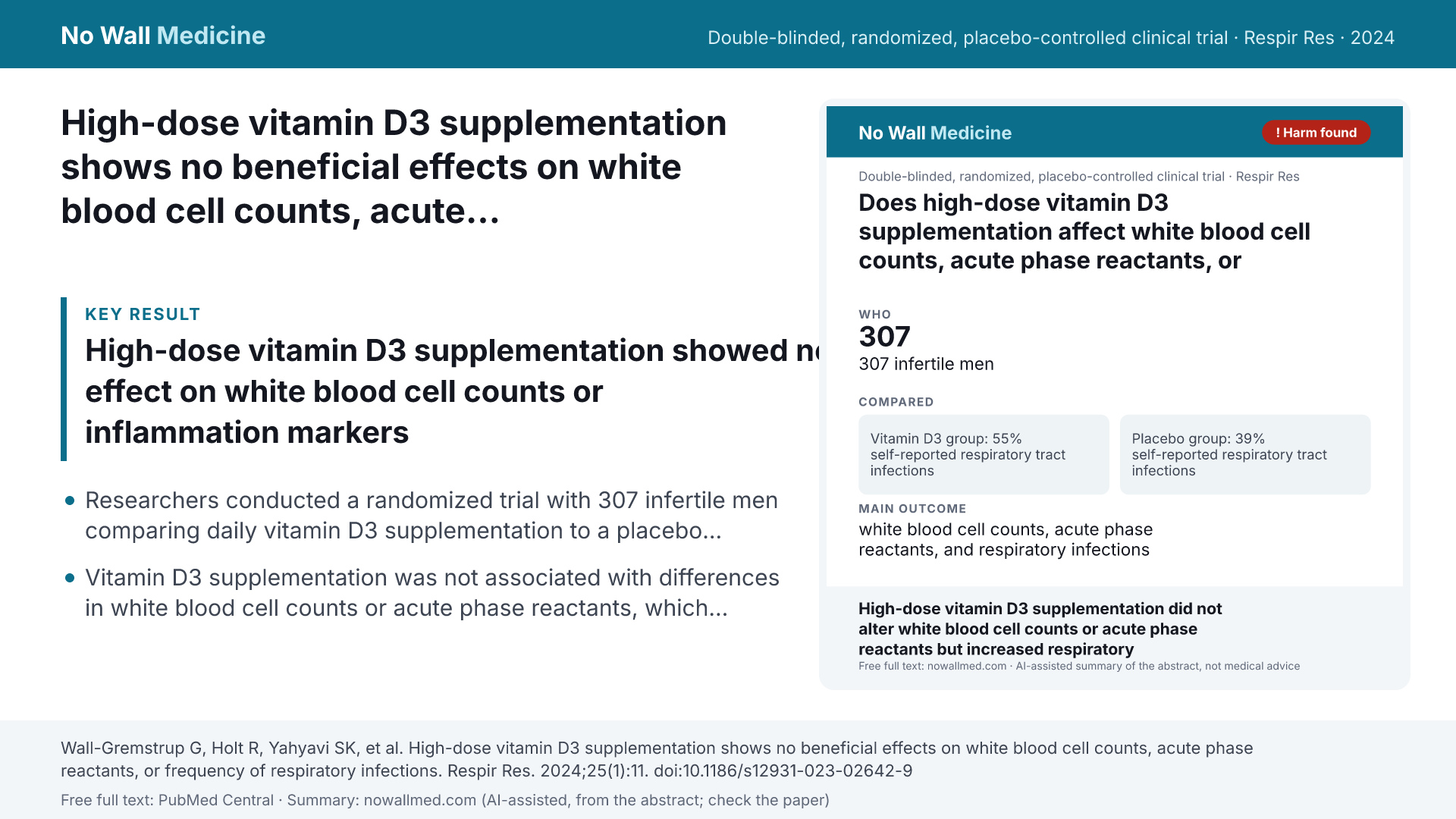
High-dose vitamin D3 supplementation showed no effect on white blood cell counts or inflammation markers
High-dose vitamin D3 supplementation shows no beneficial effects on white blood cell counts, acute phase reactants, or frequency of respiratory infections
Double-blinded, randomized, placebo-controlled clinical trialHarm found
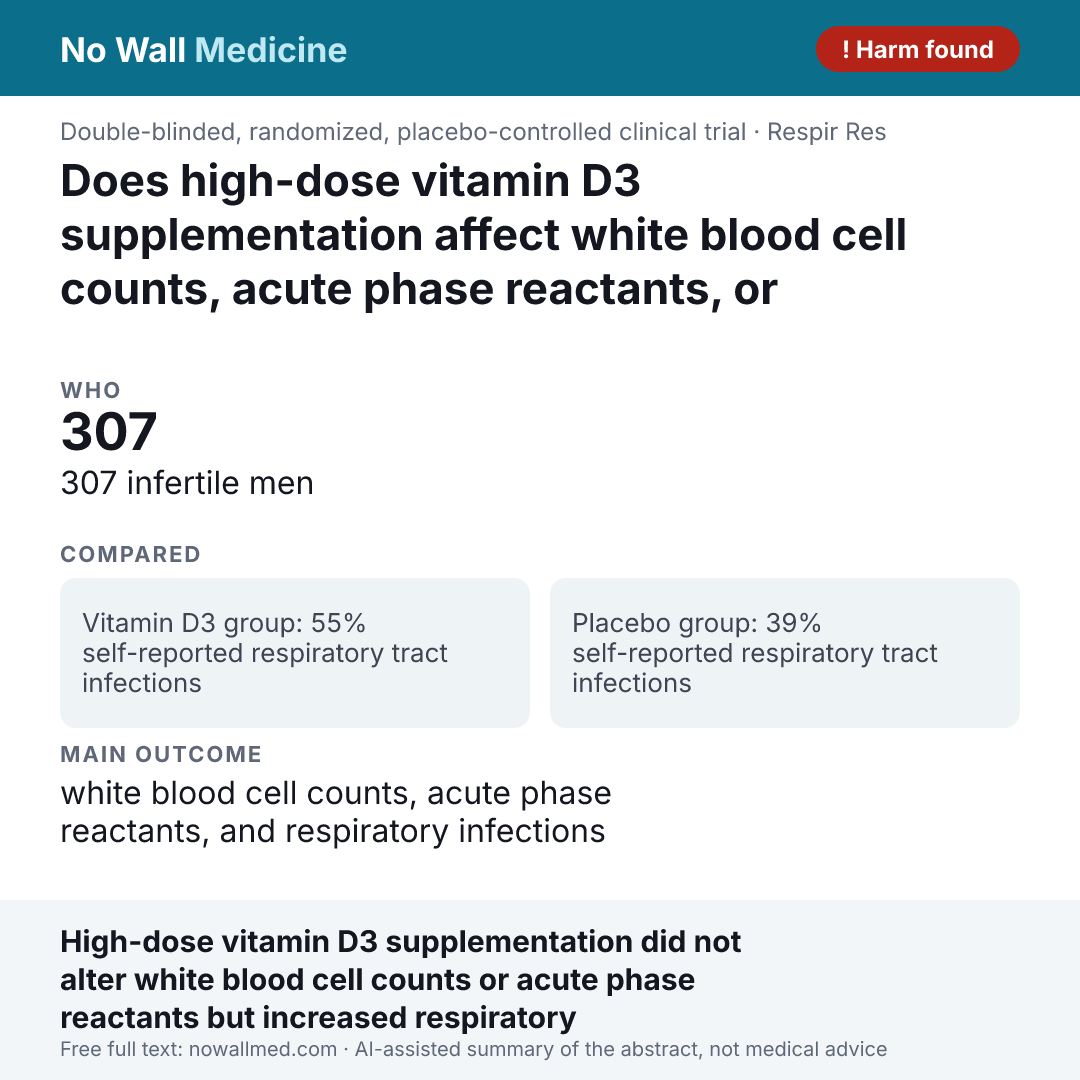
Does high-dose vitamin D3 supplementation affect white blood cell counts, acute phase reactants, or respiratory infections?
Who
307
307 infertile men
Compared
Vitamin D3 group: 55% self-reported respiratory tract infections
Placebo group: 39% self-reported respiratory tract infections
Main outcome
white blood cell counts, acute phase reactants, and respiratory infections
Bottom line: High-dose vitamin D3 supplementation did not alter white blood cell counts or acute phase reactants but increased respiratory infection prevalence.
Respir Res · 2024-01-04 · Save PNG
Same trial (NCT01304927)
Papers we list that report this registered trial, oldest first. Read a secondary analysis alongside the main results.
- Main results Benefit found
Vitamin D and calcium supplementation was associated with lower insulin and higher HDL cholesterol in infertile men J Clin Endocrinol Metab 2021-09 - Related analysis No clear difference
Low anti-Müllerian hormone levels were associated with poorer semen quality in infertile men BMC Med 2023-02 - Related analysis Harm found
This paper Respir Res 2024-01
Clinical question: Does high-dose vitamin D3 supplementation affect white blood cell counts, acute phase reactants, or respiratory infections?
In absolute numbers
Vitamin D3 group: 55% · Placebo group: 39% → a difference of 16 percentage points, so about 7 people would receive it for 1 more to be harmed (number needed to harm) over the trial’s follow-up.
Worked out by us from the two group results above, not reported by the authors. Check the paper for the exact outcome and timing.
Key points
- Researchers conducted a randomized trial with 307 infertile men comparing daily vitamin D3 supplementation to a placebo over 150 days.
- Vitamin D3 supplementation was not associated with differences in white blood cell counts or acute phase reactants, which are markers of inflammation.
- Men receiving vitamin D3 had a higher prevalence of self-reported respiratory tract infections compared to the placebo group at 55% vs 39%.
Headline and key points written with AI from the paper’s abstract, with every number checked against it. Read the paper before relying on them.
Was this summary helpful?
Subject terms
Headline, design, result, key points, caveat and citation as plain text.
Cite this article
Wall-Gremstrup G, Holt R, Yahyavi SK, et al. High-dose vitamin D3 supplementation shows no beneficial effects on white blood cell counts, acute phase reactants, or frequency of respiratory infections. Respir Res. 2024;25(1):11. doi:10.1186/s12931-023-02642-9
Spotted a mistake? Suggest a correction