High-flow nasal cannula oxygen was associated with lower intubation risk in COVID-19 respiratory failure
High-flow nasal cannula oxygen versus conventional oxygen therapy for acute respiratory failure due to COVID-19: a systematic review and meta-analysis
Systematic review and meta-analysis of 6 randomized controlled trialsMixed results
Does high-flow nasal cannula oxygen reduce intubation or mortality in COVID-19 respiratory failure?
Who
2509
Patients with acute respiratory failure due to COVID-19
Compared
High-flow nasal cannula oxygen
Conventional oxygen therapy
Main outcome
Risk of intubation and mortality
Result: risk of intubation RR 0.89 (95% CI 0.80 to 0.98); mortality RR 0.93 (95% CI 0.77 to 1.11)
Bottom line: High-flow nasal cannula oxygen reduced intubation risk and hospital stay but did not significantly reduce mortality risk.
Ann Intensive Care · 2023-11-23Download image
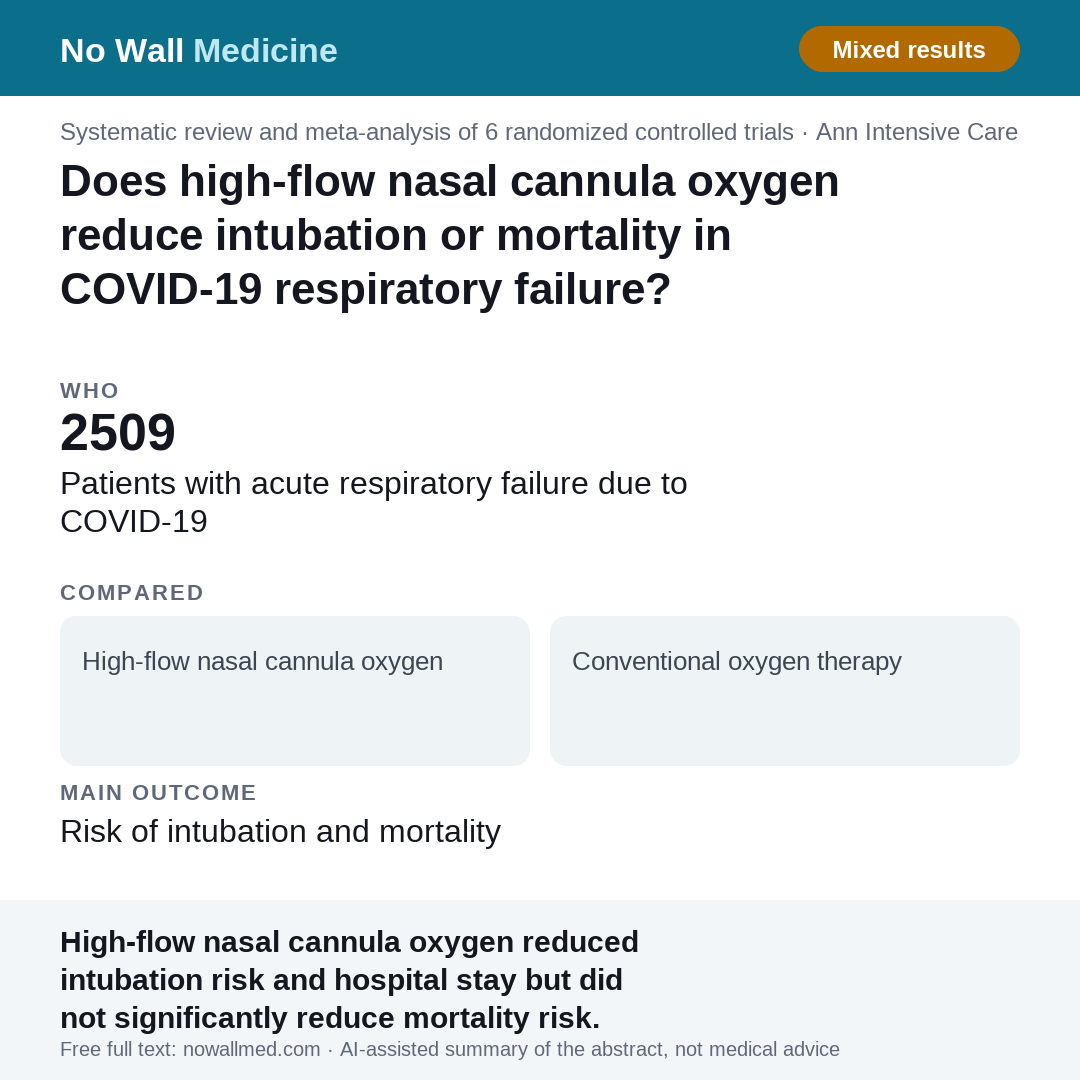
Clinical question: Does high-flow nasal cannula oxygen reduce intubation or mortality in COVID-19 respiratory failure?
Why it matters: The effectiveness of high-flow nasal cannula oxygen therapy compared to conventional oxygen therapy for patients with acute respiratory failure due to COVID-19 remains uncertain.
Key points
- Researchers analyzed 20 studies involving 8383 patients, including 6 randomized controlled trials with 2509 patients, comparing high-flow nasal cannula oxygen to conventional oxygen therapy.
- In the randomized controlled trials, high-flow nasal cannula oxygen was associated with a lower risk of intubation (RR 0.89, 95% CI 0.80 to 0.98; p = 0.02) and shorter hospital stays.
- The use of high-flow nasal cannula oxygen was not associated with a significant reduction in the risk of mortality (RR 0.93, 95% CI 0.77 to 1.11; p = 0.40).
Headline and key points written with AI from the paper’s abstract, with every number checked against it. Read the paper before relying on them.
Was this summary helpful?
Cite this article
Le Pape S, Savart S, Arrivé F, Frat JP, Ragot S, Coudroy R. High-flow nasal cannula oxygen versus conventional oxygen therapy for acute respiratory failure due to COVID-19: a systematic review and meta-analysis. Ann Intensive Care. 2023. doi:10.1186/s13613-023-01208-8
Spotted a mistake? Suggest a correction
Top studies every Monday
The week’s key trials and guidelines in your specialties, plus any topics you follow. By email, free.
Get the weekly digest