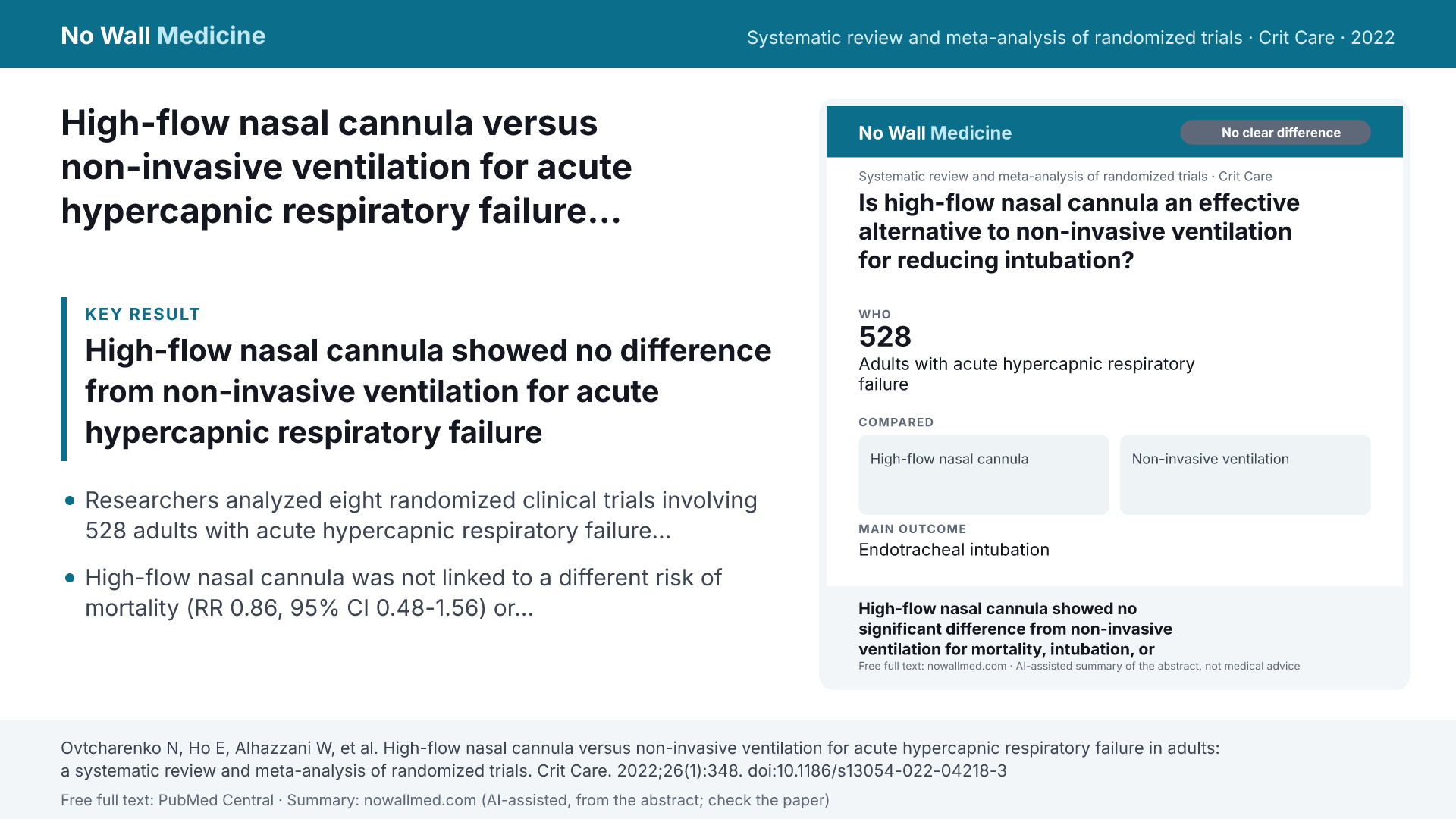
High-flow nasal cannula showed no difference from non-invasive ventilation for acute hypercapnic respiratory failure
High-flow nasal cannula versus non-invasive ventilation for acute hypercapnic respiratory failure in adults: a systematic review and meta-analysis of randomized trials
Systematic review and meta-analysis of randomized trialsNo clear difference
Is high-flow nasal cannula an effective alternative to non-invasive ventilation for reducing intubation?
Who
528
Adults with acute hypercapnic respiratory failure
Compared
High-flow nasal cannula
Non-invasive ventilation
Main outcome
Endotracheal intubation
Result: relative risk 0.80 (95% CI 0.46-1.39)
Bottom line: High-flow nasal cannula showed no significant difference from non-invasive ventilation for mortality, intubation, or hospital length of stay.
Limitation: Imprecision and study heterogeneity limit determining if high-flow nasal cannula is superior, inferior, or equivalent.
Crit Care · 2022-11-09Download image
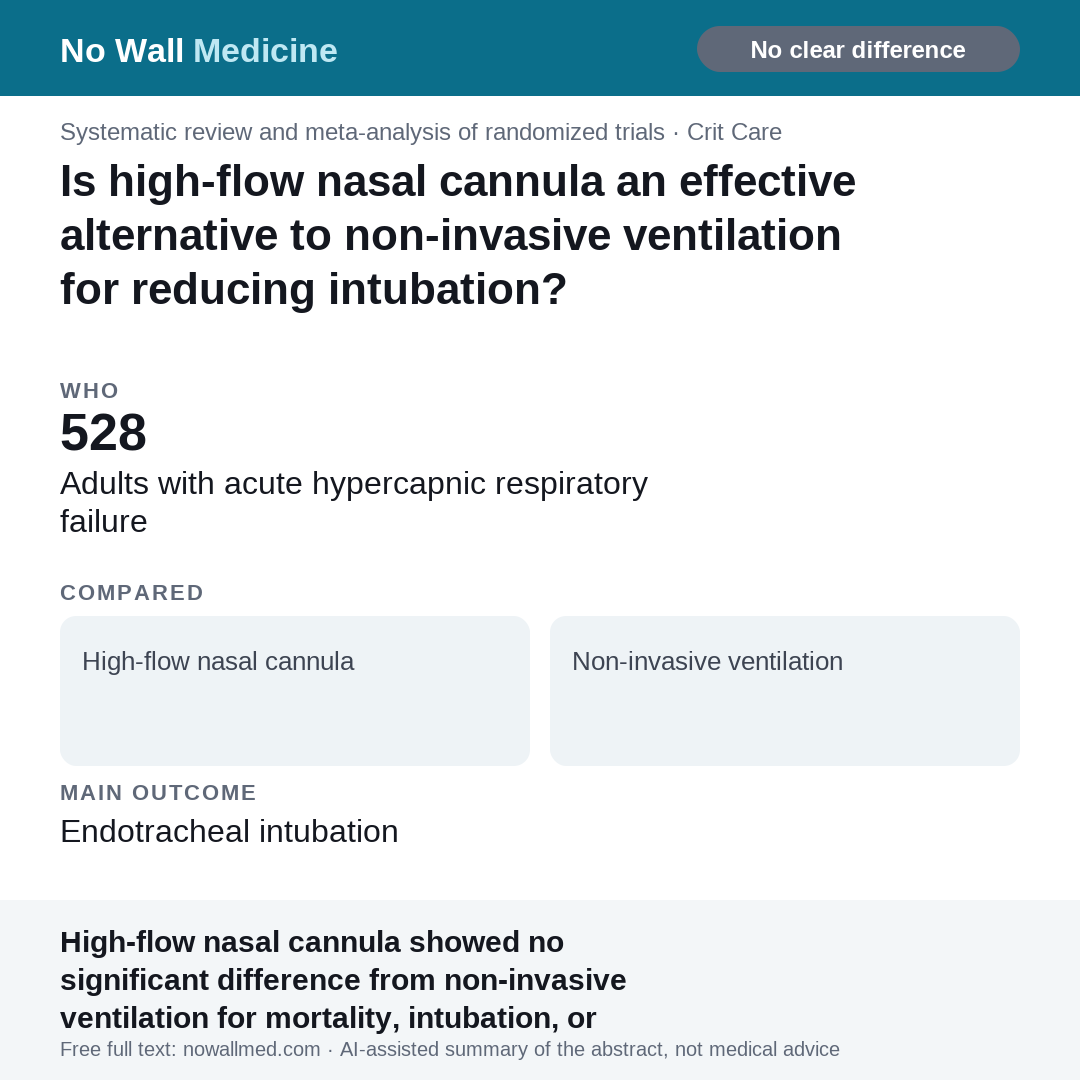
Clinical question: Is high-flow nasal cannula an effective alternative to non-invasive ventilation for reducing intubation?
Why it matters: It is unknown whether high-flow nasal cannula is a superior, inferior, or equivalent alternative to non-invasive ventilation for reducing the need for intubation.
Key points
- Researchers analyzed eight randomized clinical trials involving 528 adults with acute hypercapnic respiratory failure to compare high-flow nasal cannula and non-invasive ventilation.
- High-flow nasal cannula was not linked to a different risk of mortality (RR 0.86, 95% CI 0.48-1.56) or endotracheal intubation (RR 0.80, 95% CI 0.46-1.39).
- There was no difference in the change in partial pressure of carbon dioxide between the two groups (MD -1.87 mmHg, 95% CI -5.34-1.60).
Limitation the authors note: The current body of evidence is limited by imprecision and study heterogeneity.
Headline and key points written with AI from the paper’s abstract, with every number checked against it. Read the paper before relying on them.
Was this summary helpful?
Subject terms
Cite this article
Ovtcharenko N, Ho E, Alhazzani W, Cortegiani A, Ergan B, Scala R. High-flow nasal cannula versus non-invasive ventilation for acute hypercapnic respiratory failure in adults: a systematic review and meta-analysis of randomized trials. Crit Care. 2022. doi:10.1186/s13054-022-04218-3
Spotted a mistake? Suggest a correction