High-Flow Nasal Oxygen for Severe Hypoxemia: Oxygenation Response and Outcome in Patients with COVID-19
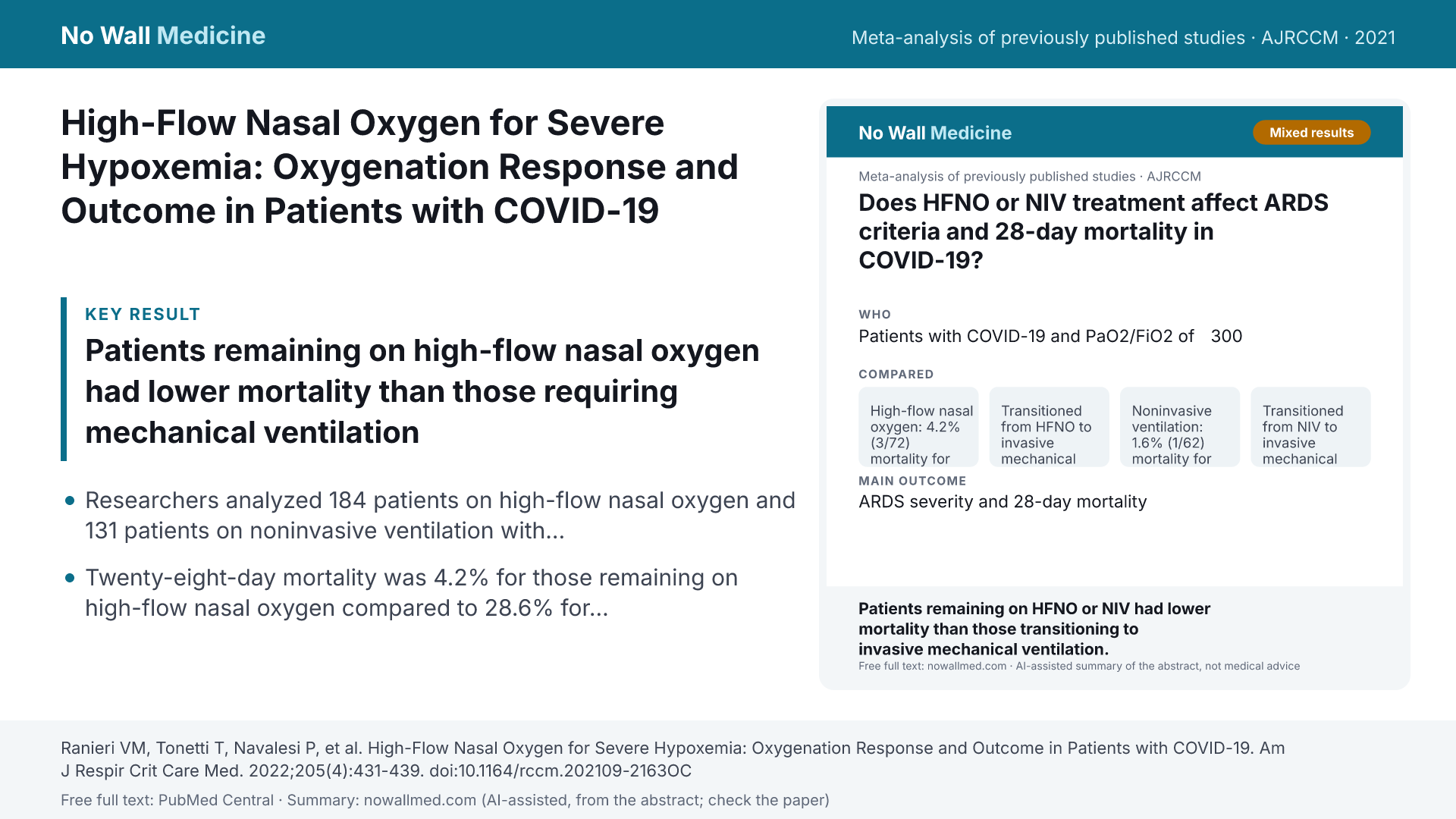
Key result: Patients remaining on high-flow nasal oxygen had lower mortality than those requiring mechanical ventilation
Meta-analysis of previously published studiesMixed results
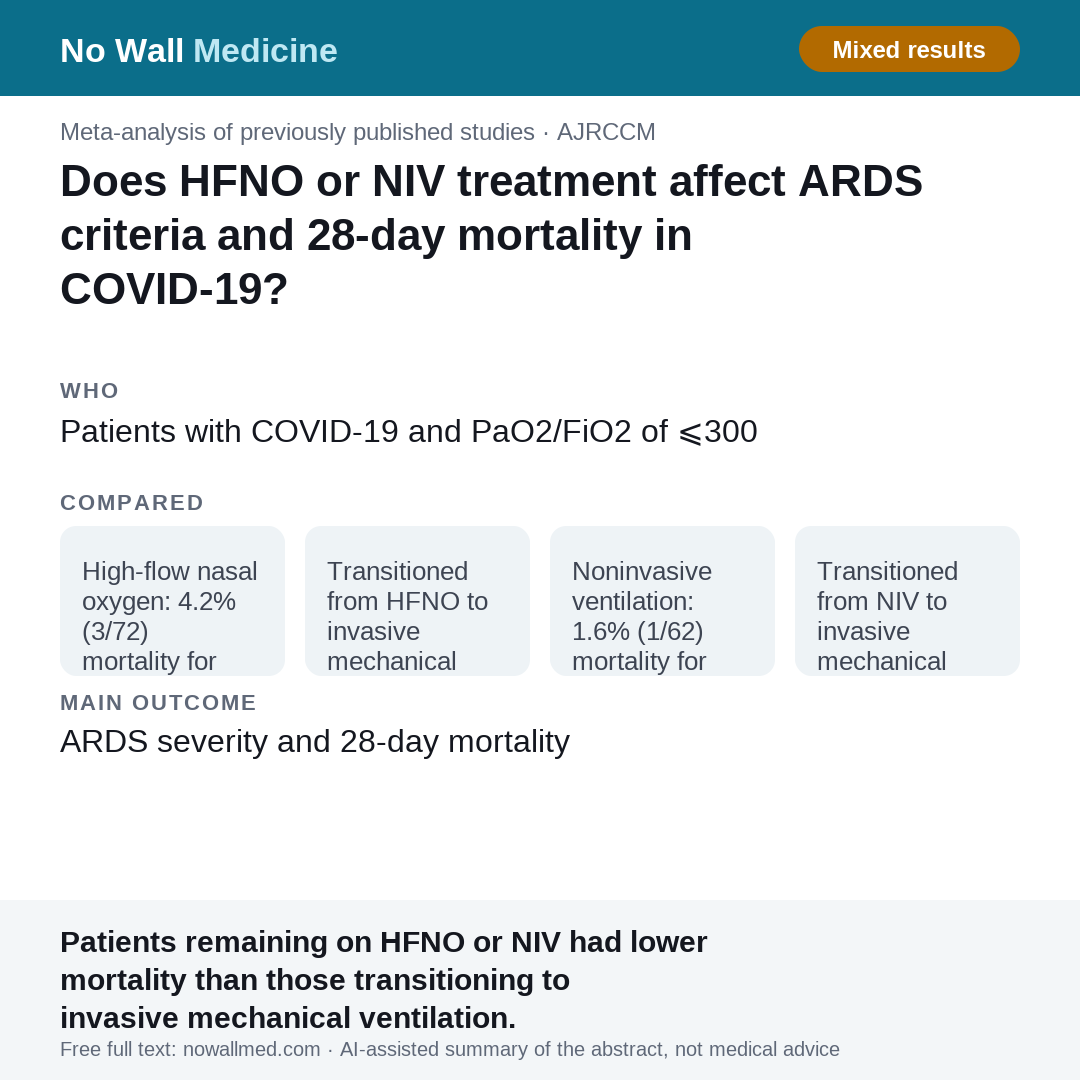
Does HFNO or NIV treatment affect ARDS criteria and 28-day mortality in COVID-19?
Who
Patients with COVID-19 and PaO2/FiO2 of ⩽300
Compared
High-flow nasal oxygen: 4.2% (3/72) mortality for those remaining on HFNO
Transitioned from HFNO to invasive mechanical ventilation: 28.6% (32/112) mortality
Noninvasive ventilation: 1.6% (1/62) mortality for those remaining on NIV
Transitioned from NIV to invasive mechanical ventilation: 44.9% (31/69) mortality
Main outcome
ARDS severity and 28-day mortality
Bottom line: Patients remaining on HFNO or NIV had lower mortality than those transitioning to invasive mechanical ventilation.
AJRCCM · 2021-12-04Download image
Key points
- Researchers analyzed 184 patients on high-flow nasal oxygen and 131 patients on noninvasive ventilation with positive end-expiratory pressure.
- Twenty-eight-day mortality was 4.2% for those remaining on high-flow nasal oxygen compared to 28.6% for those transitioning to invasive mechanical ventilation.
- Among patients transitioning to invasive mechanical ventilation, 92.9% of those on high-flow nasal oxygen and 95.7% of those on noninvasive ventilation maintained acute respiratory distress syndrome criteria.
Why it matters: Current definitions of acute respiratory distress syndrome do not include patients receiving high-flow nasal oxygen, which may prevent early identification of the condition.
Discussion prompts
- Would these patients look like yours? Who was left out?
- Is the main outcome one that matters to patients?
- Is the difference large enough to change what you do?
Cite: Ranieri VM, Tonetti T, Navalesi P, et al. High-Flow Nasal Oxygen for Severe Hypoxemia: Oxygenation Response and Outcome in Patients with COVID-19. AJRCCM. 2021. doi:10.1164/rccm.202109-2163OC
Free full text: PubMed Central · Summary and visual abstract: nowallmed.com/a/high-flow-nasal-oxygen-for-severe-hypoxemia-oxygenation-response-and-1s2jgad/ (AI-assisted from the abstract; check the paper before relying on it).