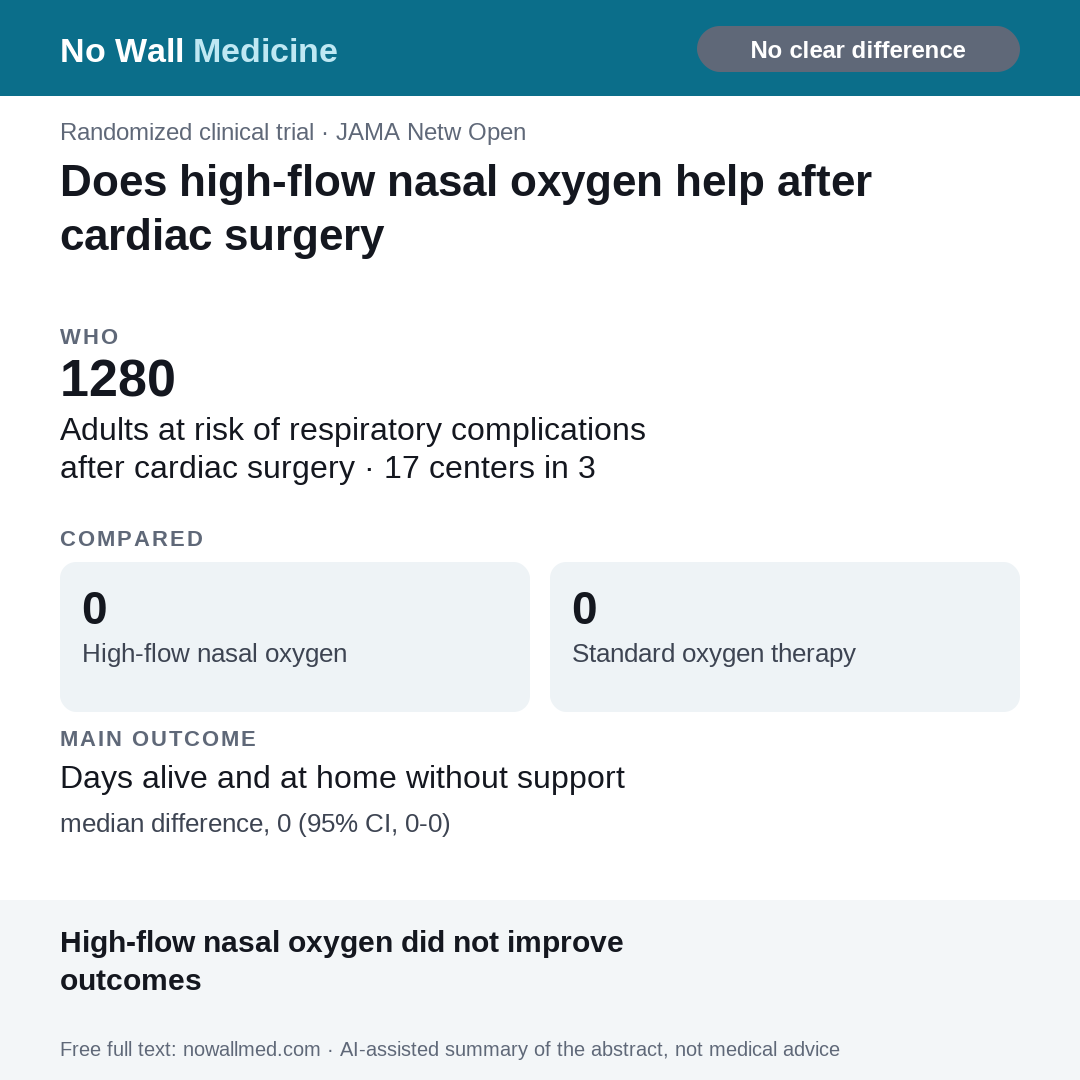
High-flow nasal oxygen therapy did not improve recovery days after cardiac surgery
High-Flow Nasal Oxygen Therapy After Cardiac Surgery: A Randomized Clinical Trial
Randomized clinical trialNo clear difference
Does high-flow nasal oxygen help after cardiac surgery
Who
1280
Adults at risk of respiratory complications after cardiac surgery · 17 centers in 3 countries
Compared
0High-flow nasal oxygen (IQR, 0-79)
0Standard oxygen therapy (IQR, 0-87)
Main outcome
Days alive and at home without support
Result: median difference, 0 (95% CI, 0-0)
Bottom line: High-flow nasal oxygen did not improve outcomes
JAMA Netw Open · 2026-04-01Download image
Why it matters: It is uncertain if using high-flow nasal oxygen therapy as a preventative measure provides clinical benefits or cost savings for patients at risk of respiratory complications after cardiac surgery.
Key points
- Researchers studied 1280 adults at 17 cardiac surgery centers to compare high-flow nasal oxygen therapy with standard oxygen therapy.
- The median days alive and at home without increased respiratory support was 0 for the high-flow group and 0 for the standard group.
- Secondary clinical outcomes were similar between the high-flow nasal oxygen therapy group and the standard oxygen therapy group.
Headline and key points written with AI from the paper’s abstract, with every number checked against it. Read the paper before relying on them.
Topics
Spotted a mistake? Suggest a correction