High-flow nasal oxygen was associated with fewer low oxygen events during gastrointestinal endoscopy
High-flow nasal oxygenation during gastrointestinal endoscopy. Systematic review and meta-analysis
Meta-analysis of 6 randomized controlled trialsBenefit found
Does high-flow nasal oxygen improve safety during gastrointestinal endoscopy under deep sedation?
Who
2867
Patients undergoing gastrointestinal endoscopy under deep sedation
Compared
5.2%High-flow nasal oxygen
27.2%Conventional oxygen therapy
Main outcome
Incidence of hypoxic events during endoscopic procedures
Bottom line: High-flow nasal oxygen reduces hypoxic events during gastrointestinal endoscopy compared to conventional oxygen therapy.
BJA Open · 2022-10-18Download image
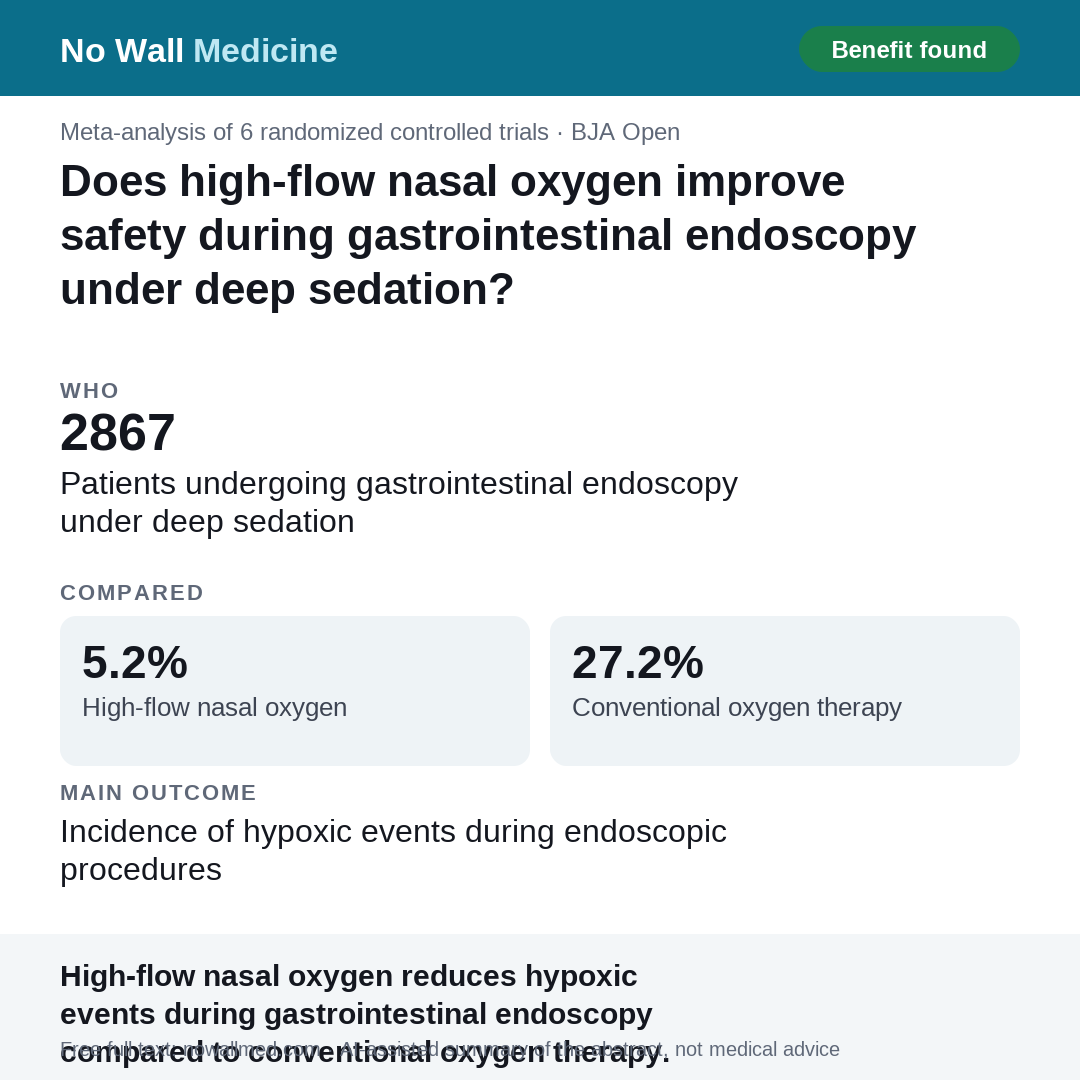
Clinical question: Does high-flow nasal oxygen improve safety during gastrointestinal endoscopy under deep sedation?
Why it matters: The degree of benefit provided by high-flow nasal oxygen for limiting hypoxaemia, or low blood oxygen levels, during gastrointestinal endoscopy is not adequately established.
Key points
- Researchers analyzed 2867 patients from six randomized controlled trials comparing high-flow nasal oxygen to conventional oxygen therapy during gastrointestinal endoscopy under deep sedation.
- Desaturation occurred in 5.2% of patients receiving high-flow nasal oxygen compared to 27.2% receiving conventional oxygen therapy.
- High-flow nasal oxygen was associated with lower rates of rescue maneuvers (4.7% vs 34.3%), procedure interruptions (0.4% vs 6.7%), and adverse events (18.7% vs 21%).
Headline and key points written with AI from the paper’s abstract, with every number checked against it. Read the paper before relying on them.
Was this summary helpful?
Cite this article
Carron M, Tamburini E, Safaee Fakhr B, De Cassai A, Linassi F, Navalesi P. High-flow nasal oxygenation during gastrointestinal endoscopy. Systematic review and meta-analysis. BJA Open. 2022. doi:10.1016/j.bjao.2022.100098
Spotted a mistake? Suggest a correction
Top studies every Monday
The week’s key trials and guidelines in your specialties, plus any topics you follow. By email, free.
Get the weekly digest