High-flow nasal oxygen was associated with lower rates of oxygen desaturation during gastrointestinal endoscopy
High-flow nasal oxygenation or standard oxygenation for gastrointestinal endoscopy with sedation in patients at risk of hypoxaemia: a multicentre randomised controlled trial (ODEPHI trial)
Multicentre, randomised controlled trialBenefit found
Does high-flow nasal oxygen reduce decreased oxygen saturation during gastrointestinal endoscopy?
Who
379
Patients at risk of hypoxaemia undergoing gastrointestinal endoscopy under deep sedation · Multicentre
Compared
9.4%High-flow nasal oxygen (18/191)
33.5%Standard oxygen (63/188)
Main outcome
Incidence of peripheral oxygen saturation less than or equal to 92%
Result: adjusted absolute risk difference, -23.4% (95% CI, -28.9 to -16.7)
Bottom line: High-flow nasal oxygen significantly reduces the incidence of oxygen desaturation in high-risk patients undergoing gastrointestinal endoscopy.
Br J Anaesth · 2021-04-28Download image
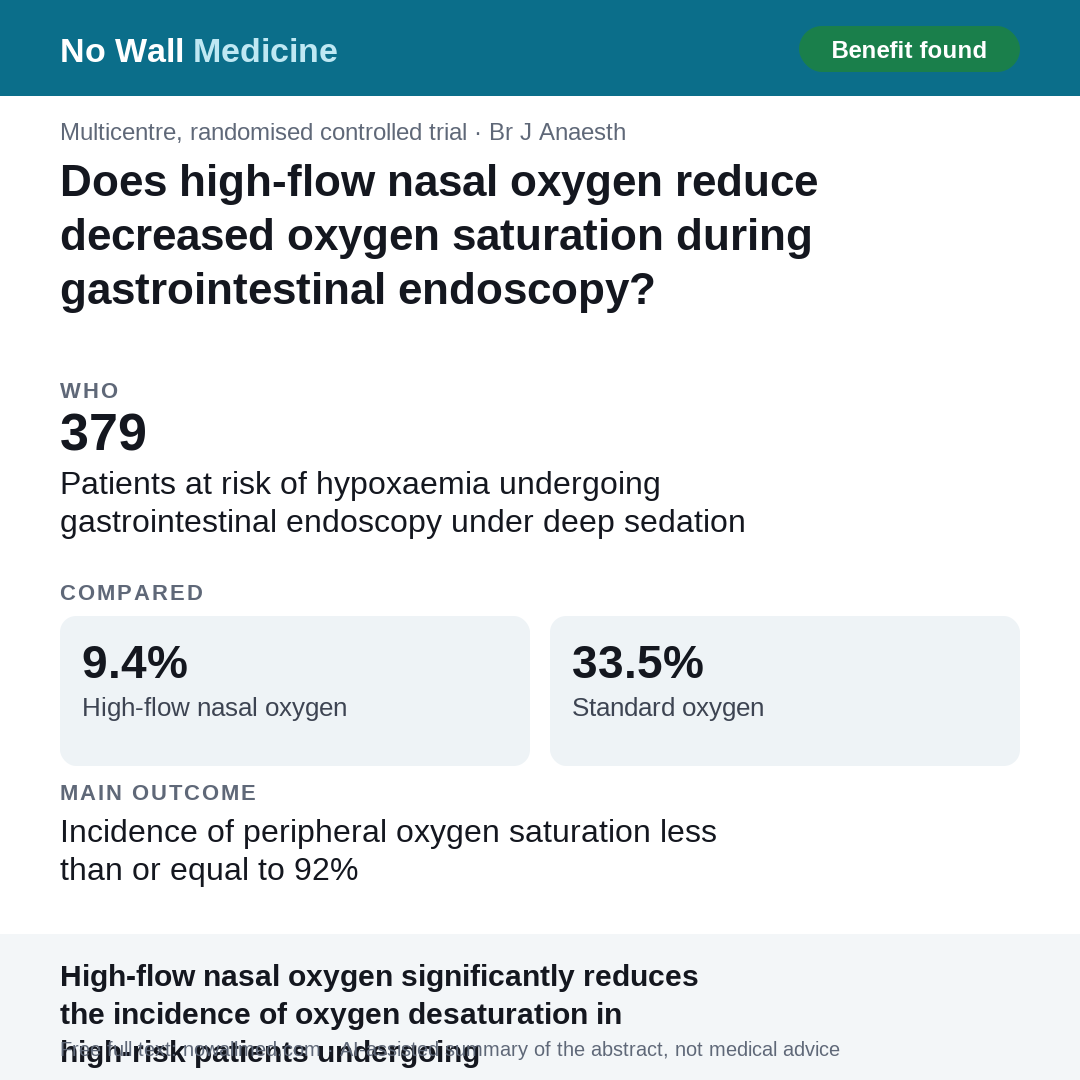
Clinical question: Does high-flow nasal oxygen reduce decreased oxygen saturation during gastrointestinal endoscopy?
Why it matters: It was unknown if high-flow nasal oxygen could reduce the incidence of decreased peripheral oxygen saturation in patients at risk of hypoxaemia during gastrointestinal endoscopy.
Key points
- Researchers conducted a multicentre randomized controlled trial involving 379 patients at risk of low blood oxygen levels undergoing gastrointestinal endoscopy under deep sedation.
- The incidence of oxygen saturation levels of 92% or lower was 9.4% in the high-flow nasal oxygen group compared to 33.5% in the standard oxygen groups.
- High-flow nasal oxygen was associated with lower rates of prolonged oxygen desaturation lasting more than 1 minute and fewer maneuvers to maintain open airways.
Headline and key points written with AI from the paper’s abstract, with every number checked against it. Read the paper before relying on them.
Was this summary helpful?
Subject terms
Cite this article
Nay MA, Fromont L, Eugene A, Marcueyz JL, Mfam WS, Baert O. High-flow nasal oxygenation or standard oxygenation for gastrointestinal endoscopy with sedation in patients at risk of hypoxaemia: a multicentre randomised controlled trial (ODEPHI trial). Br J Anaesth. 2021. doi:10.1016/j.bja.2021.03.020
Spotted a mistake? Suggest a correction
Top studies every Monday
The week’s key trials and guidelines in your specialties, plus any topics you follow. By email, free.
Get the weekly digest