High-flow nasal oxygen and VenturiMask showed no difference in reintubation rates after extubation
High-Flow Versus VenturiMask Oxygen Therapy to Prevent Reintubation in Hypoxemic Patients after Extubation: A Multicenter Randomized Clinical Trial
Randomized trialNo clear difference
Does high-flow oxygen prevent reintubation?
Who
494
Hypoxemic patients after extubation · Multicenter
Compared
32High-flow (13%)
27VenturiMask (11%)
Main outcome
Reintubation rate
Result: Unadjusted odds ratio 1.26 (95% CI 0.70-2.26)
Bottom line: High-flow oxygen did not reduce reintubation
AJRCCM · 2022-07-19Download image
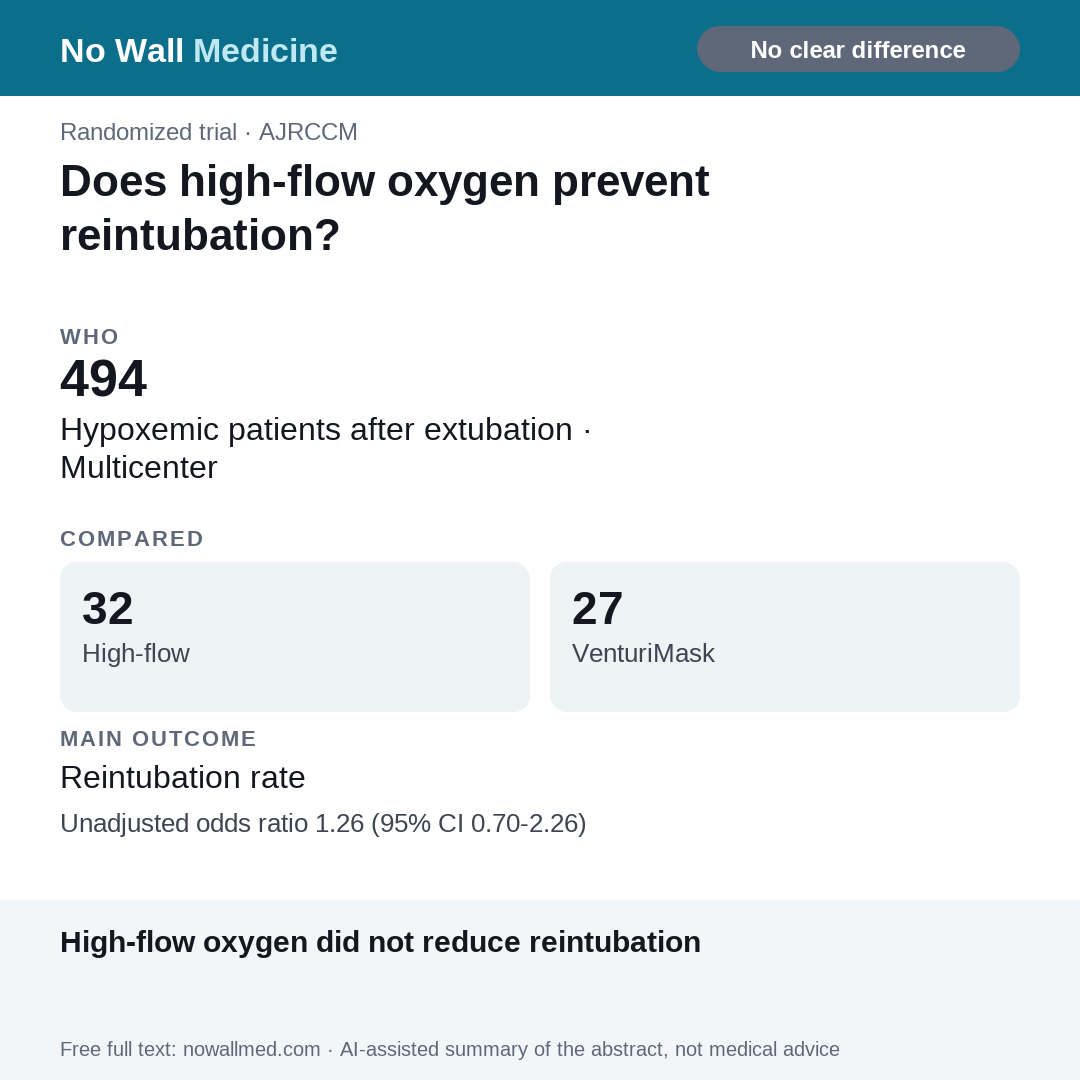
Clinical question: Does high-flow oxygen prevent reintubation?
Why it matters: It is unknown whether high-flow nasal oxygen prevents the need for reintubation compared to a VenturiMask in patients with low oxygen levels after extubation.
Key points
- Researchers conducted a multicenter randomized trial of 494 patients with low blood oxygen levels after being taken off a breathing tube.
- Reintubation rates within 72 hours were 13% for high-flow nasal oxygen and 11% for VenturiMask, which was not a statistically significant difference.
- The high-flow group had a lower need for rescue noninvasive ventilation, which is a type of breathing support, at 8% versus 17% at 72 hours.
Headline and key points written with AI from the paper’s abstract, with every number checked against it. Read the paper before relying on them.
Was this summary helpful?
Subject terms
Cite this article
Maggiore SM, Jaber S, Grieco DL, Mancebo J, Zakynthinos S, Demoule A. High-Flow Versus VenturiMask Oxygen Therapy to Prevent Reintubation in Hypoxemic Patients after Extubation: A Multicenter Randomized Clinical Trial. AJRCCM. 2022. doi:10.1164/rccm.202201-0065OC
Spotted a mistake? Suggest a correction
Top studies every Monday
The week’s key trials and guidelines in your specialties, plus any topics you follow. By email, free.
Get the weekly digest