High Oxalate Concentrations Correlate with Increased Risk for Sudden Cardiac Death in Dialysis Patients
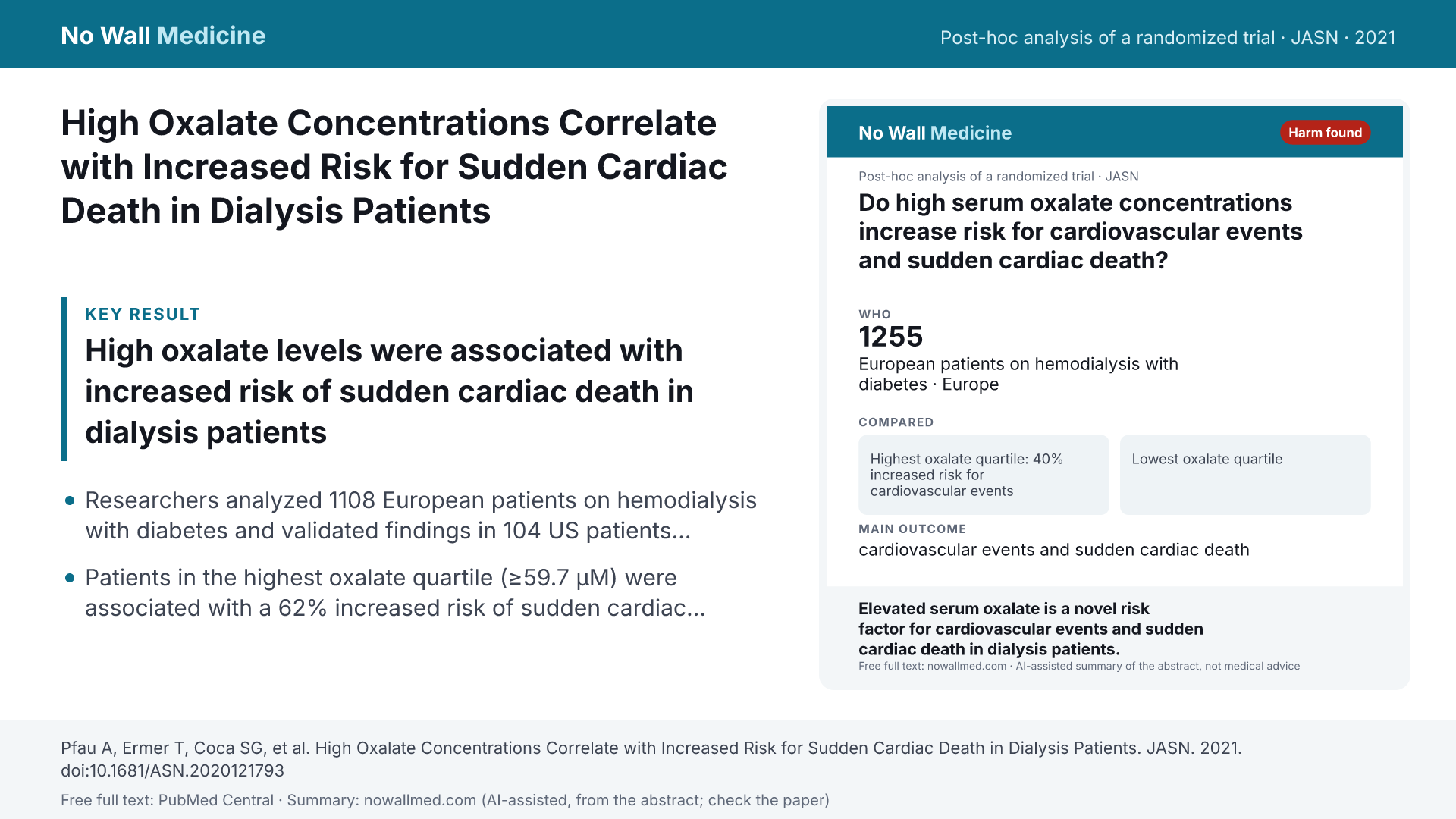
Key result: High oxalate levels were associated with increased risk of sudden cardiac death in dialysis patients
Post-hoc analysis of a randomized trialHarm found
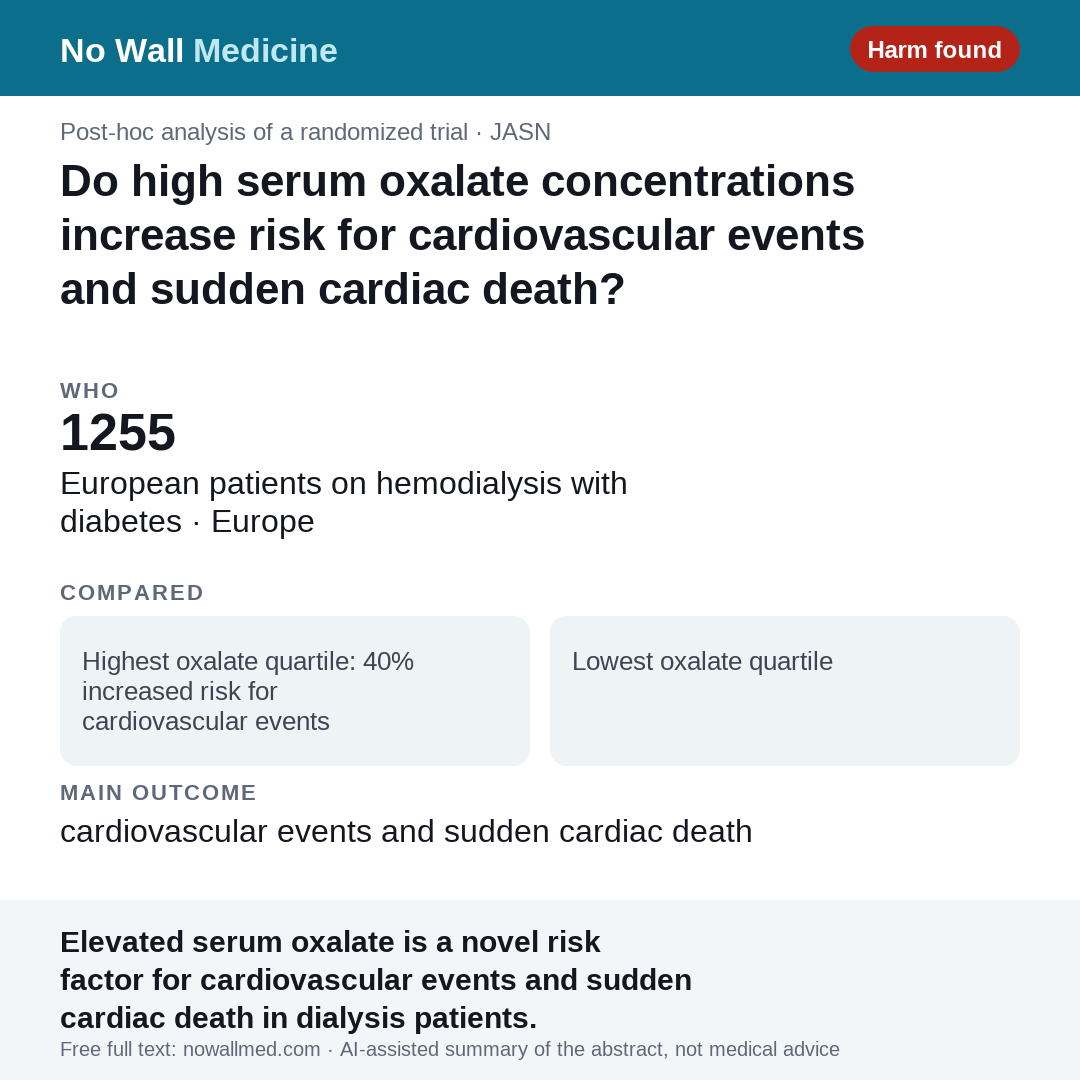
Do high serum oxalate concentrations increase risk for cardiovascular events and sudden cardiac death?
Who
1255
European patients on hemodialysis with diabetes · Europe
Compared
Highest oxalate quartile: 40% increased risk for cardiovascular events
Lowest oxalate quartile
Main outcome
cardiovascular events and sudden cardiac death
Result: adjusted hazard ratio 1.40 (95% CI 1.08 to 1.81)
Bottom line: Elevated serum oxalate is a novel risk factor for cardiovascular events and sudden cardiac death in dialysis patients.
JASN · 2021-07-19Download image
Key points
- Researchers analyzed 1108 European patients on hemodialysis with diabetes and validated findings in 104 US patients on dialysis.
- Patients in the highest oxalate quartile (≥59.7 µM) were associated with a 62% increased risk of sudden cardiac death compared to the lowest quartile (≤29.6 µM).
- High oxalate levels were also associated with a 40% increased risk for cardiovascular events, including heart attack and stroke.
Why it matters: The clinical significance of accumulating toxic metabolites like oxalate in patients with kidney failure is not well understood.
Discussion prompts
- Would these patients look like yours? Who was left out?
- Is the main outcome one that matters to patients?
- Is the difference large enough to change what you do?
Cite: Pfau A, Ermer T, Coca SG, et al. High Oxalate Concentrations Correlate with Increased Risk for Sudden Cardiac Death in Dialysis Patients. JASN. 2021. doi:10.1681/ASN.2020121793
Free full text: PubMed Central · Summary and visual abstract: nowallmed.com/a/high-oxalate-concentrations-correlate-with-increased-risk-for-sudden-180ooxw/ (AI-assisted from the abstract; check the paper before relying on it).