Various interventions were linked to better HIV outcomes for adolescents in high-burden countries
HIV interventions across the care continuum for adolescents in high-burden countries: a systematic review and meta-analysis
Systematic review and meta-analysisBenefit found
What are the effects of interventions on HIV outcomes for adolescents in high-burden countries?
Who
441,252
Adolescents aged 10 to 19 years · 37 HIV high-burden countries
Compared
Interventions
Control
Main outcome
HIV outcomes along the prevention-to-care cascade
Bottom line: Various interventions significantly improve HIV testing, antiretroviral therapy retention, suppression, and adherence among adolescents in high-burden countries.
Limitation: Strength of evidence is moderate to low due to considerable heterogeneity and limited included studies.
Funded by: UNICEF, AHISA, and US NIH
eClinicalMedicine · 2024-11-28 · Save PNG
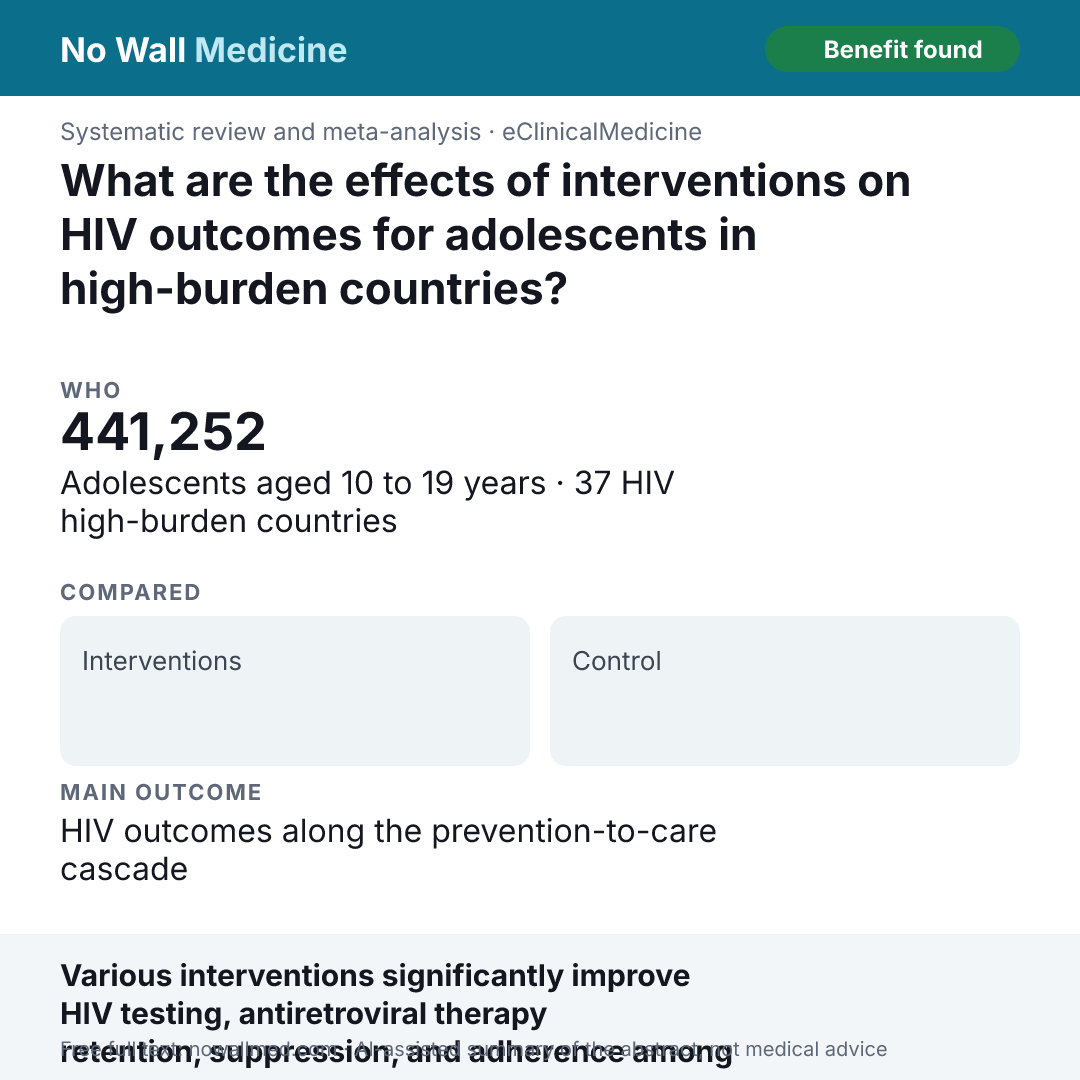
Clinical question: What are the effects of interventions on HIV outcomes for adolescents in high-burden countries?
Why it matters: Adolescents experience poor outcomes across the HIV care continuum, including prevention, testing, and treatment, in countries with high disease burdens.
Key points
- Researchers analyzed 99 studies involving 441,252 participants to evaluate interventions across the HIV prevention-to-treatment care continuum for adolescents aged 10 to 19 years.
- Digital interventions were associated with an increased HIV testing uptake (RR: 1.79, 95% CI 1.23-2.61) and financial incentives were associated with enhanced antiretroviral therapy adherence (RR: 1.52, 95% CI 1.23-1.89).
- Differentiated service delivery was associated with improved antiretroviral therapy retention (RR: 1.18, 95% CI 1.04-1.36) and virological suppression (RR: 1.19, 95% CI 1.06-1.33).
Limitation the authors note: The strength of evidence is moderate to low due to considerable heterogeneity across studies and limited included studies.
Headline and key points written with AI from the paper’s abstract, with every number checked against it. Read the paper before relying on them.
Was this summary helpful?
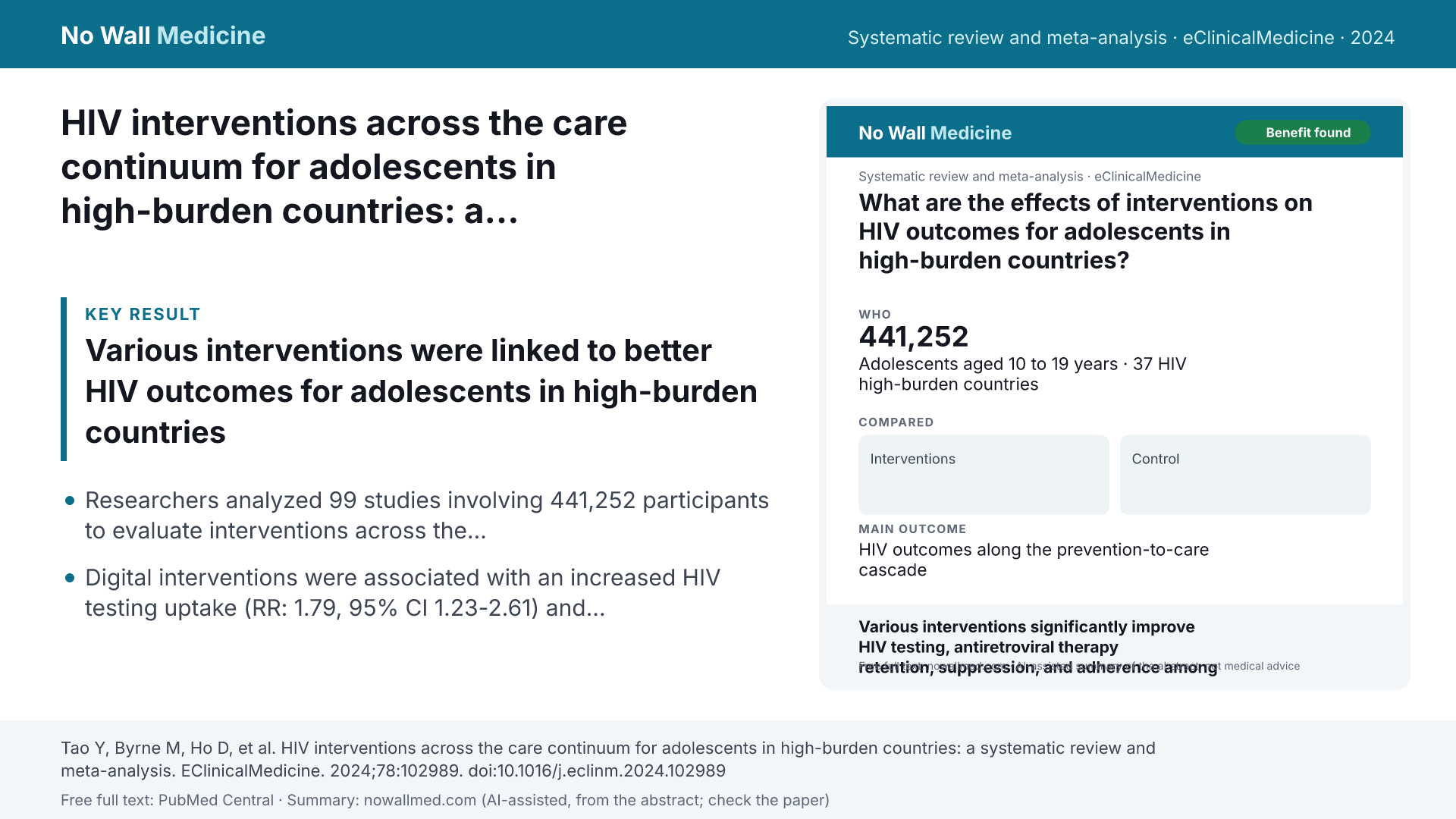
Headline, design, result, key points, caveat and citation as plain text.
Cite this article
Tao Y, Byrne M, Ho D, et al. HIV interventions across the care continuum for adolescents in high-burden countries: a systematic review and meta-analysis. EClinicalMedicine. 2024;78:102989. doi:10.1016/j.eclinm.2024.102989
Spotted a mistake? Suggest a correction