Reduced HNRNPC protein levels are linked to altered gene splicing and neurodevelopmental disorders
HNRNPC haploinsufficiency affects alternative splicing of intellectual disability-associated genes and causes a neurodevelopmental disorder
Meta-analysis and case studyHarm found
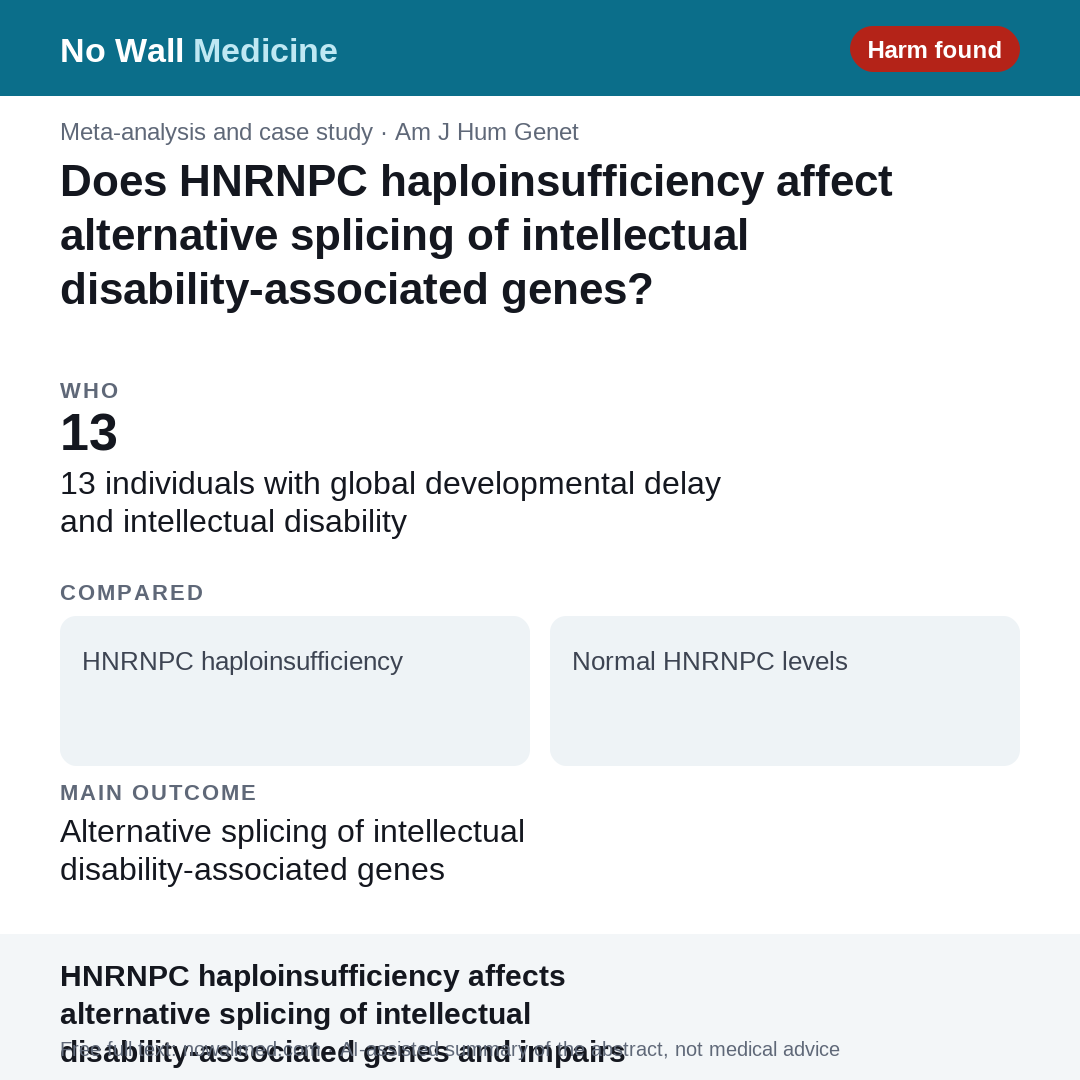
Does HNRNPC haploinsufficiency affect alternative splicing of intellectual disability-associated genes?
Who
13
13 individuals with global developmental delay and intellectual disability
Compared
HNRNPC haploinsufficiency
Normal HNRNPC levels
Main outcome
Alternative splicing of intellectual disability-associated genes
Bottom line: HNRNPC haploinsufficiency affects alternative splicing of intellectual disability-associated genes and impairs neuronal function.
Am J Hum Genet · 2023-08-05Download image
Clinical question: Does HNRNPC haploinsufficiency affect alternative splicing of intellectual disability-associated genes?
Why it matters: It was unknown if HNRNPC deficiency causes neurodevelopmental disorders through changes in how genes are processed in the brain.
Key points
- Researchers studied 13 individuals with developmental delays and intellectual disabilities who carried heterozygous HNRNPC germline variants.
- Decreased HNRNPC levels were associated with changes in alternative splicing, a process where different parts of a gene are joined together, specifically in genes linked to intellectual disability.
- Changes in HNRNPC levels were linked to effects on neuronal migration and the branching of nerve cells.
Headline and key points written with AI from the paper’s abstract, with every number checked against it. Read the paper before relying on them.
Was this summary helpful?
Subject terms
Cite this article
Niggl E, Bouman A, Briere LC, Hoogenboezem RM, Wallaard I, Park J. HNRNPC haploinsufficiency affects alternative splicing of intellectual disability-associated genes and causes a neurodevelopmental disorder. Am J Hum Genet. 2023. doi:10.1016/j.ajhg.2023.07.005
Spotted a mistake? Suggest a correction
Top studies every Monday
The week’s key trials and guidelines in your specialties, plus any topics you follow. By email, free.
Get the weekly digest