Researchers design trial to test if home-based exercise reduces stroke recurrence in specific patients
Home-Based RESIST: Rationale and Design of a Multicenter Randomized Controlled Trial
Multicenter, randomized, controlled, open-label trialUnclear result
Does home-based structured physical exercise plus usual care reduce stroke recurrence in sICAS patients?
Who
1300
Patients with symptomatic intracranial artery stenosis · Multiple study centers in China
Compared
Home-based structured physical exercise plus usual care
Usual care
Main outcome
New ischemic stroke within 1 year
Bottom line: The RESIST trial will evaluate if home-based exercise prevents stroke recurrence in patients with symptomatic intracranial artery stenosis.
J Am Heart Assoc · 2026-04-29Download image
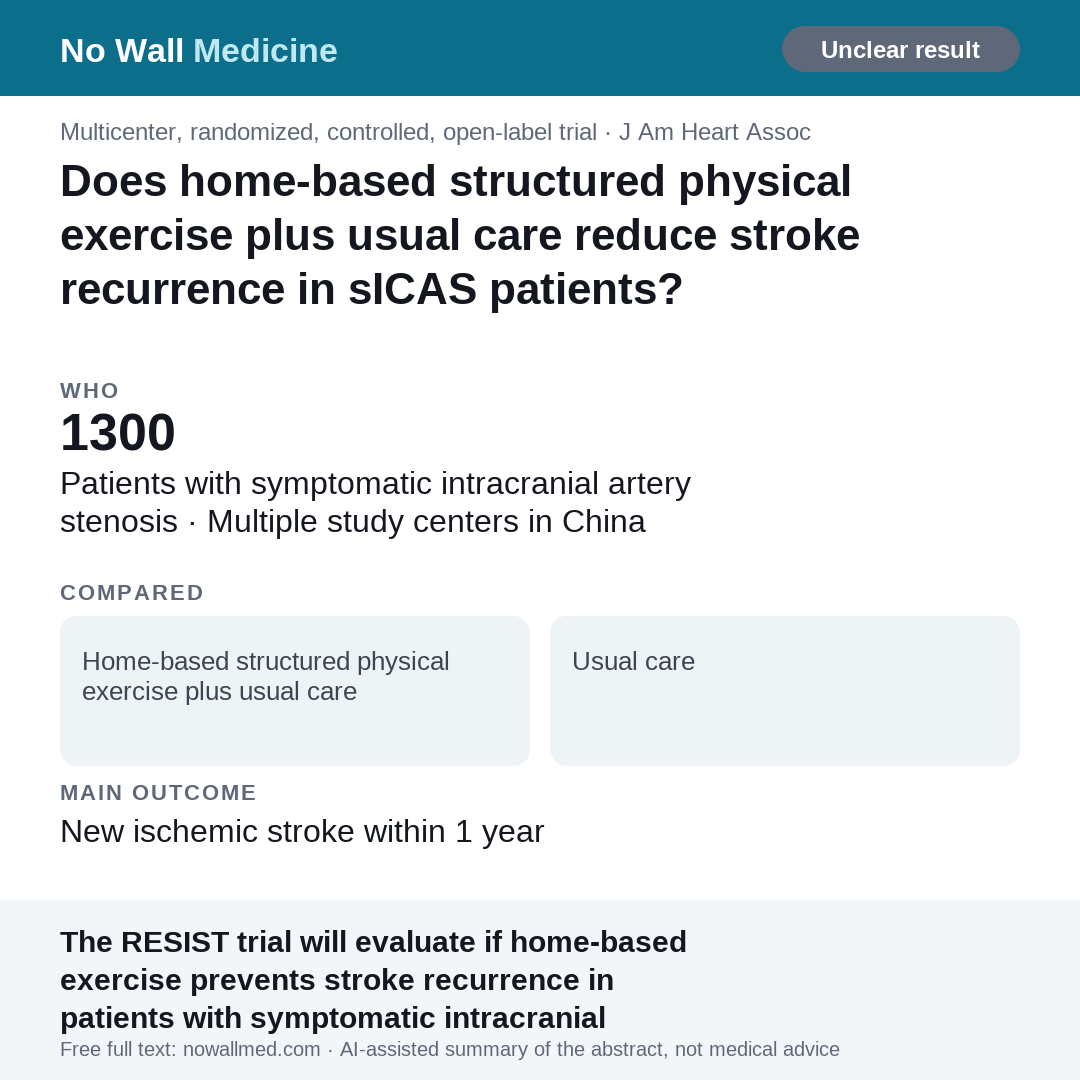
Clinical question: Does home-based structured physical exercise plus usual care reduce stroke recurrence in sICAS patients?
Why it matters: Patients with symptomatic intracranial artery stenosis have a high risk of recurrent stroke, but evidence is lacking on whether home-based exercise is effective and safe.
Key points
- The RESIST trial will recruit 1300 patients with symptomatic intracranial artery stenosis, which is narrowing of the arteries inside the brain, to compare home-based exercise with usual care.
- The study aims to measure the rate of new ischemic strokes, which are strokes caused by blood clots, within 1 year of the intervention.
- Secondary outcomes include measuring heart attacks, hemorrhagic strokes, cognitive function, and the rate of falls.
Headline and key points written with AI from the paper’s abstract, with every number checked against it. Read the paper before relying on them.
Topics
Spotted a mistake? Suggest a correction