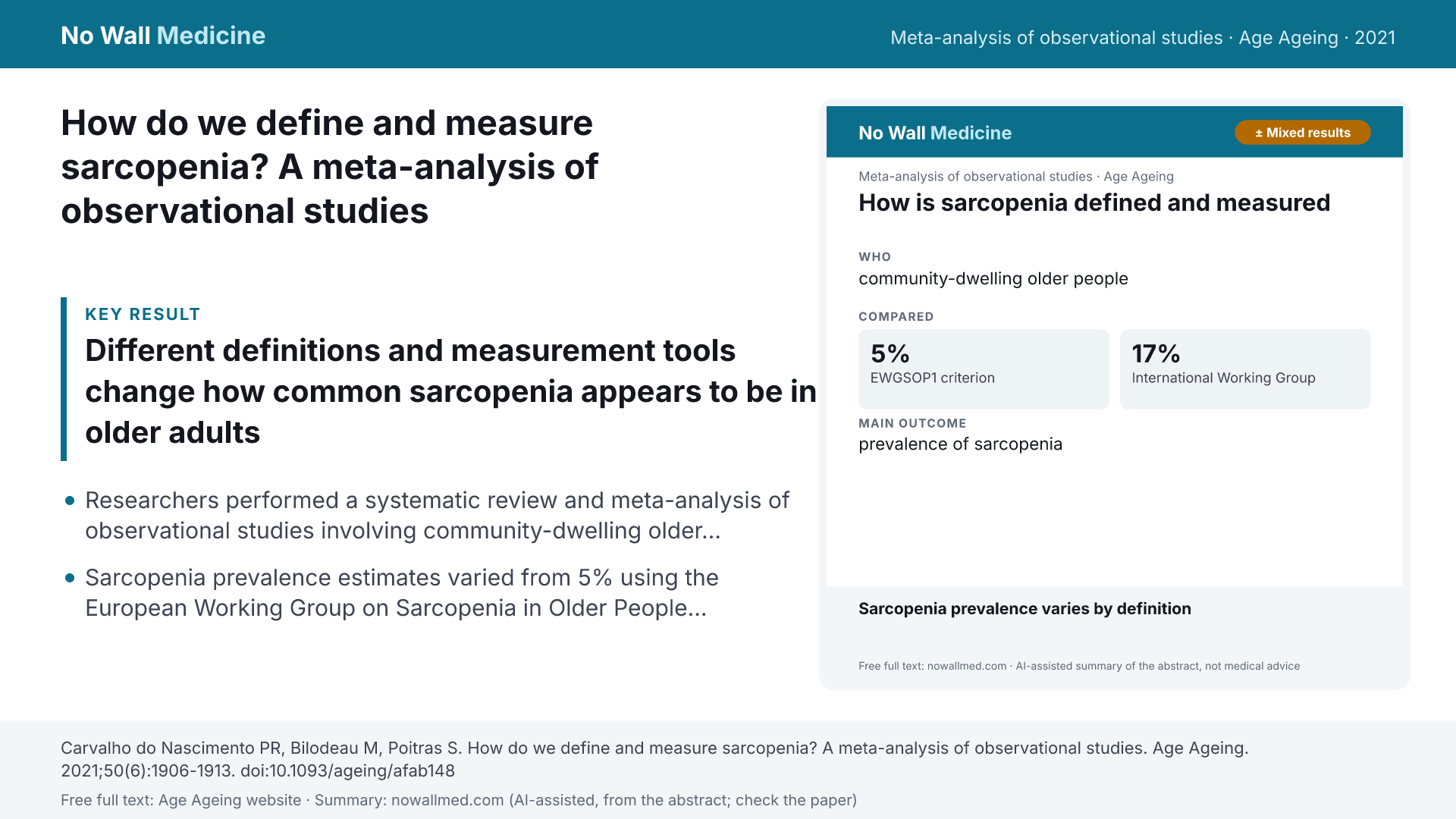
Different definitions and measurement tools change how common sarcopenia appears to be in older adults
How do we define and measure sarcopenia? A meta-analysis of observational studies
Meta-analysis of observational studiesMixed results
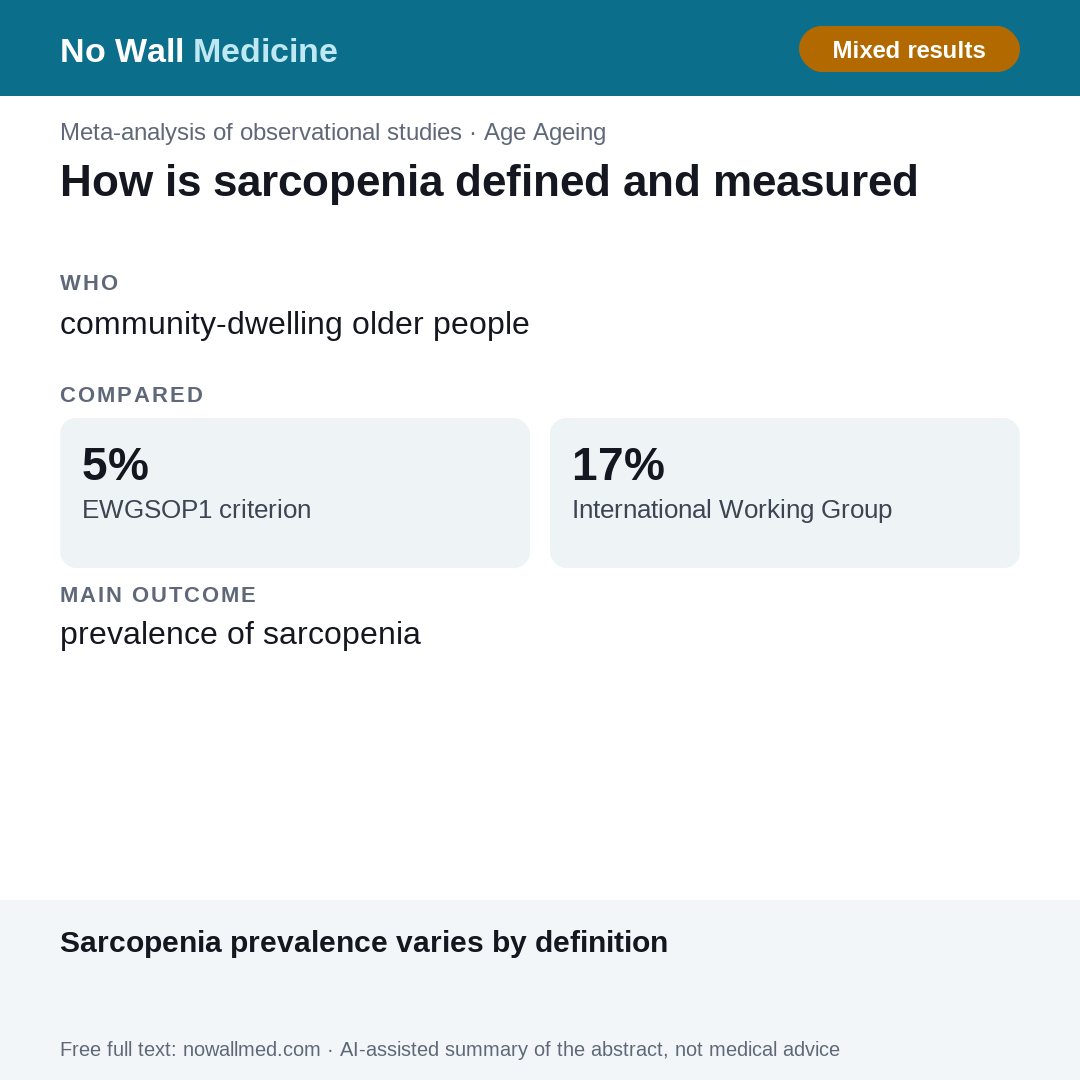
How is sarcopenia defined and measured
Who
community-dwelling older people
Compared
5%EWGSOP1 criterion
17%International Working Group
Main outcome
prevalence of sarcopenia
Bottom line: Sarcopenia prevalence varies by definition
Age Ageing · 2021-09-20Download image
Why it matters: It is unknown how different operational definitions and measurement tools for muscle mass, strength, and physical performance affect the estimated prevalence of sarcopenia.
Key points
- Researchers performed a systematic review and meta-analysis of observational studies involving community-dwelling older people to examine sarcopenia prevalence.
- Sarcopenia prevalence estimates varied from 5% using the European Working Group on Sarcopenia in Older People criterion to 17% with the International Working Group on Sarcopenia.
- Prevalence values also varied by measurement tool, ranging from 1% to 7% for muscle mass, 1% to 12% for muscle strength, and 0% to 22% for physical performance.
Headline and key points written with AI from the paper’s abstract, with every number checked against it. Read the paper before relying on them.
Was this summary helpful?
Subject terms
Cite this article
Carvalho do Nascimento PR, Bilodeau M, Poitras S. How do we define and measure sarcopenia? A meta-analysis of observational studies. Age Ageing. 2021. doi:10.1093/ageing/afab148
Spotted a mistake? Suggest a correction