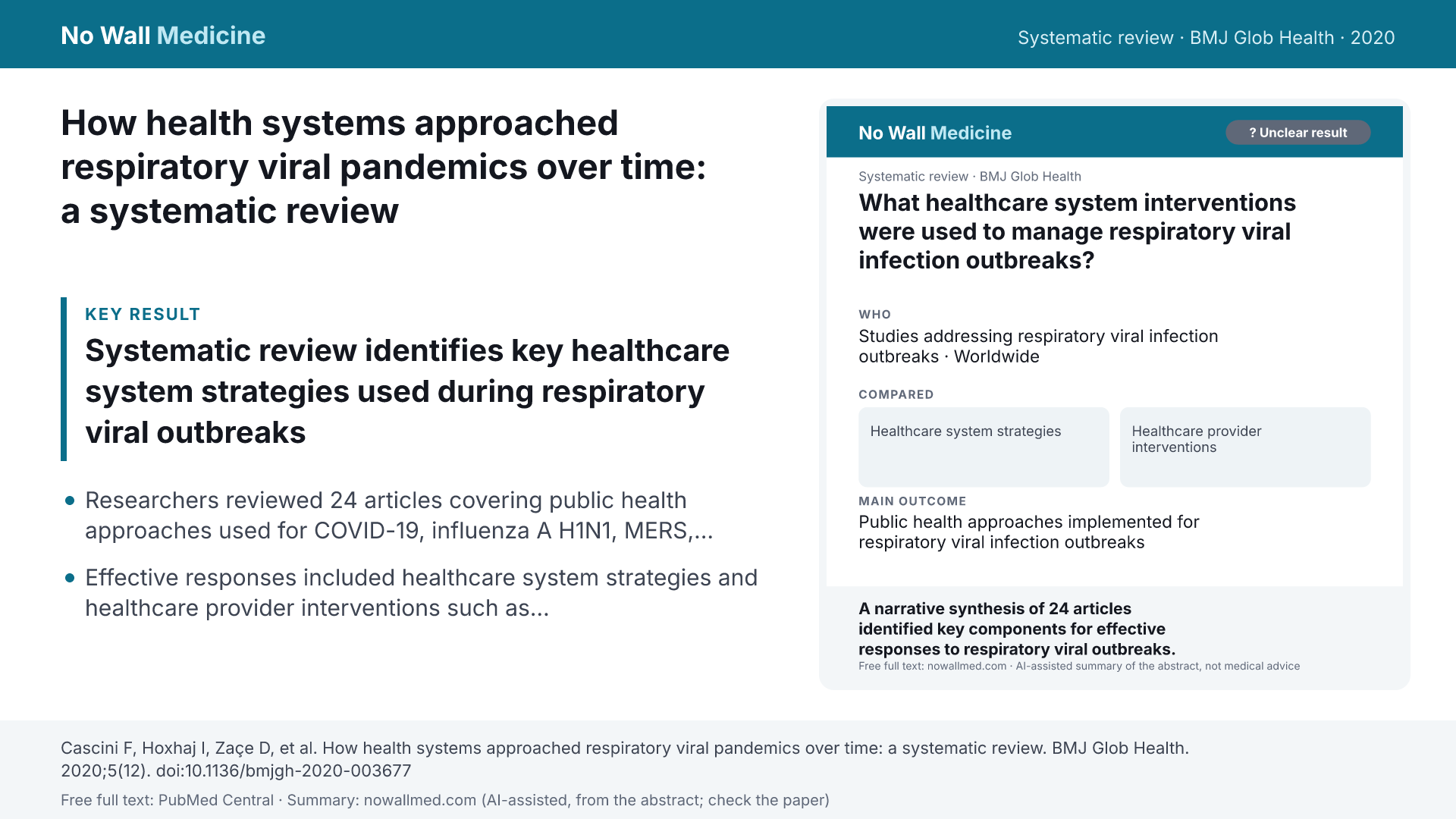
Systematic review identifies key healthcare system strategies used during respiratory viral outbreaks
How health systems approached respiratory viral pandemics over time: a systematic review
Systematic reviewUnclear result
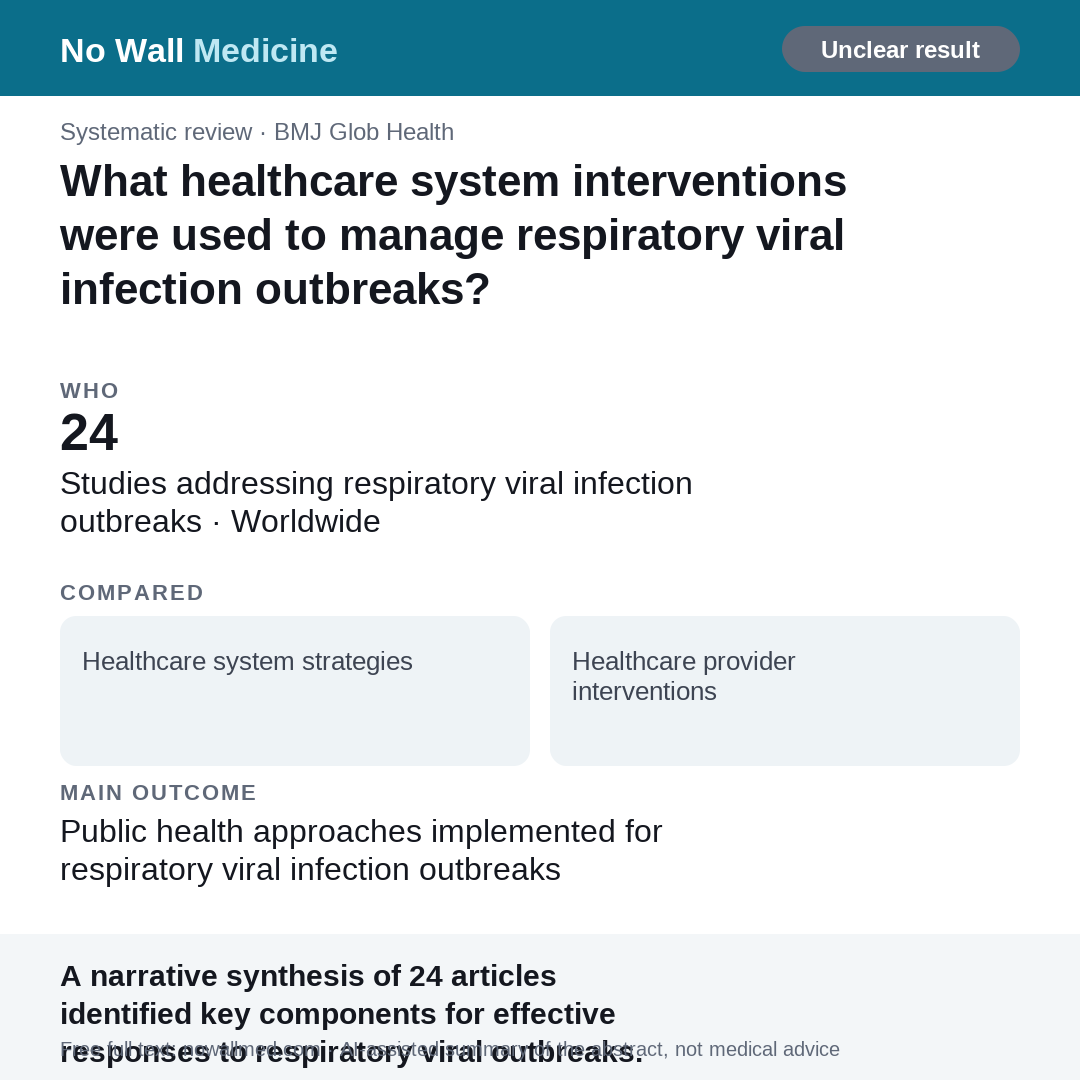
What healthcare system interventions were used to manage respiratory viral infection outbreaks?
Who
24
Studies addressing respiratory viral infection outbreaks · Worldwide
Compared
Healthcare system strategies
Healthcare provider interventions
Main outcome
Public health approaches implemented for respiratory viral infection outbreaks
Bottom line: A narrative synthesis of 24 articles identified key components for effective responses to respiratory viral outbreaks.
BMJ Glob Health · 2020-12-31Download image
Clinical question: What healthcare system interventions were used to manage respiratory viral infection outbreaks?
Why it matters: It was unknown which specific healthcare system interventions and experiences could inform evidence-based strategies during the transition phases of respiratory viral outbreaks.
Key points
- Researchers reviewed 24 articles covering public health approaches used for COVID-19, influenza A H1N1, MERS, and severe acute respiratory syndrome.
- Effective responses included healthcare system strategies and healthcare provider interventions such as enhanced surveillance, mental health interventions, and non-pharmaceutical interventions.
- The identified components include intrahospital management, community healthcare facilities, workplace preventive measures, and communication plans.
Headline and key points written with AI from the paper’s abstract, with every number checked against it. Read the paper before relying on them.
Was this summary helpful?
Abstract
Background
Several healthcare systems facing respiratory viral infections outbreaks, like COVID-19, have not been prepared to manage them. Public health mitigation solutions ranging from isolation of infected or suspected cases to implementation of national lockdowns have proven their effectiveness for the outbreak's control. However, the adjustment of public health measures is crucial during transition phases to avoid new outbreaks. To address the need for designing evidence-based strategies, we performed a systematic review to identify healthcare systems interventions, experiences and recommendations that have been used to manage different respiratory viral infections outbreaks in the past. Methods
PubMed, Web of Science, Scopus and Cochrane were searched to retrieve eligible studies of any study design, published in English until 17 April 2020. Double-blinded screening process was conducted by titles/abstracts and subsequently eligible full texts were read and pertinent data were extracted. When applicable, quality assessment was conducted for the included articles. We performed a narrative synthesis of each implemented public health approaches. Results
We included a total of 24 articles addressing the public health approaches implemented for respiratory viral infections outbreaks for COVID-19, influenza A H1N1, MERS and severe acute respiratory syndrome . The identified approaches are ascribable to two main categories: healthcare system strategies and healthcare provider interventions. The key components of an effective response on respiratory viral outbreaks included the implementation of evidence-based contextual policies, intrahospital management actions, community healthcare facilities, non-pharmaceutical interventions, enhanced surveillance, workplace preventive measures, mental health interventions and communication plans. Conclusion
The identified healthcare system strategies applied worldwide to face epidemics or pandemics are a useful knowledge base to inform decision-makers about control measures to be used in the transition phases of COVID-19 and beyond.
Abstract reproduced under the article’s CC BY NC licence.
Subject terms
Cite this article
Cascini F, Hoxhaj I, Zaçe D, et al. How health systems approached respiratory viral pandemics over time: a systematic review. BMJ Glob Health. 2020. doi:10.1136/bmjgh-2020-003677
Spotted a mistake? Suggest a correction