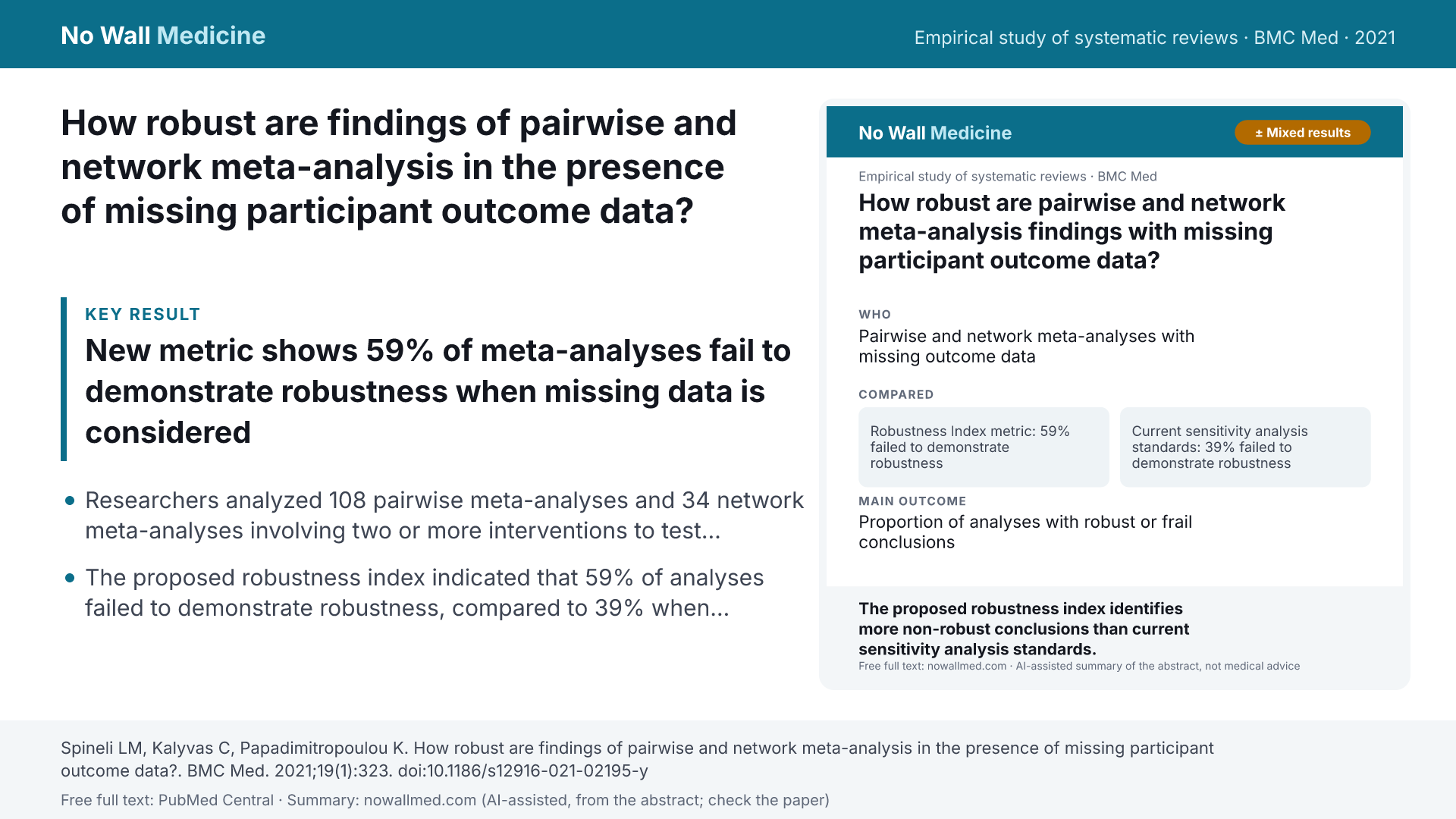
New metric shows 59% of meta-analyses fail to demonstrate robustness when missing data is considered
How robust are findings of pairwise and network meta-analysis in the presence of missing participant outcome data?
Empirical study of systematic reviewsMixed results
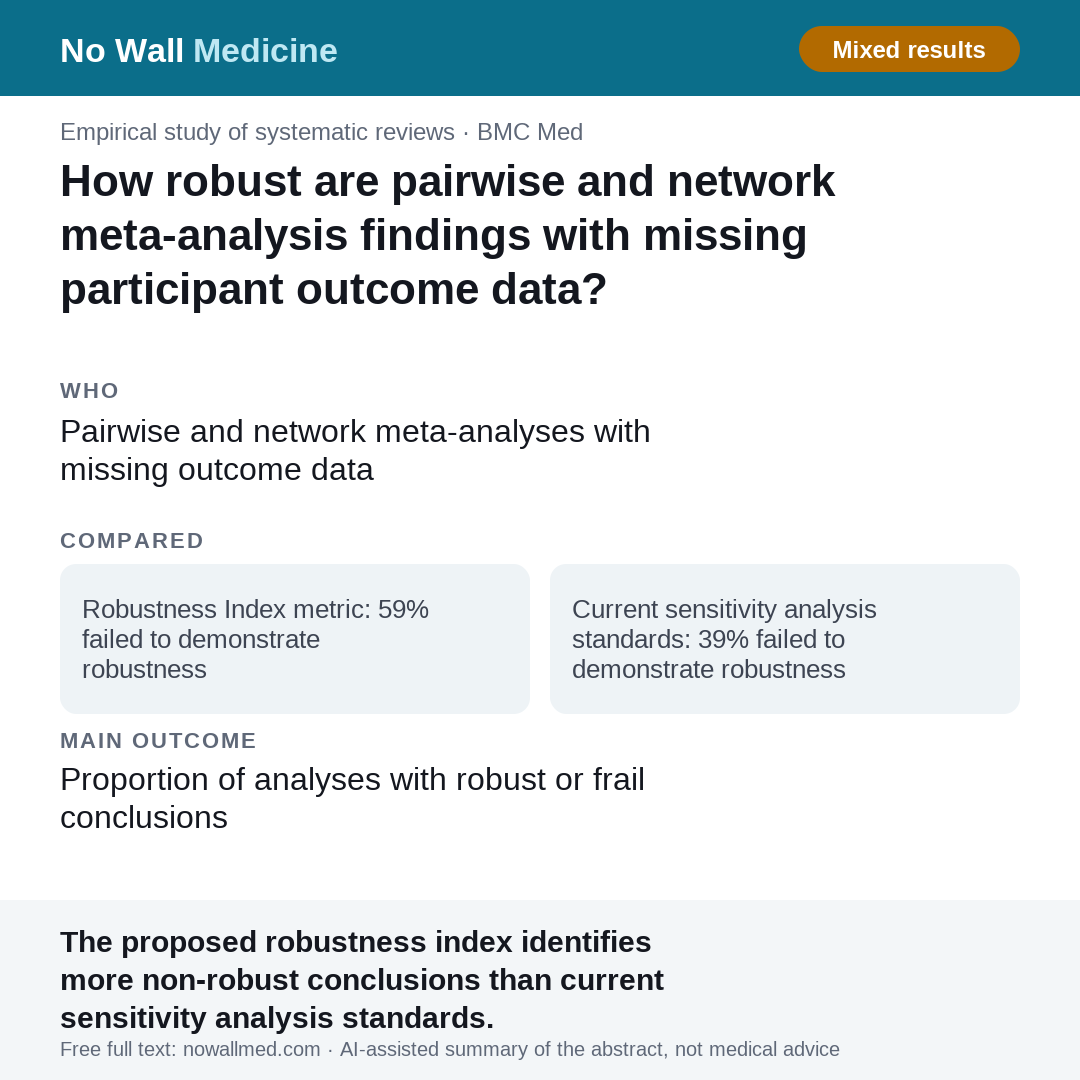
How robust are pairwise and network meta-analysis findings with missing participant outcome data?
Who
Pairwise and network meta-analyses with missing outcome data
Compared
Robustness Index metric: 59% failed to demonstrate robustness
Current sensitivity analysis standards: 39% failed to demonstrate robustness
Main outcome
Proportion of analyses with robust or frail conclusions
Bottom line: The proposed robustness index identifies more non-robust conclusions than current sensitivity analysis standards.
BMC Med · 2021-12-21Download image
Clinical question: How robust are pairwise and network meta-analysis findings with missing participant outcome data?
Key points
- Researchers analyzed 108 pairwise meta-analyses and 34 network meta-analyses involving two or more interventions to test how missing participant data affects conclusions.
- The proposed robustness index indicated that 59% of analyses failed to demonstrate robustness, compared to 39% when using current sensitivity analysis standards.
- Two in five analyses yielded contradictory conclusions when comparing the new robustness index to current sensitivity analysis standards.
Headline and key points written with AI from the paper’s abstract, with every number checked against it. Read the paper before relying on them.
Was this summary helpful?
Subject terms
Headline, design, result, key points, caveat and citation as plain text.
Cite this article
Spineli LM, Kalyvas C, Papadimitropoulou K. How robust are findings of pairwise and network meta-analysis in the presence of missing participant outcome data?. BMC Med. 2021. doi:10.1186/s12916-021-02195-y
Spotted a mistake? Suggest a correction