Blocking specific molecular targets did not significantly reduce cold pain in a human trial
Human cold pain: a randomized crossover trial
Randomized double-blinded crossover trialNo clear difference
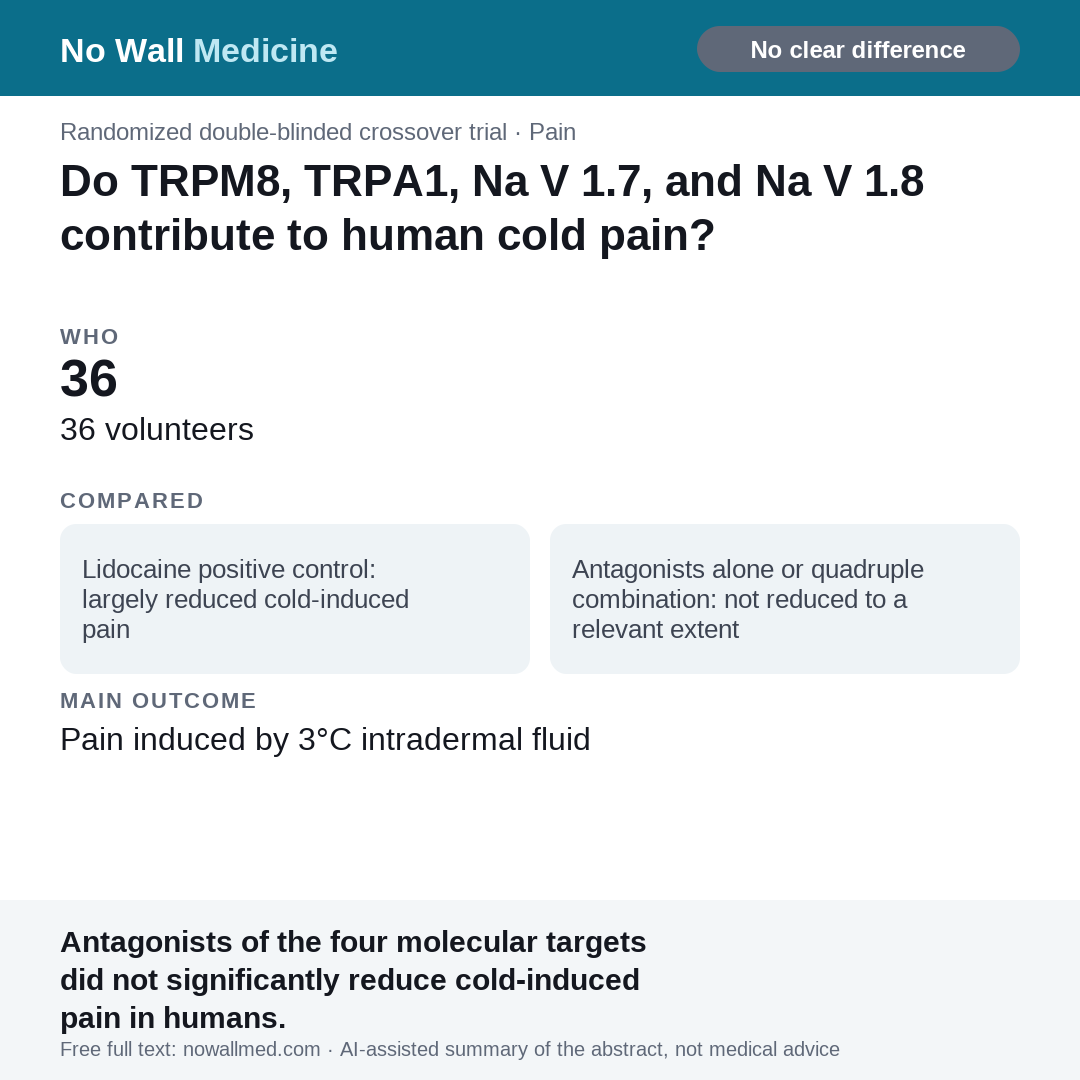
Do TRPM8, TRPA1, Na V 1.7, and Na V 1.8 contribute to human cold pain?
Who
36
36 volunteers
Compared
Lidocaine positive control: largely reduced cold-induced pain
Antagonists alone or quadruple combination: not reduced to a relevant extent
Main outcome
Pain induced by 3°C intradermal fluid
Bottom line: Antagonists of the four molecular targets did not significantly reduce cold-induced pain in humans.
Limitation: Further mechanisms contributing to human cold pain need to be considered.
Pain · 2024-12-17Download image
Clinical question: Do TRPM8, TRPA1, Na V 1.7, and Na V 1.8 contribute to human cold pain?
Why it matters: The specific molecular mechanisms that cause cold pain in humans remain unresolved.
Key points
- Researchers conducted a double-blinded crossover trial in 36 volunteers using an intradermal injection-based model to test four molecular targets.
- Pain induced by 3°C intradermal fluid was not reduced to a relevant extent by any of the 4 antagonists alone or by the quadruple combination.
- Inhibition of TRPA1, TRPM8, and Na V 1.7, and to a lesser extent Na V 1.8, was associated with a 5.8°C decrease in the temperature threshold for cold pain.
Headline and key points written with AI from the paper’s abstract, with every number checked against it. Read the paper before relying on them.
Topics
Cite this article
Resch FJ, Heber S, Shahi F, Zauner M, Ciotu CI, Gleiss A. Human cold pain: a randomized crossover trial. Pain. 2024. doi:10.1097/j.pain.0000000000003503
Spotted a mistake? Suggest a correction
Top studies every Monday
The week’s key trials and guidelines in your specialties, by email. Free.
Get the weekly digest