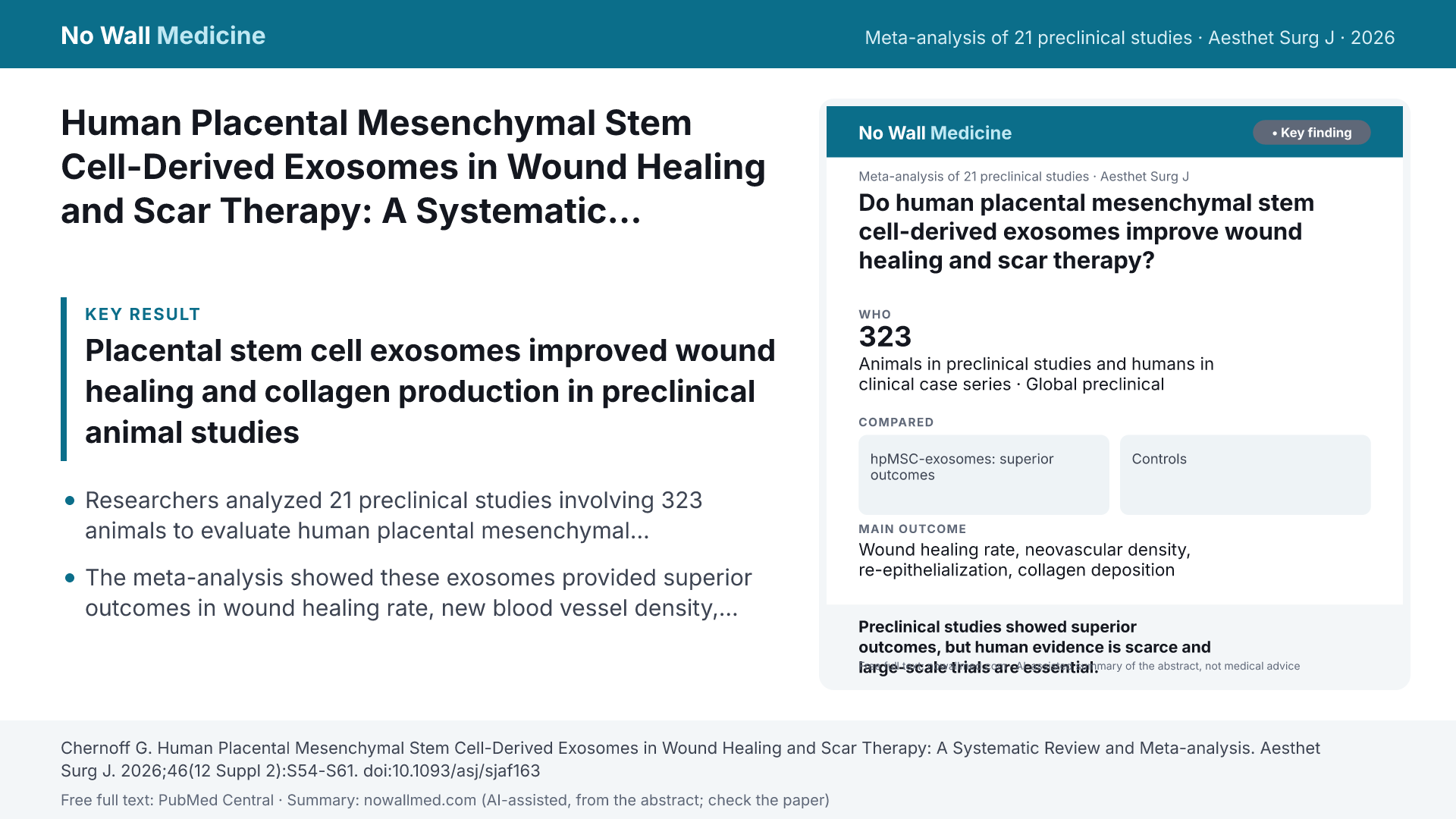
Placental stem cell exosomes improved wound healing and collagen production in preclinical animal studies
Human Placental Mesenchymal Stem Cell-Derived Exosomes in Wound Healing and Scar Therapy: A Systematic Review and Meta-analysis
Meta-analysis of 21 preclinical studiesKey finding
Do human placental mesenchymal stem cell-derived exosomes improve wound healing and scar therapy?
Who
323
Animals in preclinical studies and humans in clinical case series · Global preclinical studies and human clinical series
Compared
hpMSC-exosomes: superior outcomes
Controls
Main outcome
Wound healing rate, neovascular density, re-epithelialization, collagen deposition
Bottom line: Preclinical studies showed superior outcomes, but human evidence is scarce and large-scale trials are essential.
Limitation: Most studies utilized rodent models, with limited translation to human trials.
Aesthet Surg J · 2026-03-09Download image
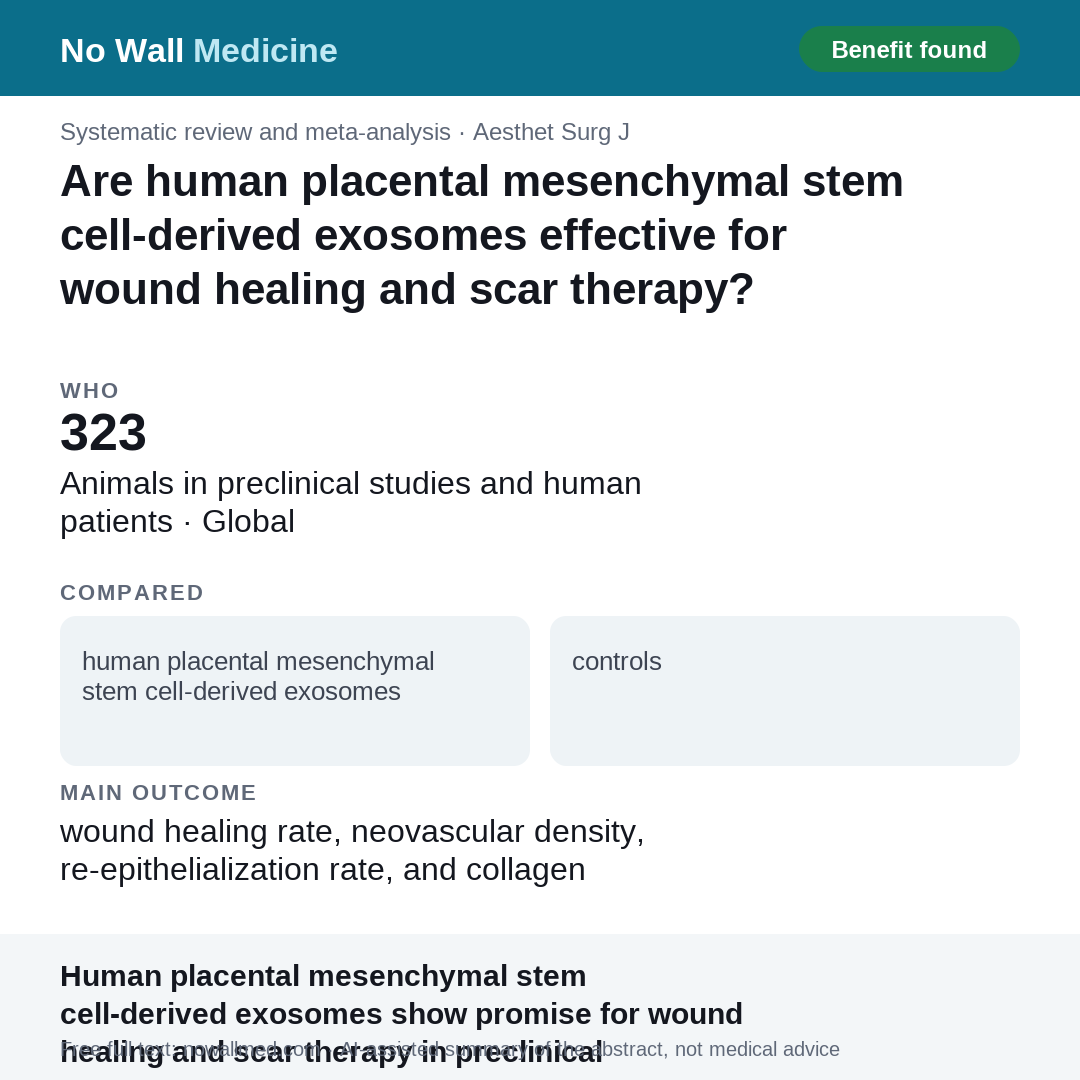
Clinical question: Do human placental mesenchymal stem cell-derived exosomes improve wound healing and scar therapy?
Why it matters: While preclinical research suggests potential for regenerative medicine, human clinical studies on using placental stem cell exosomes for wound and scar treatment remain scarce.
Key points
- Researchers analyzed 21 preclinical studies involving 323 animals to evaluate human placental mesenchymal stem cell-derived exosomes, which are tiny fluid-filled sacs released by stem cells.
- The meta-analysis showed these exosomes provided superior outcomes in wound healing rate, new blood vessel density, skin regrowth rate, and collagen deposition compared to controls.
- The review also included data from 738 patients treated over 7 years, including 175 cases for wound healing and 118 cases for scar therapy.
Limitation the authors note: Current human evidence is predominantly based on early-phase trials, case series, and observational studies rather than large-scale, well-designed clinical trials.
Headline and key points written with AI from the paper’s abstract, with every number checked against it. Read the paper before relying on them.
Was this summary helpful?
Subject terms
Cite this article
Chernoff G. Human Placental Mesenchymal Stem Cell-Derived Exosomes in Wound Healing and Scar Therapy: A Systematic Review and Meta-analysis. Aesthet Surg J. 2026. doi:10.1093/asj/sjaf163
Spotted a mistake? Suggest a correction