Human rabies despite post-exposure prophylaxis: a systematic review of fatal breakthrough infections after zoonotic exposures
Systematic reviewMixed results
What are the characteristics of fatal rabies breakthrough infections after post-exposure prophylaxis?
Who
122
People with fatal rabies breakthrough infections after zoonotic exposures · Across all continents
Compared
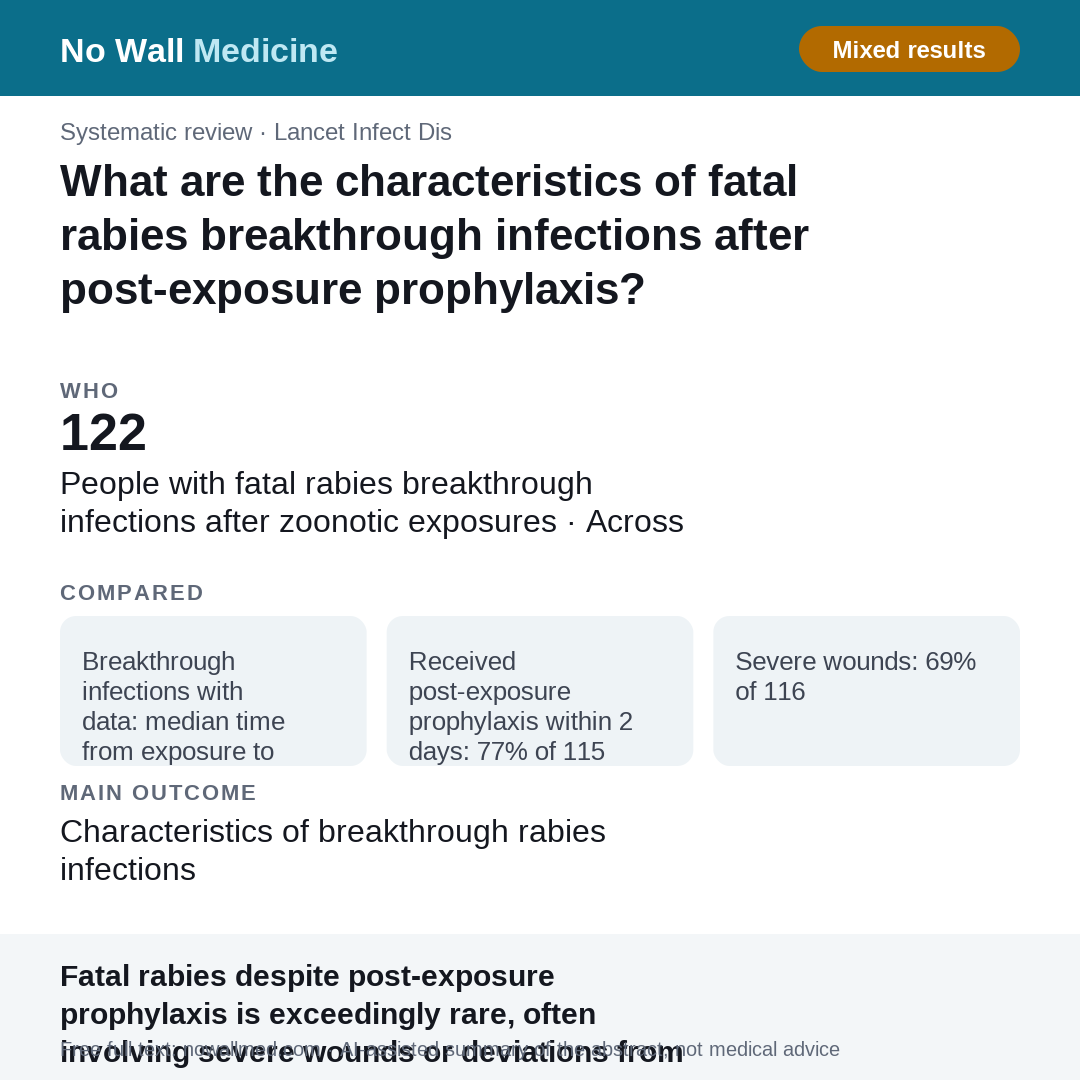
Breakthrough infections with data: median time from exposure to symptom onset was 20 days (IQR 16-24)
Received post-exposure prophylaxis within 2 days: 77% of 115
Severe wounds: 69% of 116
Main outcome
Characteristics of breakthrough rabies infections
Bottom line: Fatal rabies despite post-exposure prophylaxis is exceedingly rare, often involving severe wounds or deviations from core practices.
Lancet Infect Dis · 2022-12-16Download image
Clinical question: What are the characteristics of fatal rabies breakthrough infections after post-exposure prophylaxis?
Abstract
Post-exposure prophylaxis (PEP) for rabies is widely administered and highly effective. Nevertheless, sporadic breakthrough infections (ie, rabies in people who have started PEP) have been reported. We conducted a systematic review of articles published between Jan 1, 1980 and June 1, 2022 to characterise breakthrough infections. After reviewing 3380 articles from across all continents, we identified 52 articles, which included a total of 122 breakthrough infections. We classified breakthrough infections on the basis of adherence to core practices (ie, wound cleaning and vaccine administration). Of 86 breakthrough infections with data, median time from exposure to symptom onset was 20 days (IQR 16-24). Most (89 [77%] of 115) participants received PEP within 2 days of an exposure. Severe wounds (defined as those involving multiple wound sites or bites to the head, face, or neck) were common (80 [69%] of 116 [with data]). Deviations from core practices were reported in 68 (56%) of 122 cases. Other possible causes for breakthrough infections included errors in the administration of rabies immunoglobulin, delays in seeking health care, and comorbidities or immunosuppression. Cold-chain integrity assessments and potency testing of PEP biologics were only rarely assessed (8 [7%] of 122 cases), neither of which were found to be a cause of breakthrough infections. Timely and appropriate administration of PEP is crucial to prevent rabies, and although people with high-risk exposures or immunosuppression can develop rabies despite adherence to core practices, this occurrence remains exceedingly rare.
Subject terms
Cite this article
Whitehouse ER, Mandra A, Bonwitt J, Beasley EA, Taliano J, Rao AK. Human rabies despite post-exposure prophylaxis: a systematic review of fatal breakthrough infections after zoonotic exposures. Lancet Infect Dis. 2022. doi:10.1016/S1473-3099(22)00641-7
Spotted a mistake? Suggest a correction
Top studies every Monday
The week’s key trials and guidelines in your specialties, plus any topics you follow. By email, free.
Get the weekly digest