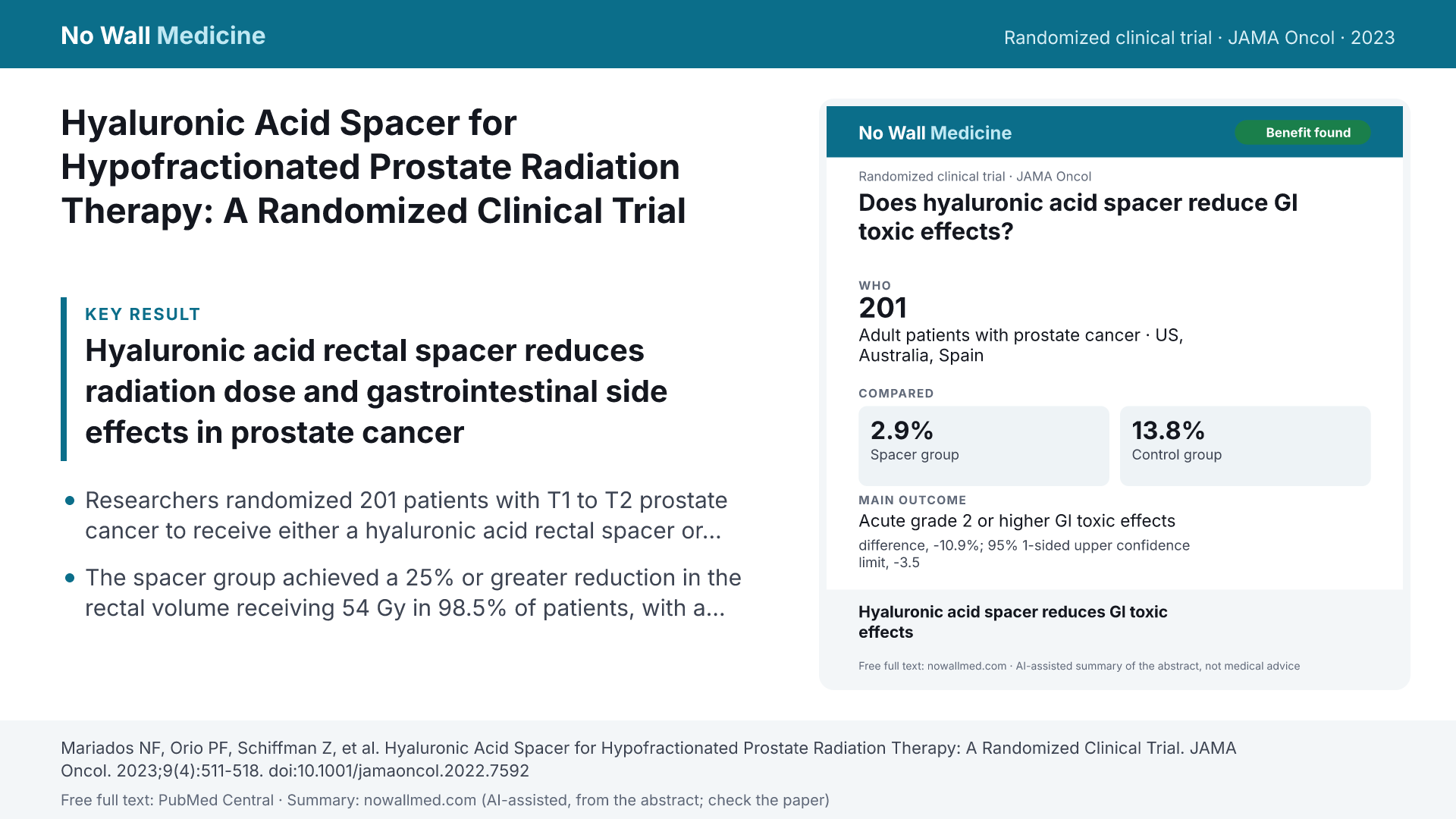
Hyaluronic acid rectal spacer reduces radiation dose and gastrointestinal side effects in prostate cancer
Hyaluronic Acid Spacer for Hypofractionated Prostate Radiation Therapy: A Randomized Clinical Trial
Randomized clinical trialBenefit found
Does hyaluronic acid spacer reduce GI toxic effects?
Who
201
Adult patients with prostate cancer · US, Australia, Spain
Compared
2.9%Spacer group (4/136)
13.8%Control group (9/65)
Main outcome
Acute grade 2 or higher GI toxic effects
Result: difference, -10.9%; 95% 1-sided upper confidence limit, -3.5
Bottom line: Hyaluronic acid spacer reduces GI toxic effects
JAMA Oncol · 2023-02-10Download image
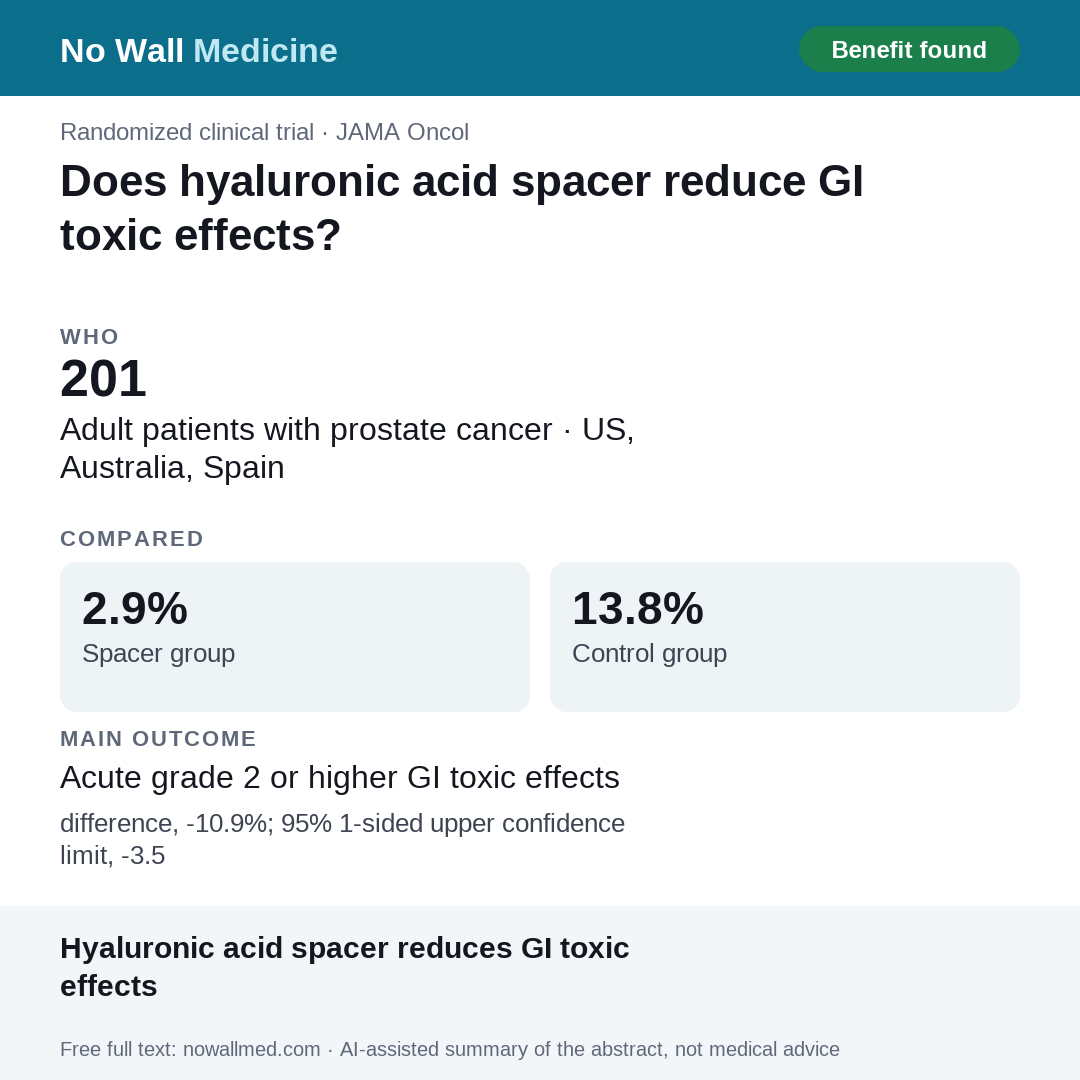
Clinical question: Does hyaluronic acid spacer reduce GI toxic effects?
Why it matters: Hypofractionated radiation therapy for prostate cancer is associated with higher rates of acute grade 2 gastrointestinal side effects compared to conventional radiation schedules.
In absolute numbers
Spacer group: 2.9% · Control group: 13.8% → a difference of 10.9 percentage points, so about 10 people would need the treatment for 1 more to benefit (number needed to treat) over the trial’s follow-up.
Worked out by us from the two group results above, not reported by the authors. Check the paper for the exact outcome and timing.
Key points
- Researchers randomized 201 patients with T1 to T2 prostate cancer to receive either a hyaluronic acid rectal spacer or no spacer during radiation therapy.
- The spacer group achieved a 25% or greater reduction in the rectal volume receiving 54 Gy in 98.5% of patients, with a mean reduction of 85.0%.
- Acute grade 2 or higher gastrointestinal toxic effects occurred in 2.9% of the spacer group compared to 13.8% in the control group.
Headline and key points written with AI from the paper’s abstract, with every number checked against it. Read the paper before relying on them.
Was this summary helpful?
Subject terms
Cite this article
Mariados NF, Orio PF, Schiffman Z, Van TJ, Engelman A, Nurani R. Hyaluronic Acid Spacer for Hypofractionated Prostate Radiation Therapy: A Randomized Clinical Trial. JAMA Oncol. 2023. doi:10.1001/jamaoncol.2022.7592
Spotted a mistake? Suggest a correction
Top studies every Monday
The week’s key trials and guidelines in your specialties, plus any topics you follow. By email, free.
Get the weekly digest