Hydrocortisone use was associated with a lower risk of needing kidney replacement therapy in septic shock
Hydrocortisone and Risk Factors for Kidney Replacement Therapy in Septic Shock
Post hoc analysis of a randomized clinical trialBenefit found
Does hydrocortisone use reduce the risk of kidney replacement therapy in septic shock?
Who
3161
Patients with septic shock not requiring kidney replacement therapy · 69 intensive care units in five countries
Compared
21%Hydrocortisone (329/1589)
24%Placebo (372/1572)
Main outcome
Requirement for kidney replacement therapy
Result: odds ratio 0.84 (95% CI 0.70 to 0.99)
Bottom line: Intravenous hydrocortisone was associated with a reduced risk of new kidney replacement therapy requirement in patients with septic shock.
JAMA Netw Open · 2025-05-01Download image
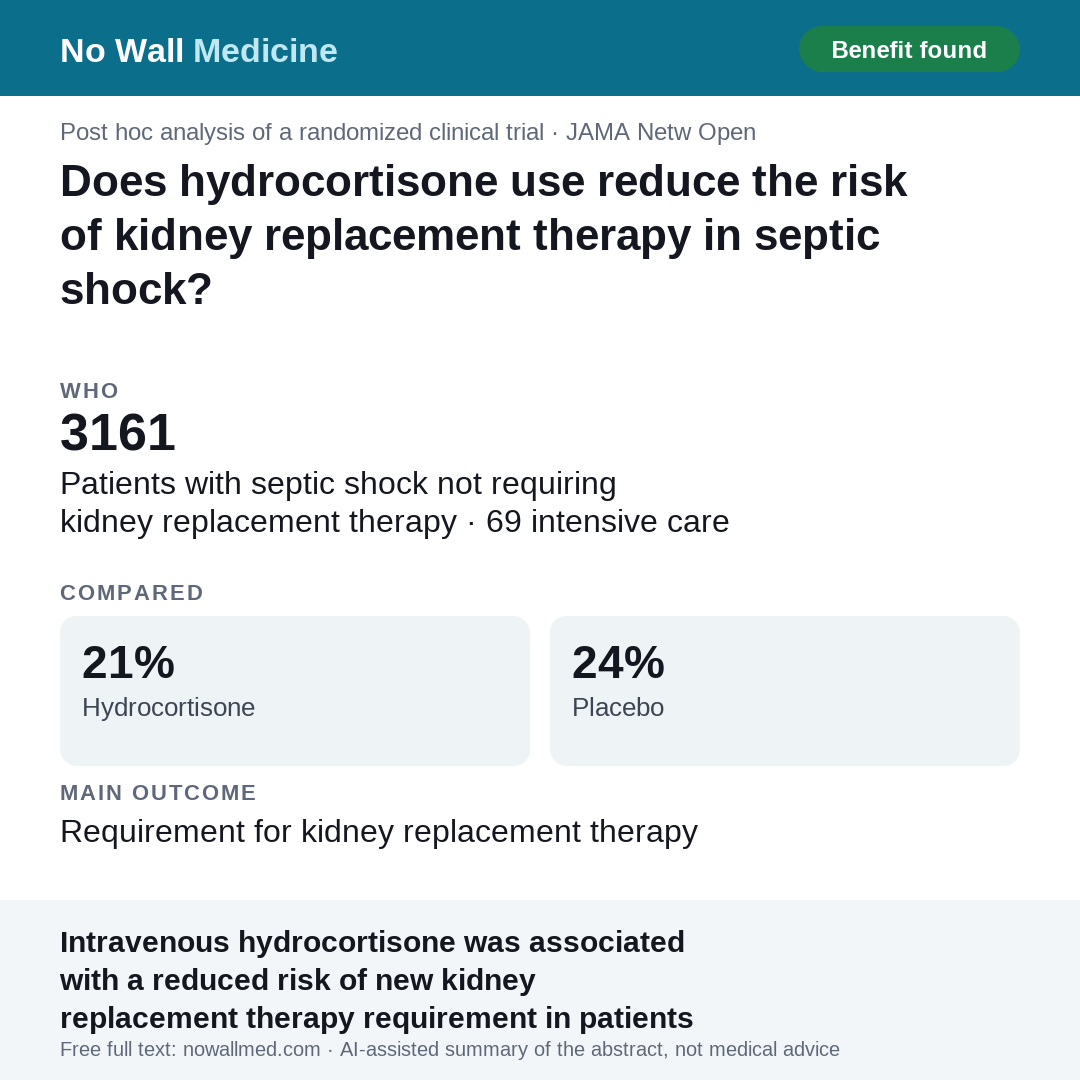
Clinical question: Does hydrocortisone use reduce the risk of kidney replacement therapy in septic shock?
Why it matters: It is unclear if intravenous hydrocortisone can decrease the risk of sepsis-associated acute kidney injury progression.
In absolute numbers
Hydrocortisone: 21% · Placebo: 24% → a difference of 3 percentage points, so about 34 people would need the treatment for 1 more to benefit (number needed to treat) over the trial’s follow-up.
Worked out by us from the two group results above, not reported by the authors. Check the paper for the exact outcome and timing.
Key points
- Researchers analyzed 3161 patients with septic shock, including 1589 receiving hydrocortisone and 1572 receiving a placebo.
- Hydrocortisone was associated with a lower incidence of kidney replacement therapy requirement compared to placebo (21% vs 24%).
- Among patients who started kidney replacement therapy, hydrocortisone was not associated with a difference in days alive and free of the treatment.
Headline and key points written with AI from the paper’s abstract, with every number checked against it. Read the paper before relying on them.
Was this summary helpful?
Subject terms
Cite this article
Donaldson LH, Devaux A, White KC, Rajbhandari D, Cohen J, Bellomo R. Hydrocortisone and Risk Factors for Kidney Replacement Therapy in Septic Shock. JAMA Netw Open. 2025. doi:10.1001/jamanetworkopen.2025.12279
Spotted a mistake? Suggest a correction
Top studies every Monday
The week’s key trials and guidelines in your specialties, plus any topics you follow. By email, free.
Get the weekly digest