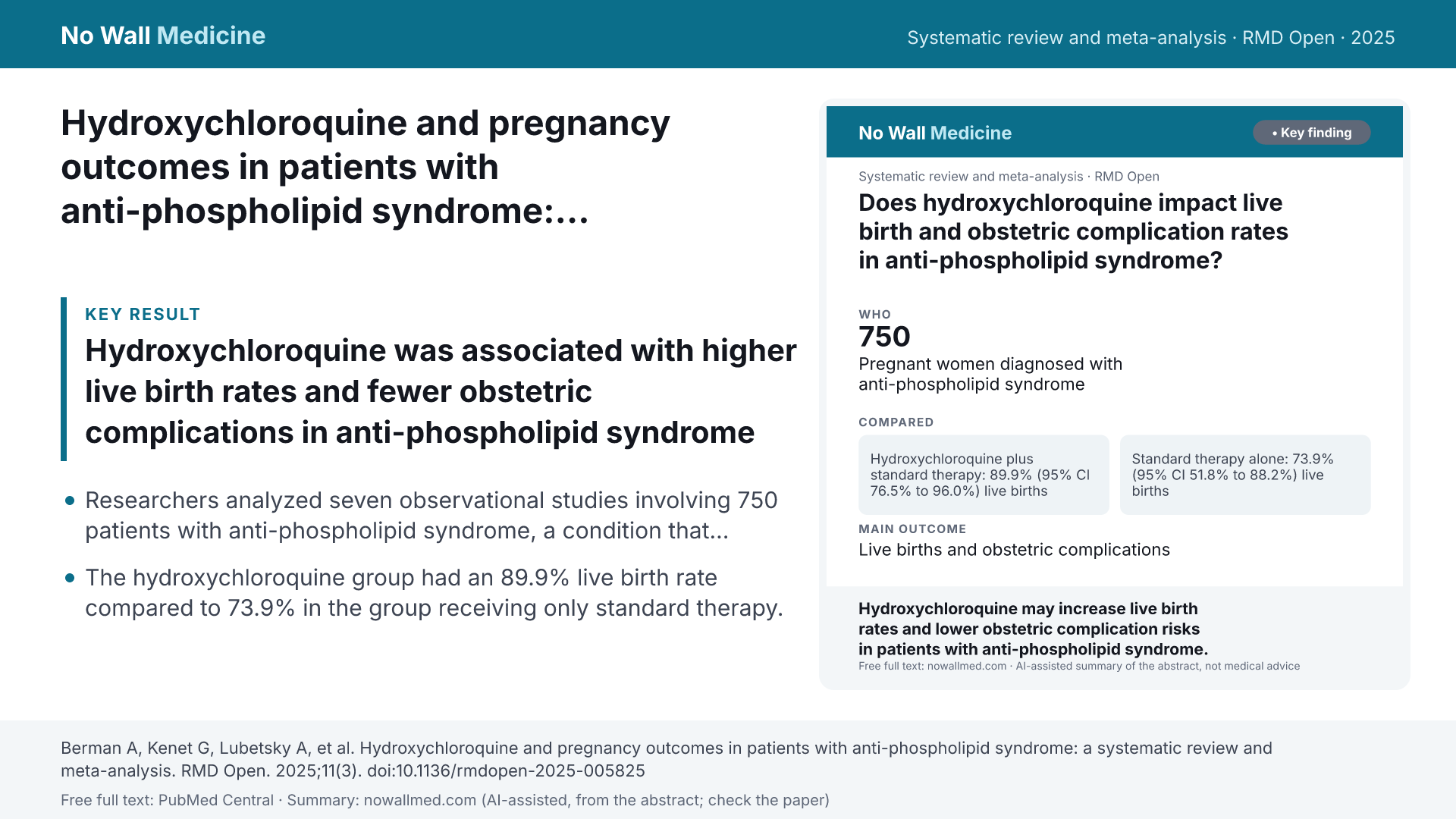
Hydroxychloroquine was associated with higher live birth rates and fewer obstetric complications in anti-phospholipid syndrome
Hydroxychloroquine and pregnancy outcomes in patients with anti-phospholipid syndrome: a systematic review and meta-analysis
Systematic review and meta-analysisKey finding
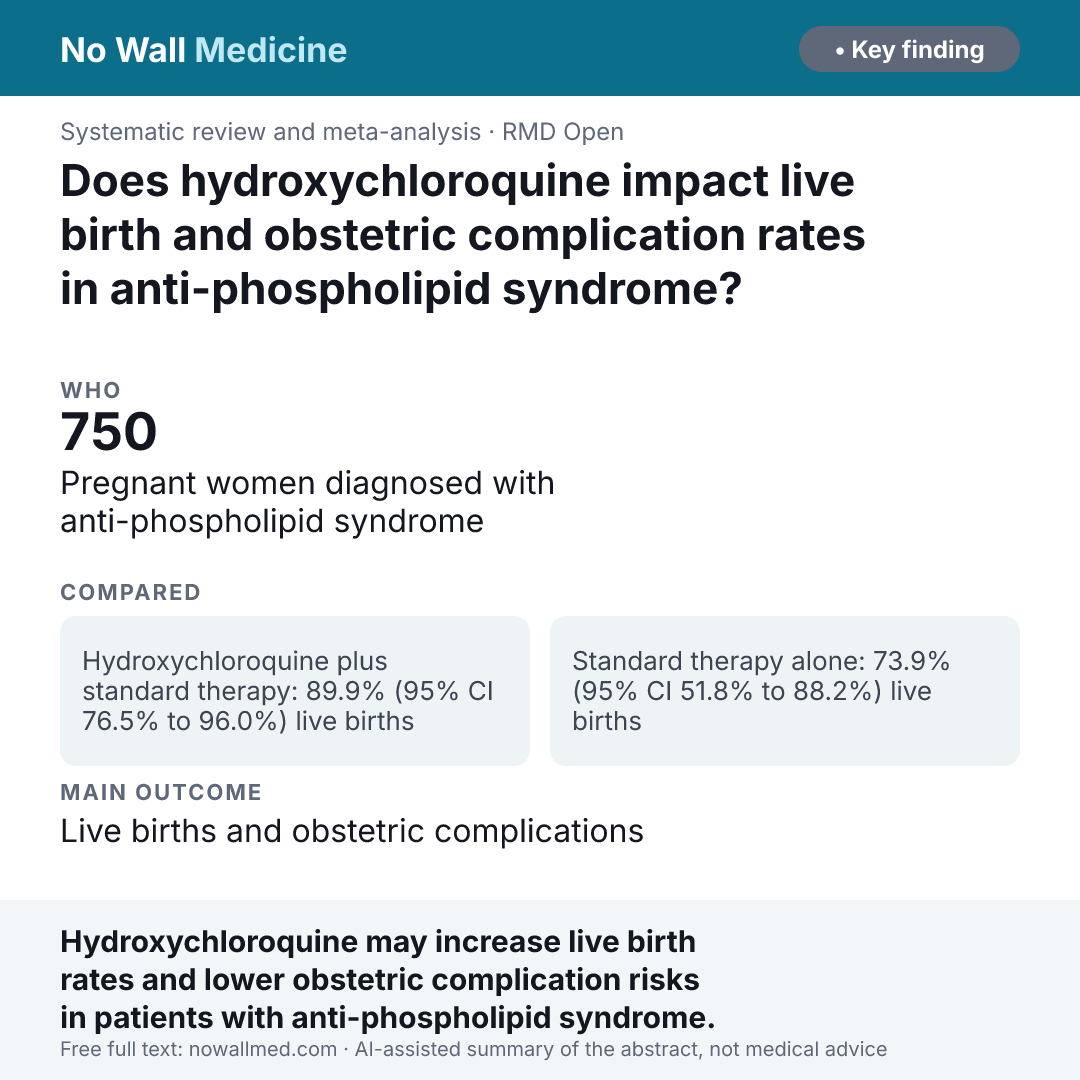
Does hydroxychloroquine impact live birth and obstetric complication rates in anti-phospholipid syndrome?
Who
750
Pregnant women diagnosed with anti-phospholipid syndrome
Compared
Hydroxychloroquine plus standard therapy: 89.9% (95% CI 76.5% to 96.0%) live births
Standard therapy alone: 73.9% (95% CI 51.8% to 88.2%) live births
Main outcome
Live births and obstetric complications
Result: OR 2.66 (95% CI 1.44 to 4.91) for live births; OR 0.19 (95% CI 0.19 to 0.39) for obstetric complications
Bottom line: Hydroxychloroquine may increase live birth rates and lower obstetric complication risks in patients with anti-phospholipid syndrome.
RMD Open · 2025-08-27 · Save PNG
Clinical question: Does hydroxychloroquine impact live birth and obstetric complication rates in anti-phospholipid syndrome?
Why it matters: About 20% of women with anti-phospholipid syndrome experience pregnancy complications despite receiving standard treatment with aspirin and heparin.
Key points
- Researchers analyzed seven observational studies involving 750 patients with anti-phospholipid syndrome, a condition that can cause pregnancy complications.
- The hydroxychloroquine group had an 89.9% live birth rate compared to 73.9% in the group receiving only standard therapy.
- Obstetric complications occurred in 19.3% of the hydroxychloroquine group compared to 55.0% in the group not receiving the medication.
Limitation the authors note: The study was based on seven observational studies.
Headline and key points written with AI from the paper’s abstract, with every number checked against it. Read the paper before relying on them.
Was this summary helpful?
Abstract
Background
About 20% of female patients with anti-phospholipid syndrome (APS) experience obstetric complications despite standard treatment with aspirin and heparin. Treatment with hydroxychloroquine (HCQ) was shown to reduce disease flares during pregnancy in patients with systemic lupus erythematosus and to improve pregnancy outcomes. Objectives
To evaluate the impact of HCQ on live birth and obstetric complication rates in pregnant women diagnosed with APS. Methods
We systematically searched PubMed and EMBASE databases in April 2024 for original, peer-reviewed studies on HCQ efficacy and safety in APS patients. The main outcomes measured were live births and obstetric complications, comparing HCQ plus standard therapy to standard therapy alone. Results
Seven observational studies met our inclusion criteria, comprising a total of 750 patients included in the meta-analysis. The overall pooled proportions of live births in the HCQ group were 89.9% (95% CI 76.5% to 96.0%; I 2=81%) and 73.9% (95% CI 51.8% to 88.2%; I 2=81%) in the non-HCQ-treated group. The overall pooled proportion of obstetric complications occurred in 19.3% (95% CI 9.4% to 35.4; I 2=81%; four studies) of the HCQ group and 55.0% (95% CI 39.4 to 69.7; I 2=79%; four studies) of the non-HCQ treated group. Treatment with HCQ was associated with higher rates of live births (OR 2.66; 95% CI 1.44 to 4.91) and lower obstetric complications (OR 0.19; 95% CI 0.19 to 0.39) compared with non-HCQ treatment. HCQ treatment during pregnancy was well tolerated. Conclusions
Our findings suggest that HCQ may offer potential benefits to APS patients during pregnancy by increasing the probability of live birth rates and lowering the risk for obstetric complications. Prospero registration number
The study was registered with PROSPERO, the prospective international register of systematic reviews (identification number CRD42024574097).
Abstract reproduced under the article’s CC BY NC licence.
Subject terms
Headline, design, result, key points, caveat and citation as plain text.
Cite this article
Berman A, Kenet G, Lubetsky A, et al. Hydroxychloroquine and pregnancy outcomes in patients with anti-phospholipid syndrome: a systematic review and meta-analysis. RMD Open. 2025;11(3). doi:10.1136/rmdopen-2025-005825
Spotted a mistake? Suggest a correction