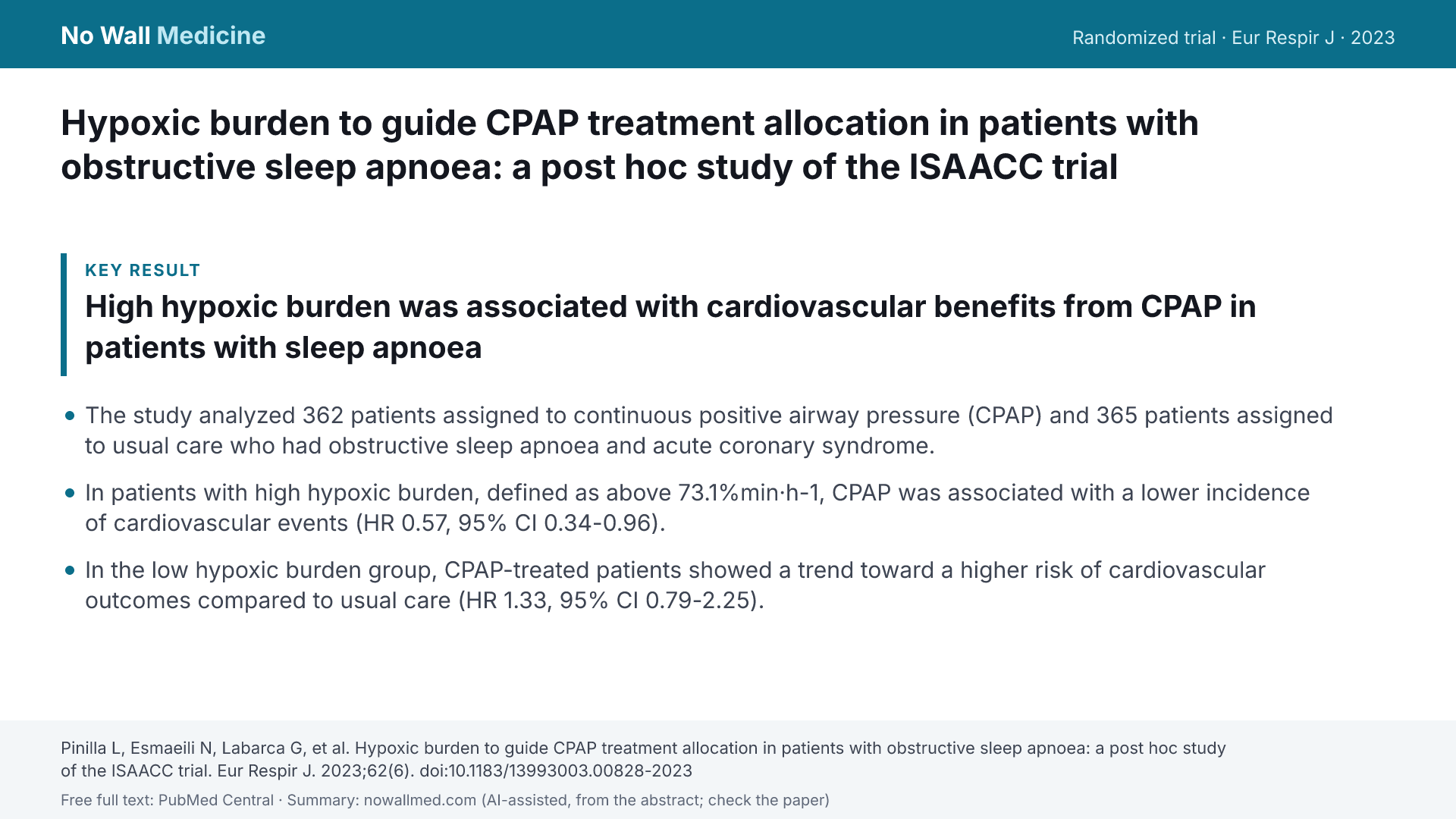
High hypoxic burden was associated with cardiovascular benefits from CPAP in patients with sleep apnoea
Hypoxic burden to guide CPAP treatment allocation in patients with obstructive sleep apnoea: a post hoc study of the ISAACC trial
Same trial (NCT01335087)
Papers we list that report this registered trial, oldest first. Read a secondary analysis alongside the main results.
- Secondary analysis
This paper Eur Respir J 2023-12 - Secondary analysis Benefit found
Obstructive sleep apnea is associated with better collateral blood flow during first-time heart attacks Chest 2026-03
Key points
- The study analyzed 362 patients assigned to continuous positive airway pressure (CPAP) and 365 patients assigned to usual care who had obstructive sleep apnoea and acute coronary syndrome.
- In patients with high hypoxic burden, defined as above 73.1%min·h-1, CPAP was associated with a lower incidence of cardiovascular events (HR 0.57, 95% CI 0.34-0.96).
- In the low hypoxic burden group, CPAP-treated patients showed a trend toward a higher risk of cardiovascular outcomes compared to usual care (HR 1.33, 95% CI 0.79-2.25).
Headline and key points written with AI from the paper’s abstract, with every number checked against it. Read the paper before relying on them.
Was this summary helpful?
Subject terms
Headline, design, result, key points, caveat and citation as plain text.
Cite this article
Pinilla L, Esmaeili N, Labarca G, et al. Hypoxic burden to guide CPAP treatment allocation in patients with obstructive sleep apnoea: a post hoc study of the ISAACC trial. Eur Respir J. 2023;62(6). doi:10.1183/13993003.00828-2023
Spotted a mistake? Suggest a correction