Genetic analysis links smoking, obesity, and certain inflammatory factors to higher COVID-19 risk
Identifying factors contributing to increased susceptibility to COVID-19 risk: a systematic review of Mendelian randomization studies
Systematic review of Mendelian randomization studiesMixed results
What are the modifiable factors contributing to increased COVID-19 susceptibility?
Who
50
Genetically predicted exposures and COVID-19-related outcomes
Compared
Increased smoking, obesity, and inflammatory factors: higher risk of COVID-19
Vitamin D, glycaemic traits, and cardiometabolic diseases: no strong genetic evidence
Main outcome
COVID-19 severity, hospitalization, and susceptibility
Bottom line: Smoking, obesity, and certain inflammatory factors increase COVID-19 risk, while vitamin D and glycaemic traits showed no strong evidence.
Int J Epidemiol · 2022-04-22Download image
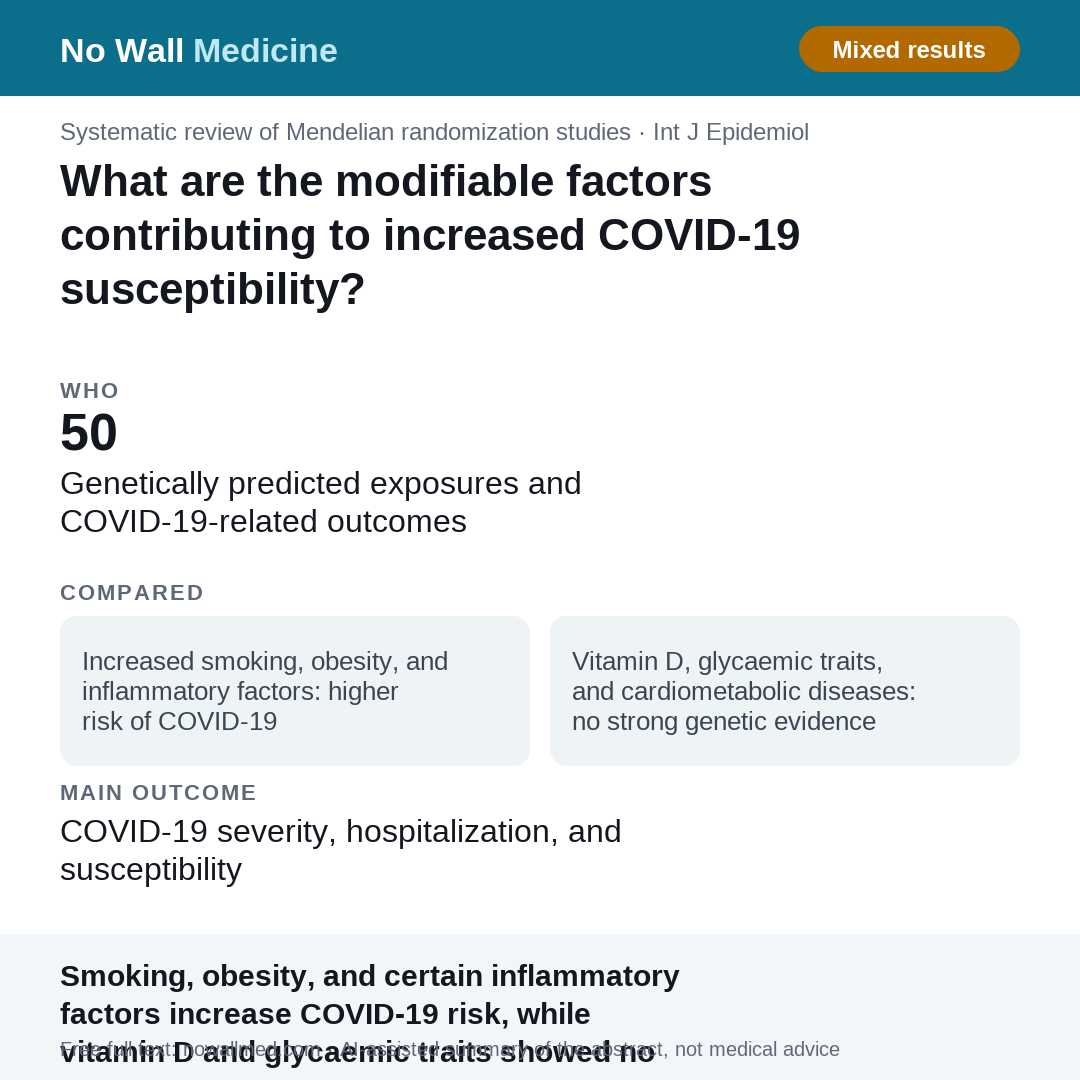
Clinical question: What are the modifiable factors contributing to increased COVID-19 susceptibility?
Why it matters: The specific modifiable factors and genetic signatures that contribute to increased susceptibility to COVID-19 were not fully summarized.
Key points
- Researchers reviewed 50 Mendelian randomization studies, which use genetic variants to estimate the relationship between exposures and health outcomes.
- Increased smoking, obesity, and inflammatory factors were associated with a higher risk of COVID-19.
- No strong genetic evidence was found to support the role of vitamin D, glycaemic traits, or cardiometabolic diseases in COVID-19 risk.
Headline and key points written with AI from the paper’s abstract, with every number checked against it. Read the paper before relying on them.
Was this summary helpful?
Subject terms
Cite this article
Luo S, Liang Y, Wong THT, Schooling CM, Au Yeung SL. Identifying factors contributing to increased susceptibility to COVID-19 risk: a systematic review of Mendelian randomization studies. Int J Epidemiol. 2022. doi:10.1093/ije/dyac076
Spotted a mistake? Suggest a correction
Top studies every Monday
The week’s key trials and guidelines in your specialties, plus any topics you follow. By email, free.
Get the weekly digest