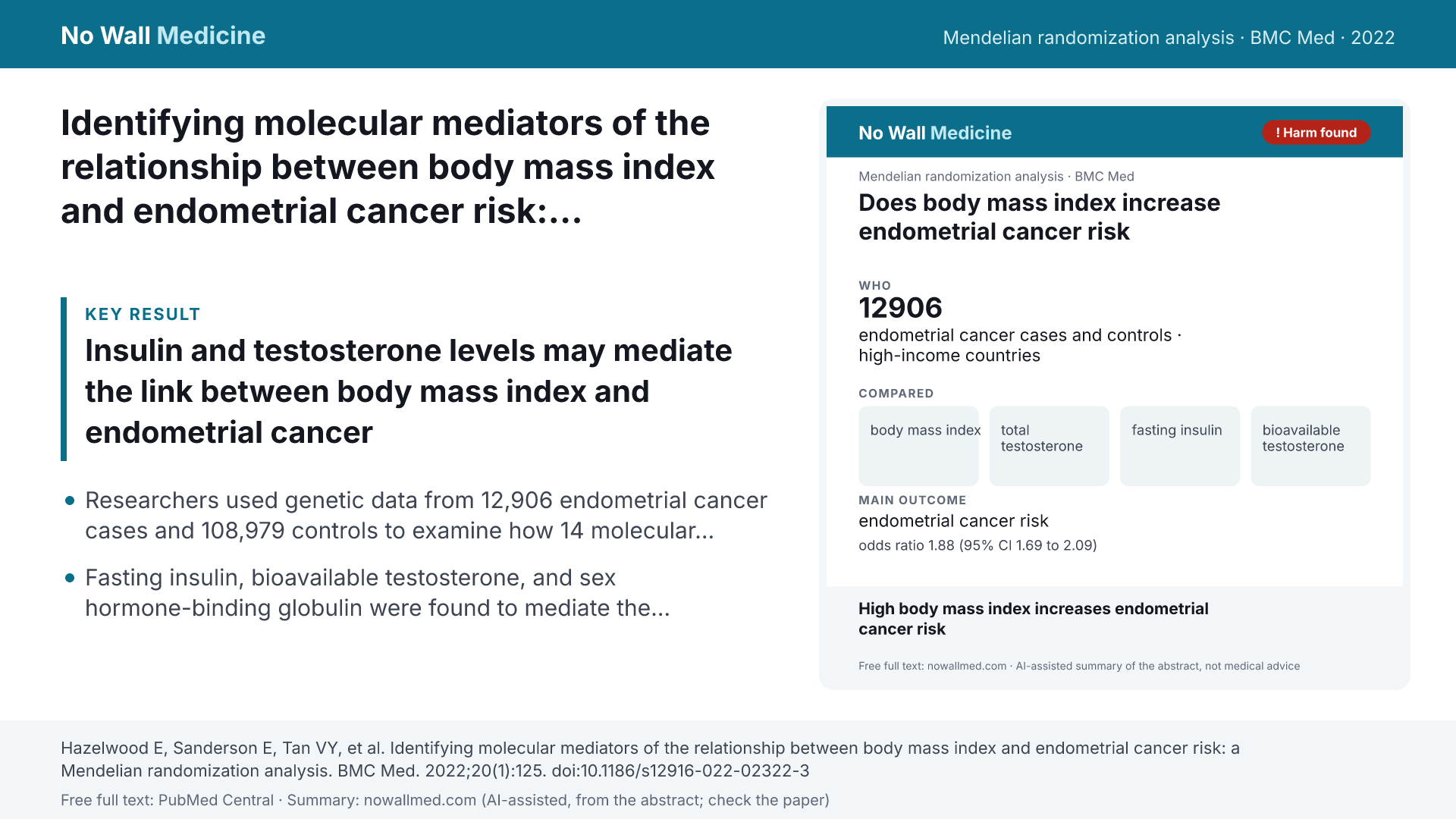
Insulin and testosterone levels may mediate the link between body mass index and endometrial cancer
Identifying molecular mediators of the relationship between body mass index and endometrial cancer risk: a Mendelian randomization analysis
Mendelian randomization analysisHarm found
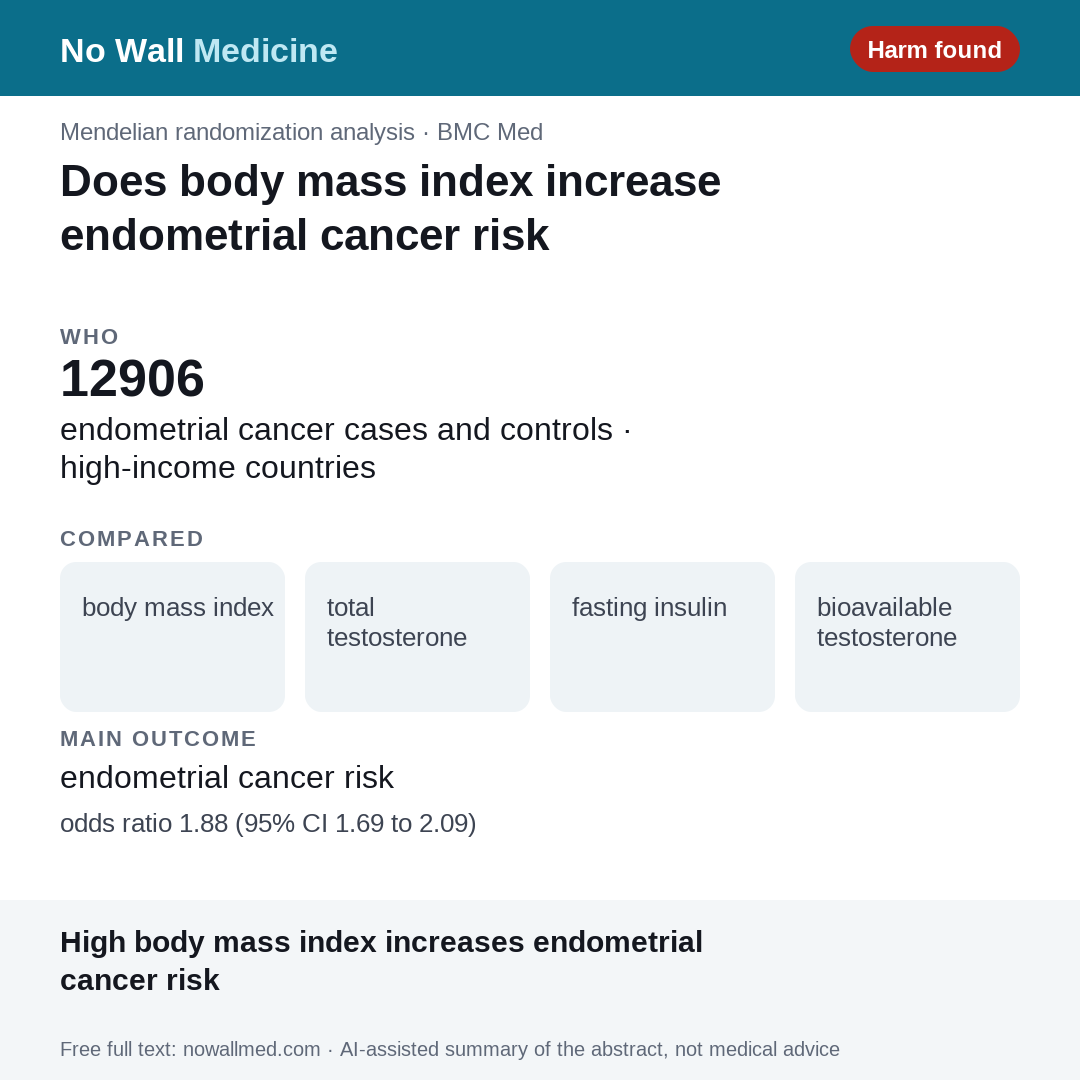
Does body mass index increase endometrial cancer risk
Who
12906
endometrial cancer cases and controls · high-income countries
Compared
body mass index
total testosterone
fasting insulin
bioavailable testosterone
Main outcome
endometrial cancer risk
Result: odds ratio 1.88 (95% CI 1.69 to 2.09)
Bottom line: High body mass index increases endometrial cancer risk
BMC Med · 2022-04-19Download image
Why it matters: The molecular mechanisms that explain why a higher body mass index is linked to increased endometrial cancer risk remain unclear.
Key points
- Researchers used genetic data from 12,906 endometrial cancer cases and 108,979 controls to examine how 14 molecular markers relate to cancer risk.
- Fasting insulin, bioavailable testosterone, and sex hormone-binding globulin were found to mediate the relationship between body mass index and endometrial cancer risk.
- Fasting insulin mediated 19% of the effect, bioavailable testosterone mediated 15%, and sex hormone-binding globulin mediated 7% of the total effect.
Headline and key points written with AI from the paper’s abstract, with every number checked against it. Read the paper before relying on them.
Was this summary helpful?
Subject terms
Cite this article
Hazelwood E, Sanderson E, Tan VY, et al. Identifying molecular mediators of the relationship between body mass index and endometrial cancer risk: a Mendelian randomization analysis. BMC Med. 2022. doi:10.1186/s12916-022-02322-3
Spotted a mistake? Suggest a correction