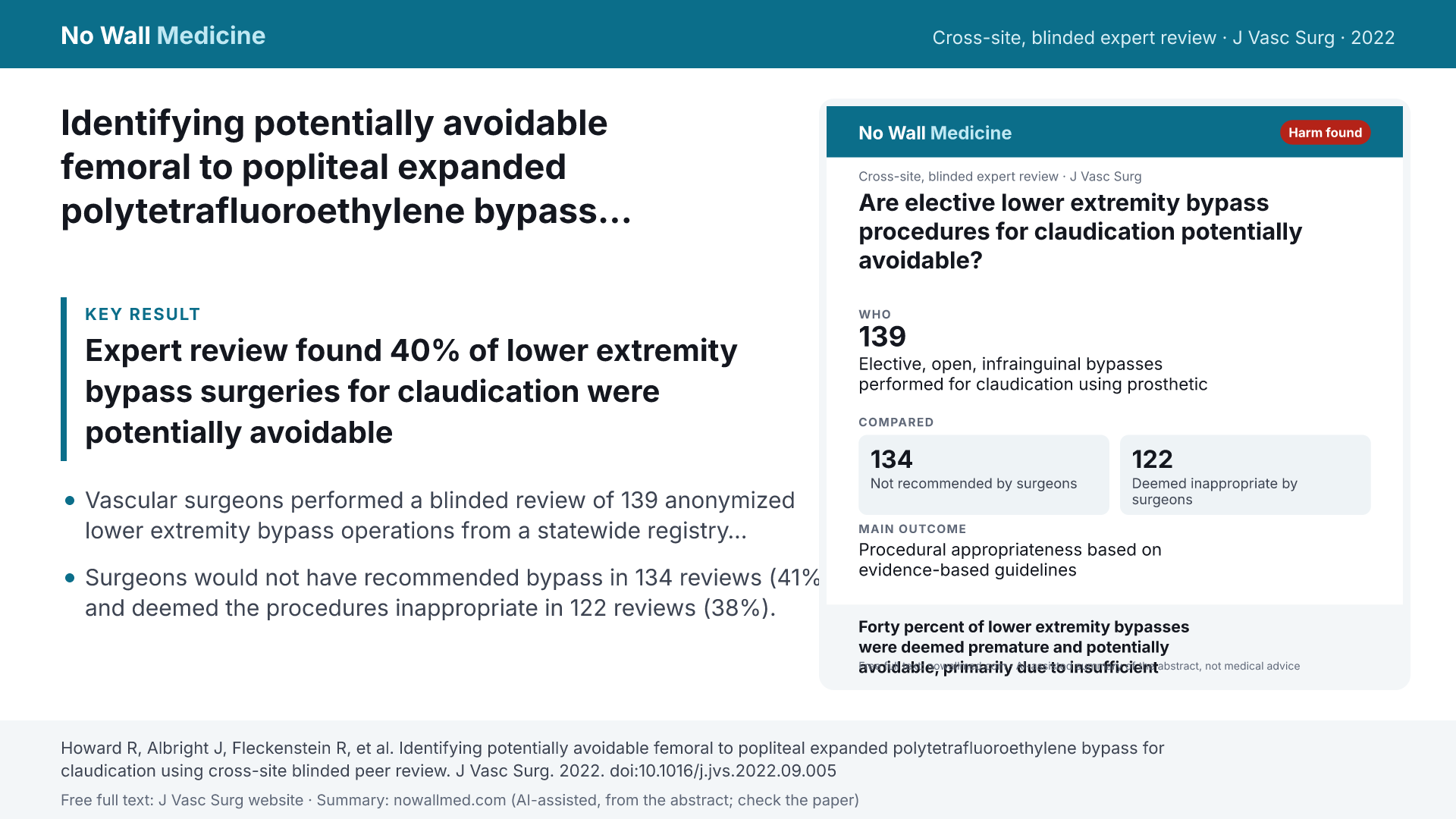
Identifying potentially avoidable femoral to popliteal expanded polytetrafluoroethylene bypass for claudication using cross-site blinded peer review
Key result: Expert review found 40% of lower extremity bypass surgeries for claudication were potentially avoidable
Key points
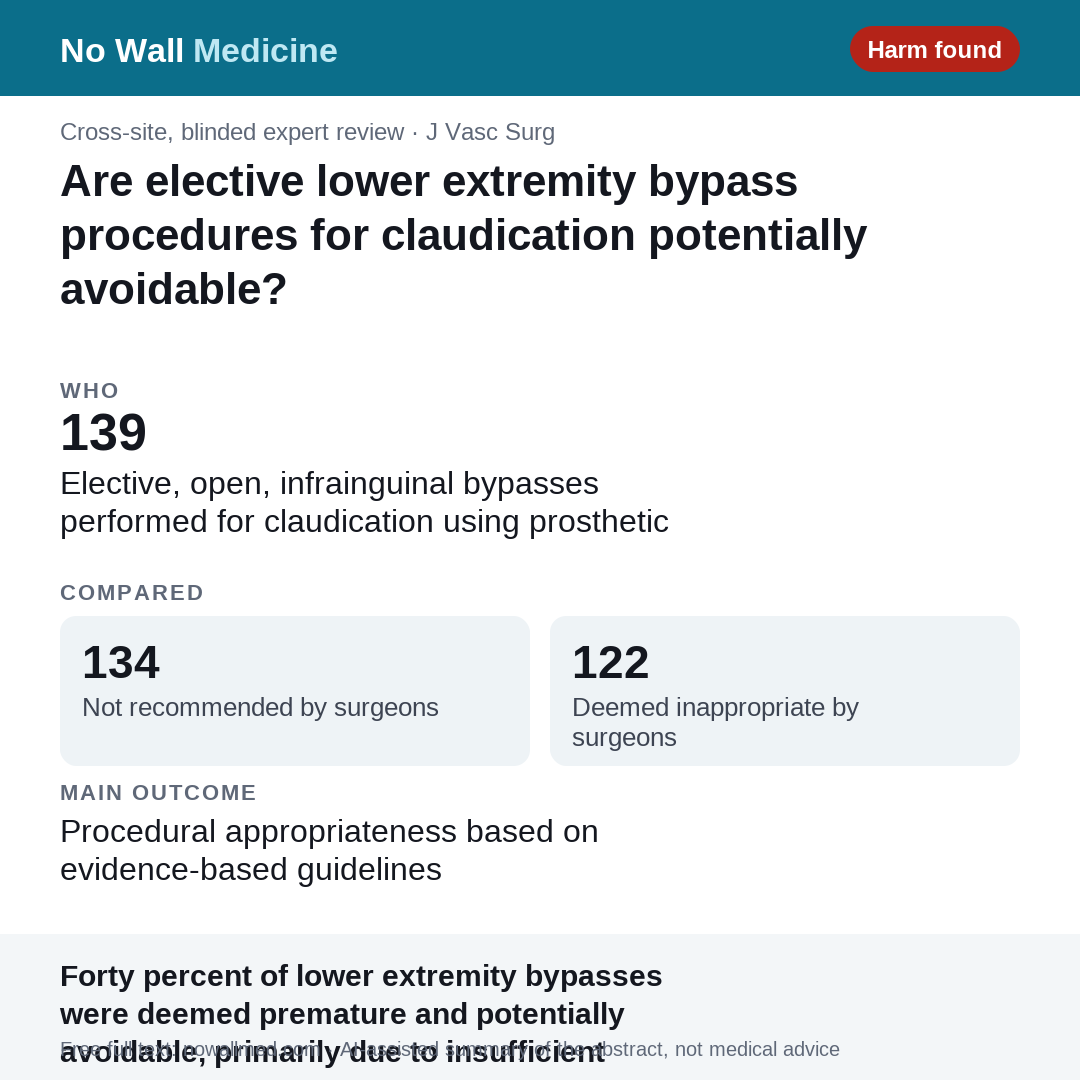
- Vascular surgeons performed a blinded review of 139 anonymized lower extremity bypass operations from a statewide registry to assess procedural appropriateness.
- Surgeons would not have recommended bypass in 134 reviews (41%) and deemed the procedures inappropriate in 122 reviews (38%).
- The most common reason for inappropriateness was a lack of preoperative medical and lifestyle therapy, which was present in 39% of inappropriate reviews.
Why it matters: It is unknown how many patients undergo surgical treatment for claudication without first attempting evidence-based nonoperative management such as exercise or smoking cessation.
Discussion prompts
- Would these patients look like yours? Who was left out?
- Is the main outcome one that matters to patients?
- Is the difference large enough to change what you do?
Cite: Howard R, Albright J, Fleckenstein R, et al. Identifying potentially avoidable femoral to popliteal expanded polytetrafluoroethylene bypass for claudication using cross-site blinded peer review. J Vasc Surg. 2022. doi:10.1016/j.jvs.2022.09.005
Free full text: J Vasc Surg website · Summary and visual abstract: nowallmed.com/a/identifying-potentially-avoidable-femoral-to-popliteal-expanded-ai68iu/ (AI-assisted from the abstract; check the paper before relying on it).