Imatinib treatment was associated with lower incidence of severe hyperglycemia in hospitalized COVID-19 patients
Imatinib treatment improves hyperglycaemic dysregulation in severe COVID-19: a secondary analysis of blood biomarkers in a randomised controlled trial
Randomized, double-blind, placebo-controlled clinical trialBenefit found
Does imatinib treatment improve hyperglycaemic dysregulation in severe COVID-19?
Who
385
Hospitalized COVID-19 patients
Compared
Imatinib: significantly lower incidence of severe hyperglycaemia
Placebo
Main outcome
Incidence of severe hyperglycaemia and blood biomarkers
Bottom line: Imatinib treatment significantly lowered the incidence of severe hyperglycaemia in hospitalized COVID-19 patients.
Crit Care · 2024-02-29Download image
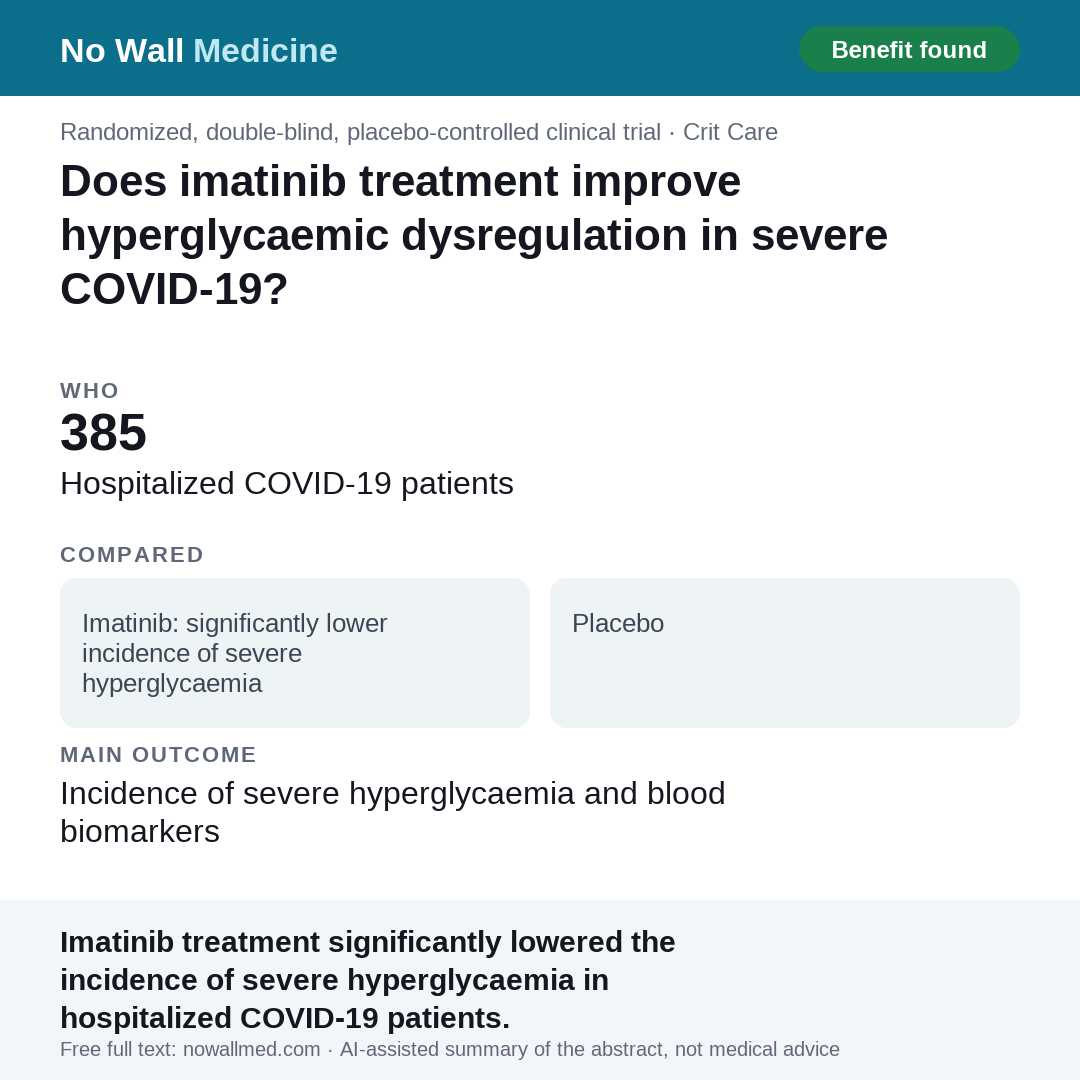
Clinical question: Does imatinib treatment improve hyperglycaemic dysregulation in severe COVID-19?
Why it matters: It was unknown if the tyrosine kinase inhibitor imatinib could influence glucose regulation or inflammatory biomarkers in patients with severe COVID-19.
Key points
- Researchers analyzed 385 hospitalized COVID-19 patients from a randomized, double-blind, placebo-controlled clinical trial.
- The incidence of severe hyperglycemia was significantly lower in patients treated with imatinib, though insulin production and central insulin sensitivity were unaffected.
- Imatinib treatment was associated with increased plasma angiotensin-2 and adiponectin levels and decreased levels of interleukin-6 and c-Jun N-terminal protein kinase 1 and 2.
Headline and key points written with AI from the paper’s abstract, with every number checked against it. Read the paper before relying on them.
Was this summary helpful?
Subject terms
Cite this article
Duijvelaar E, Pan X, Bogaard HJ, Eringa EC, Aman J. Imatinib treatment improves hyperglycaemic dysregulation in severe COVID-19: a secondary analysis of blood biomarkers in a randomised controlled trial. Crit Care. 2024. doi:10.1186/s13054-024-04829-y
Spotted a mistake? Suggest a correction
Top studies every Monday
The week’s key trials and guidelines in your specialties, plus any topics you follow. By email, free.
Get the weekly digest