Multiple beta-cell peptide immunotherapy was associated with maintained insulin production in recent-onset type 1 diabetes
Immune and Metabolic Effects of Antigen-Specific Immunotherapy Using Multiple β-Cell Peptides in Type 1 Diabetes
Randomized placebo-controlled studyBenefit found
Does multiple beta-cell peptide immunotherapy affect immune and metabolic function in type 1 diabetes?
Who
Patients with recent-onset type 1 diabetes possessing HLA-DRB1*0401 genotype
Compared
Placebo: stimulated C-peptide declined in all subjects
Treated group: stimulated C-peptide maintained at ≥100% baseline levels in one-half
Main outcome
Stimulated C-peptide and islet-specific immune responses
Bottom line: Multiple-peptide immunotherapy shows promise in maintaining insulin functional reserve and correcting immune regulatory defects.
Diabetes · 2022-01-25Download image
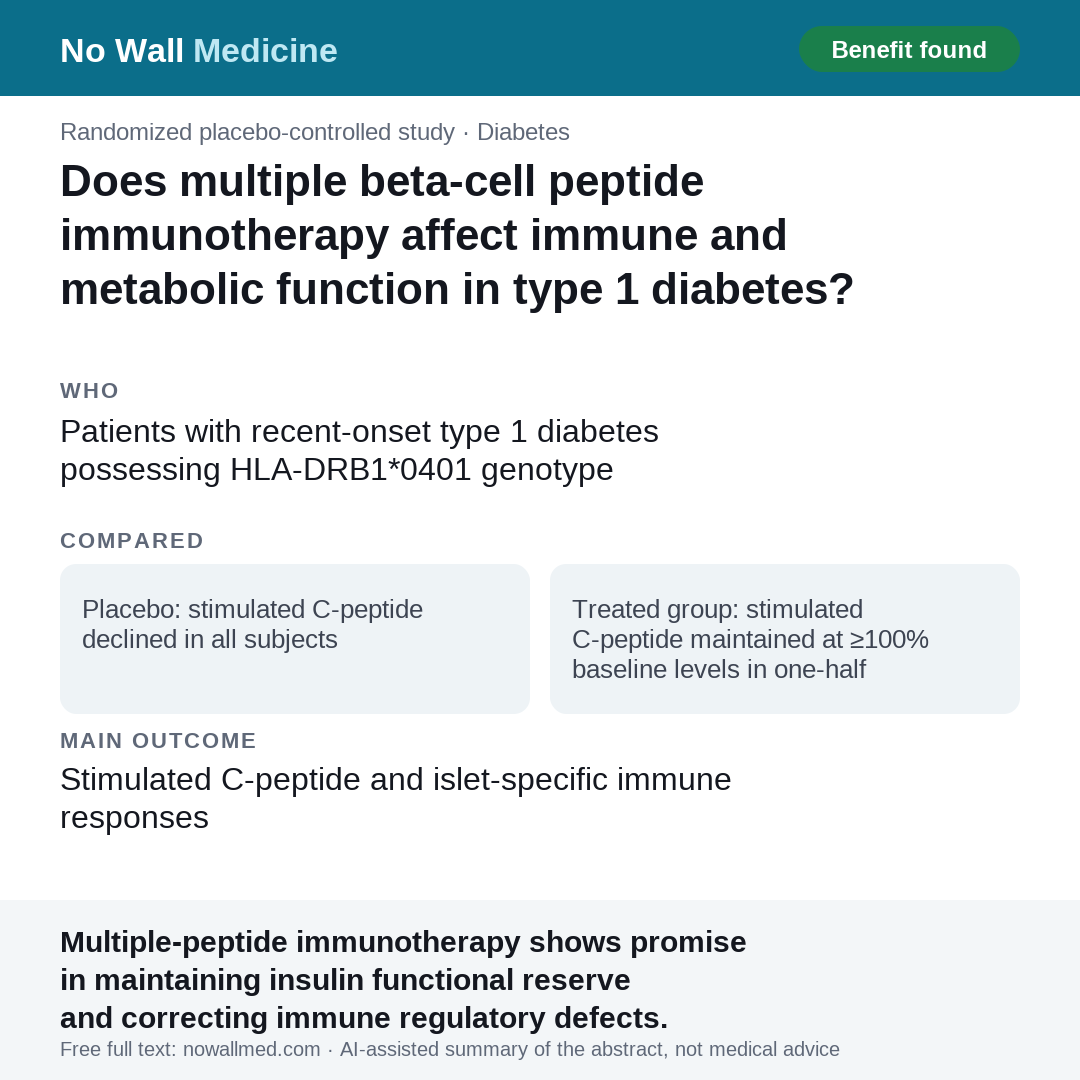
Clinical question: Does multiple beta-cell peptide immunotherapy affect immune and metabolic function in type 1 diabetes?
Why it matters: It was unknown if administering a mixture of six specific peptides could restore immune tolerance and protect insulin-producing cells in humans with type 1 diabetes.
Key points
- Researchers conducted a randomized placebo-controlled study in patients with recent-onset type 1 diabetes and the HLA-DRB1*0401 genotype using monthly doses of 10, 100, and 500 μg of six peptides.
- Stimulated C-peptide, which measures insulin functional reserve, was maintained at ≥100% baseline levels in one-half of the treated group compared to all placebo subjects.
- The treatment was associated with a dose-dependent increase in the expression of FOXP3, a transcription factor in regulatory T-cells, and changes in regulatory T-cell gene expression.
Headline and key points written with AI from the paper’s abstract, with every number checked against it. Read the paper before relying on them.
Was this summary helpful?
Subject terms
Cite this article
Liu YF, Powrie J, Arif S, Yang JHM, Williams E, Khatri L. Immune and Metabolic Effects of Antigen-Specific Immunotherapy Using Multiple β-Cell Peptides in Type 1 Diabetes. Diabetes. 2022. doi:10.2337/db21-0728
Spotted a mistake? Suggest a correction
Top studies every Monday
The week’s key trials and guidelines in your specialties, plus any topics you follow. By email, free.
Get the weekly digest