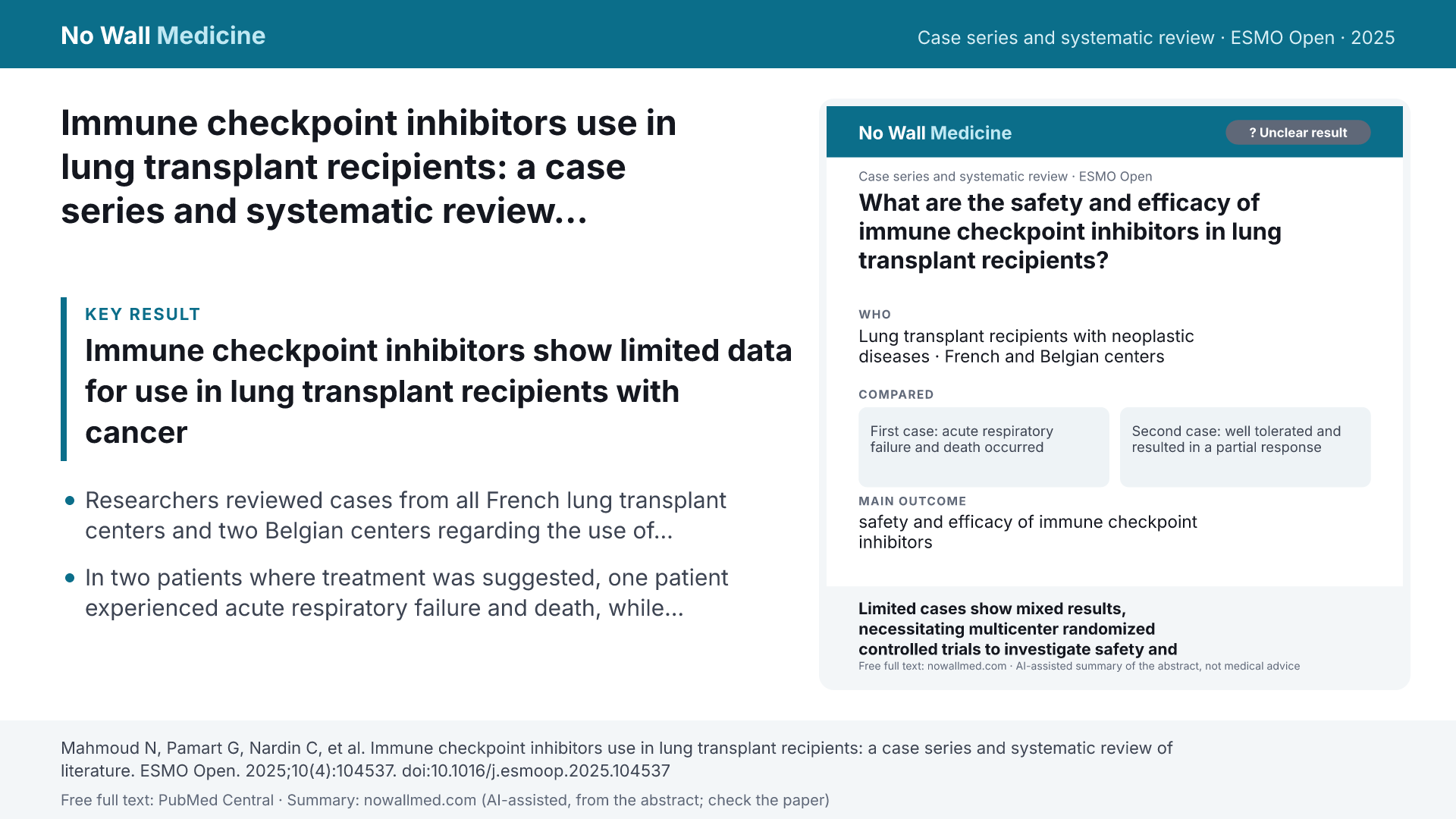
Immune checkpoint inhibitors show limited data for use in lung transplant recipients with cancer
Immune checkpoint inhibitors use in lung transplant recipients: a case series and systematic review of literature
Case series and systematic reviewUnclear result
What are the safety and efficacy of immune checkpoint inhibitors in lung transplant recipients?
Who
Lung transplant recipients with neoplastic diseases · French and Belgian centers
Compared
First case: acute respiratory failure and death occurred
Second case: well tolerated and resulted in a partial response
Main outcome
safety and efficacy of immune checkpoint inhibitors
Bottom line: Limited cases show mixed results, necessitating multicenter randomized controlled trials to investigate safety and efficacy.
Limitation: Limited number of cases and lack of clinical trials
ESMO Open · 2025-03-31Download image
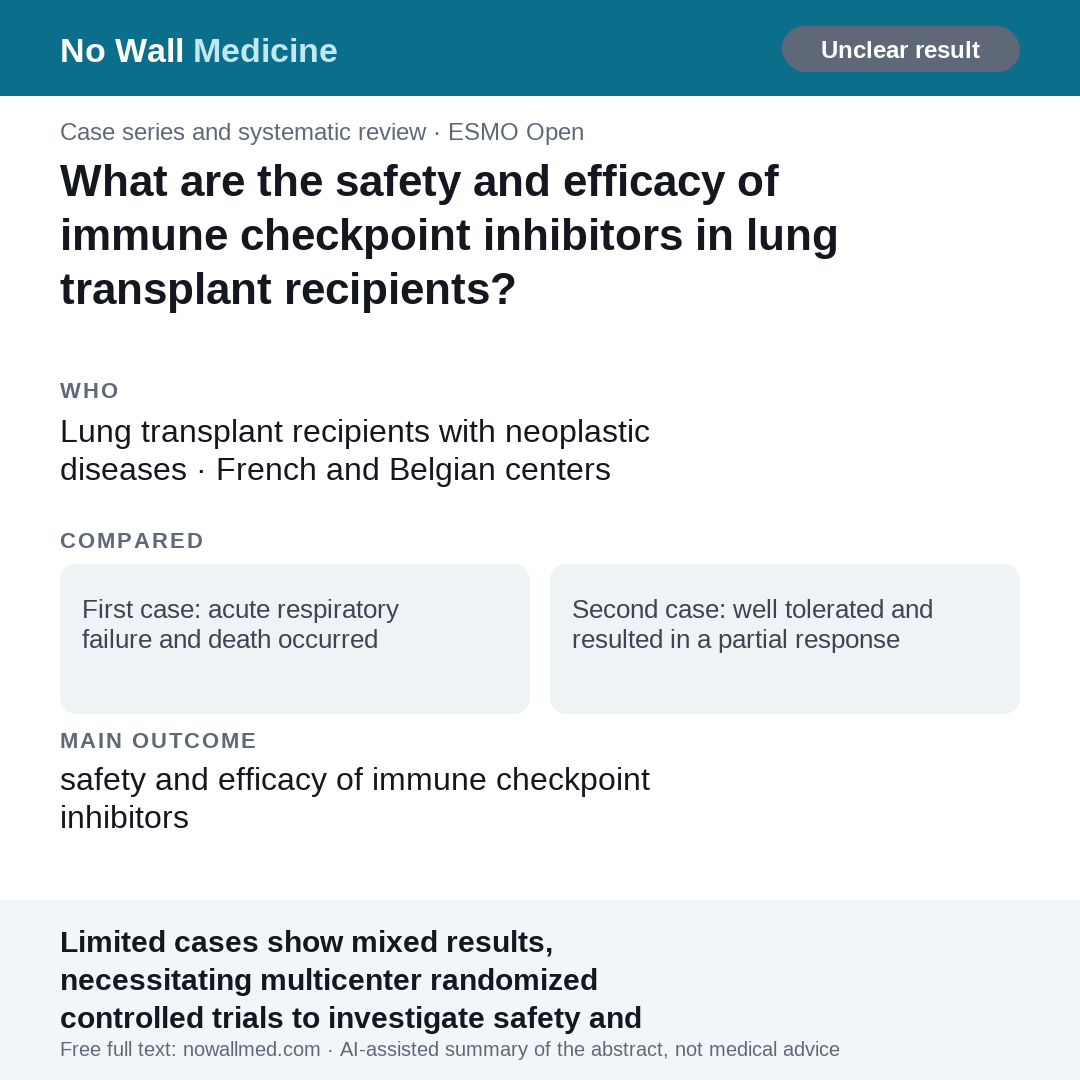
Clinical question: What are the safety and efficacy of immune checkpoint inhibitors in lung transplant recipients?
Why it matters: Lung transplant recipients have been largely excluded from clinical trials for immune checkpoint inhibitors due to the perceived high risk of organ rejection.
Key points
- Researchers reviewed cases from all French lung transplant centers and two Belgian centers regarding the use of immune checkpoint inhibitors, a type of cancer treatment, in these patients.
- In two patients where treatment was suggested, one patient experienced acute respiratory failure and death, while the other patient tolerated the treatment and had a partial response.
- A third patient was considered for treatment but did not receive it because the risk-benefit balance did not favor the use of immune checkpoint inhibitors.
Limitation the authors note: The study is based on a limited number of cases and a systematic review of existing literature rather than large-scale trials.
Headline and key points written with AI from the paper’s abstract, with every number checked against it. Read the paper before relying on them.
Was this summary helpful?
Subject terms
Headline, design, result, key points, caveat and citation as plain text.
Cite this article
Mahmoud N, Pamart G, Nardin C, et al. Immune checkpoint inhibitors use in lung transplant recipients: a case series and systematic review of literature. ESMO Open. 2025. doi:10.1016/j.esmoop.2025.104537
Spotted a mistake? Suggest a correction