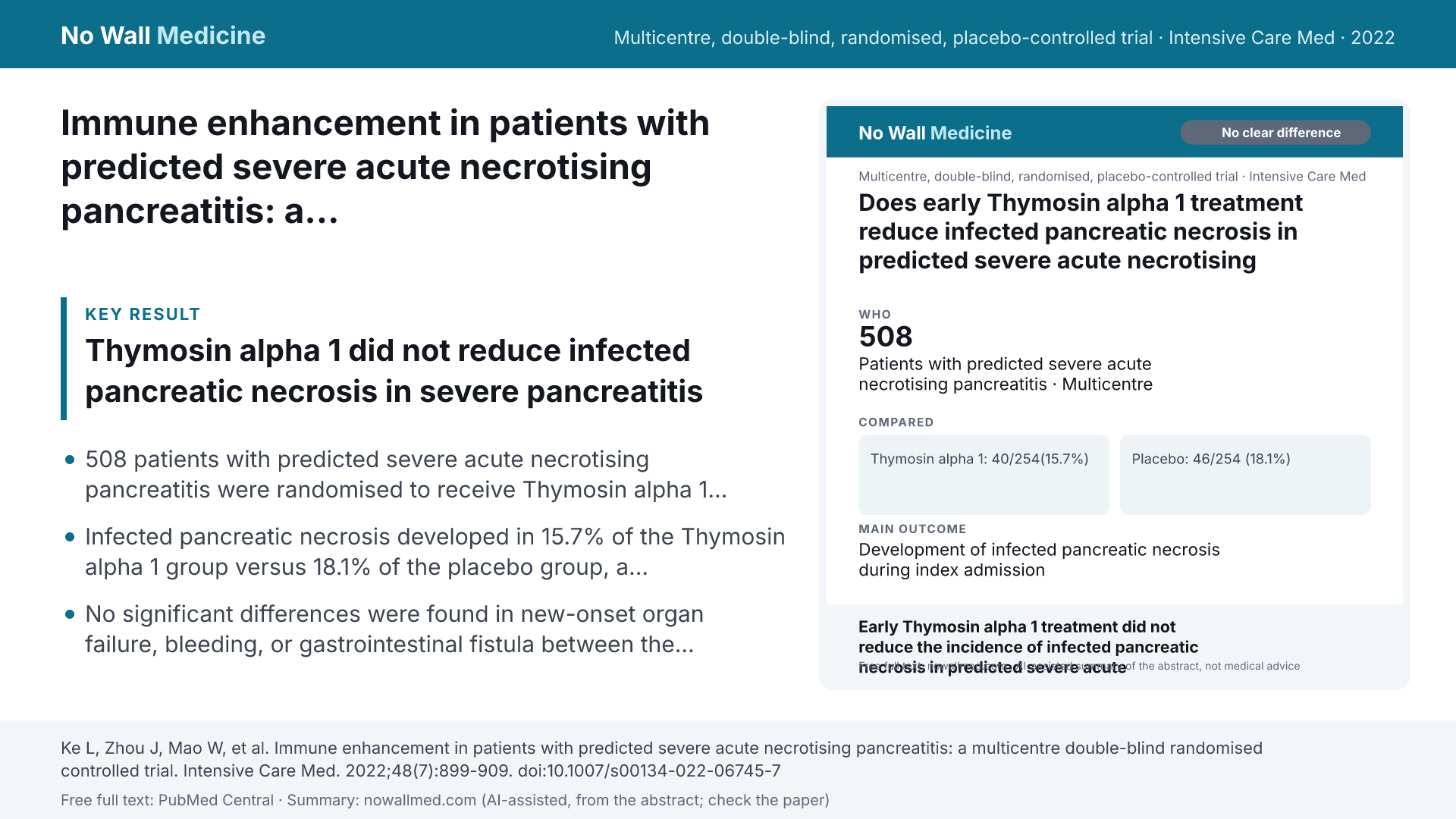
Immune enhancement in patients with predicted severe acute necrotising pancreatitis: a multicentre double-blind randomised controlled trial
Key result: Thymosin alpha 1 did not reduce infected pancreatic necrosis in severe pancreatitis
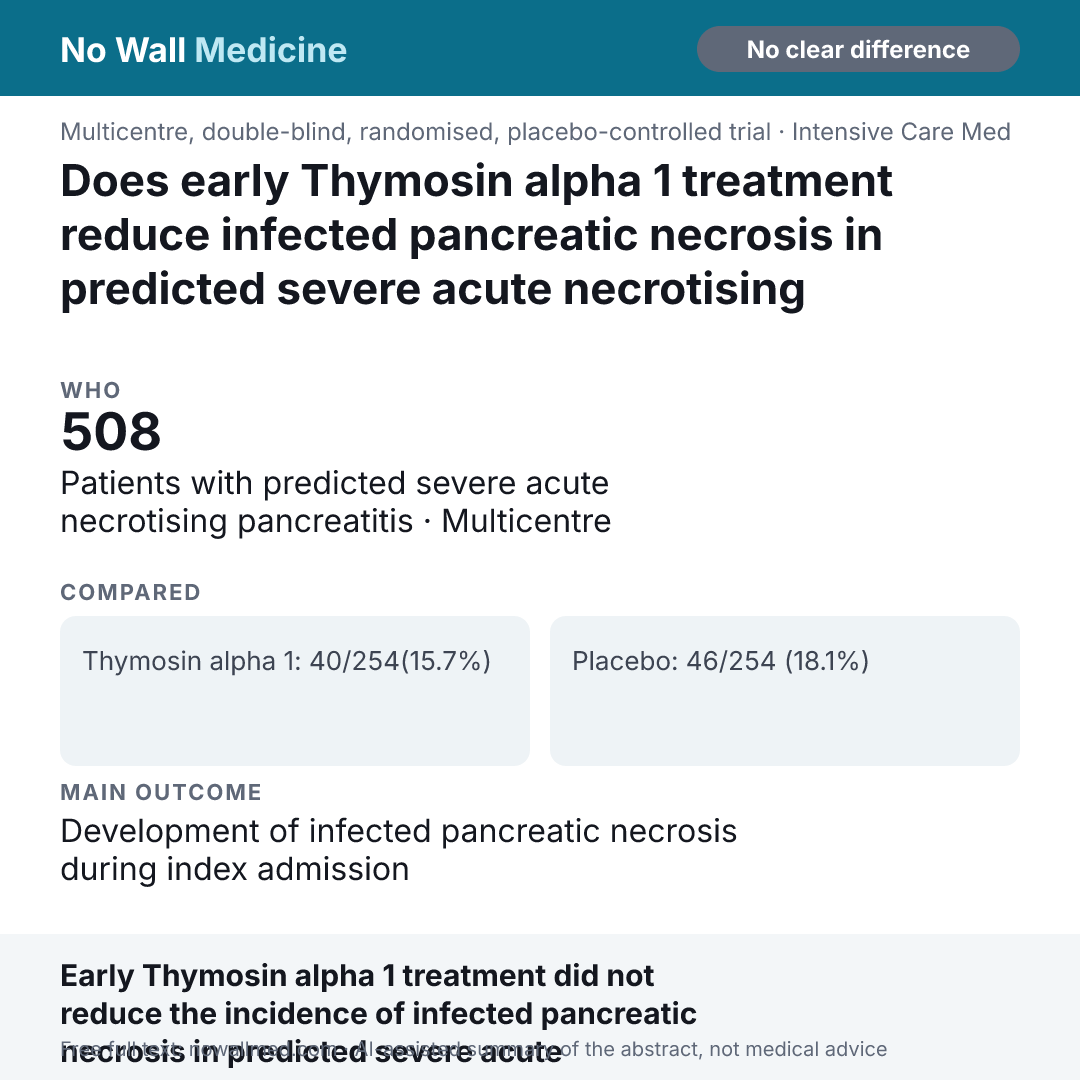
Multicentre, double-blind, randomised, placebo-controlled trialNo clear difference
Does early Thymosin alpha 1 treatment reduce infected pancreatic necrosis in predicted severe acute necrotising pancreatitis?
Who
508
Patients with predicted severe acute necrotising pancreatitis · Multicentre
Compared
Thymosin alpha 1: 40/254(15.7%)
Placebo: 46/254 (18.1%)
Main outcome
Development of infected pancreatic necrosis during index admission
Result: difference -2.4% (95% CI -7.4 to 5.1%; p = 0.48)
Bottom line: Early Thymosin alpha 1 treatment did not reduce the incidence of infected pancreatic necrosis in predicted severe acute necrotising pancreatitis.
Intensive Care Med · 2022-06-17 · Save PNG
Key points
- 508 patients with predicted severe acute necrotising pancreatitis were randomised to receive Thymosin alpha 1 or placebo injections.
- Infected pancreatic necrosis developed in 15.7% of the Thymosin alpha 1 group versus 18.1% of the placebo group, a difference that was not statistically significant.
- No significant differences were found in new-onset organ failure, bleeding, or gastrointestinal fistula between the two treatment groups.
Discussion prompts
- Would these patients look like yours? Who was left out?
- Is the main outcome one that matters to patients?
- Is the difference large enough to change what you do?
Cite: Ke L, Zhou J, Mao W, et al. Immune enhancement in patients with predicted severe acute necrotising pancreatitis: a multicentre double-blind randomised controlled trial. Intensive Care Med. 2022;48(7):899-909. doi:10.1007/s00134-022-06745-7
Free full text: PubMed Central · Summary and visual abstract: nowallmed.com/a/immune-enhancement-in-patients-with-predicted-severe-acute-1jrpcrs/ (AI-assisted from the abstract; check the paper before relying on it).