Intradermal mRNA booster doses produced lower antibody levels than intramuscular doses in older adults
Immunogenicity and Reactogenicity of Messenger RNA Coronavirus Disease 2019 Vaccine Booster Administered by Intradermal or Intramuscular Route in Thai Older Adults
Randomized trialMixed results
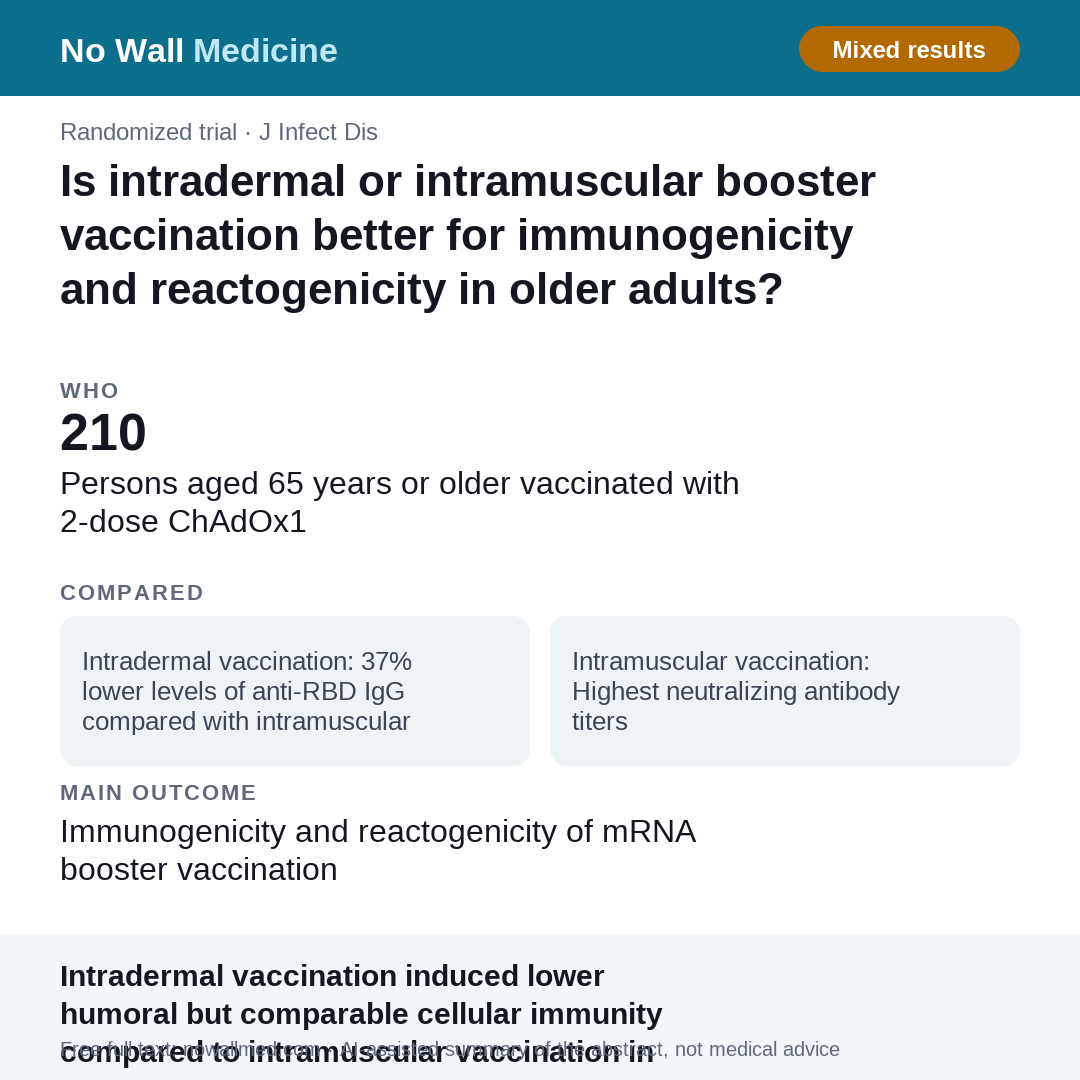
Is intradermal or intramuscular booster vaccination better for immunogenicity and reactogenicity in older adults?
Who
210
Persons aged 65 years or older vaccinated with 2-dose ChAdOx1
Compared
Intradermal vaccination: 37% lower levels of anti-RBD IgG compared with intramuscular
Intramuscular vaccination: Highest neutralizing antibody titers
Main outcome
Immunogenicity and reactogenicity of mRNA booster vaccination
Bottom line: Intradermal vaccination induced lower humoral but comparable cellular immunity compared to intramuscular vaccination in older adults.
J Infect Dis · 2023-05-04Download image
Clinical question: Is intradermal or intramuscular booster vaccination better for immunogenicity and reactogenicity in older adults?
Why it matters: It is unknown if intradermal administration of messenger RNA vaccines can serve as an alternative to intramuscular administration for older adults.
Key points
- Researchers randomized 210 participants aged 65 years or older to receive a messenger RNA booster via intradermal (into the skin) or intramuscular (into the muscle) injection.
- Intradermal vaccination induced 37% lower levels of anti-receptor-binding domain immunoglobulin G, a type of antibody, compared to the same vaccine given via intramuscular injection.
- The intradermal route was associated with fewer systemic side effects, though more local side effects were reported in the group receiving the intradermal mRNA-1273 vaccine.
Headline and key points written with AI from the paper’s abstract, with every number checked against it. Read the paper before relying on them.
Topics
Cite this article
Assantachai P, Niyomnaitham S, Chatthanawaree W, Intalapaporn S, Muangpaisan W, Phannarus H. Immunogenicity and Reactogenicity of Messenger RNA Coronavirus Disease 2019 Vaccine Booster Administered by Intradermal or Intramuscular Route in Thai Older Adults. J Infect Dis. 2023. doi:10.1093/infdis/jiad133
Spotted a mistake? Suggest a correction
Top studies every Monday
The week’s key trials and guidelines in your specialties, plus any topics you follow. By email, free.
Get the weekly digest