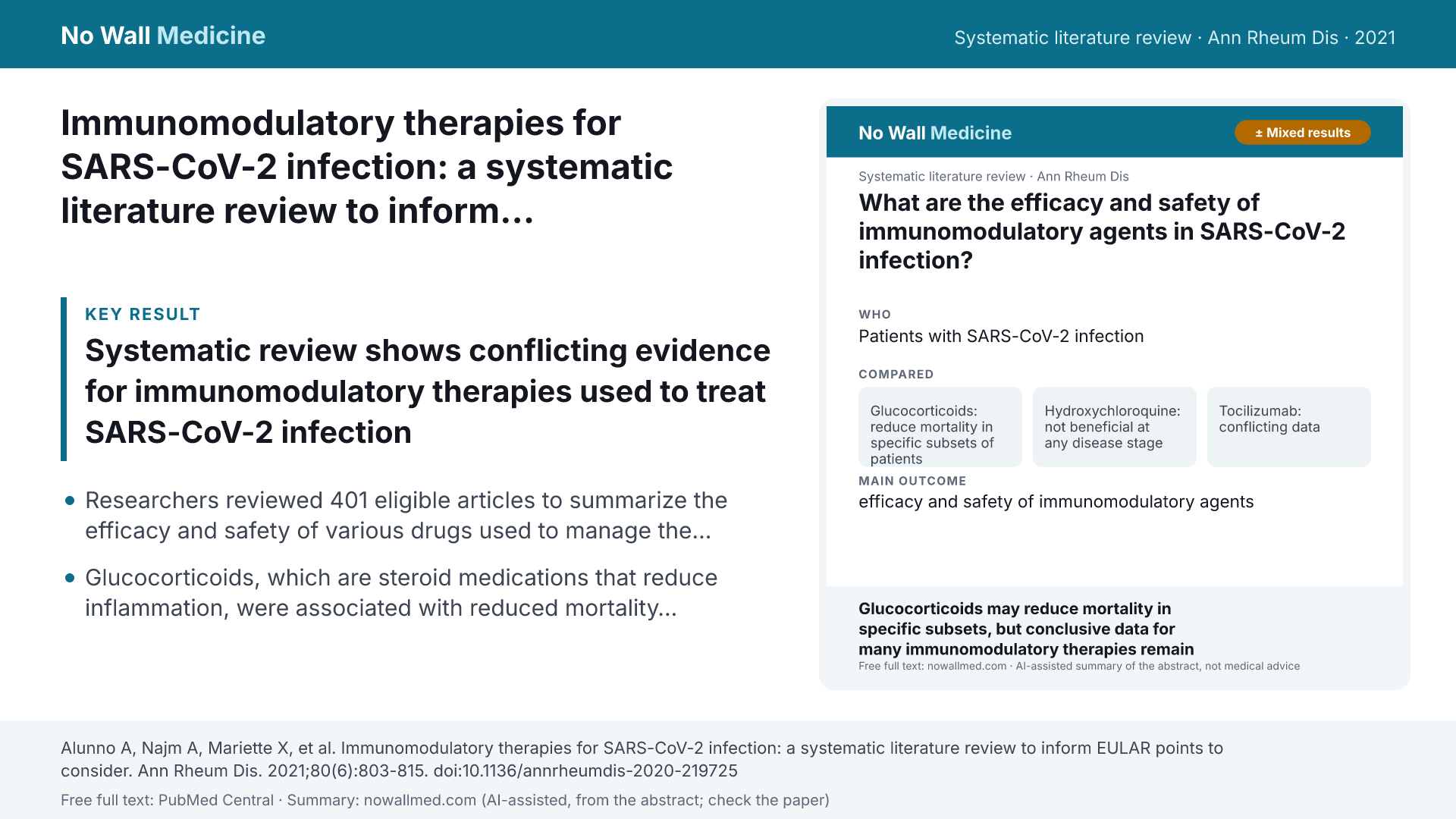
Systematic review shows conflicting evidence for immunomodulatory therapies used to treat SARS-CoV-2 infection
Immunomodulatory therapies for SARS-CoV-2 infection: a systematic literature review to inform EULAR points to consider
Systematic literature reviewMixed results
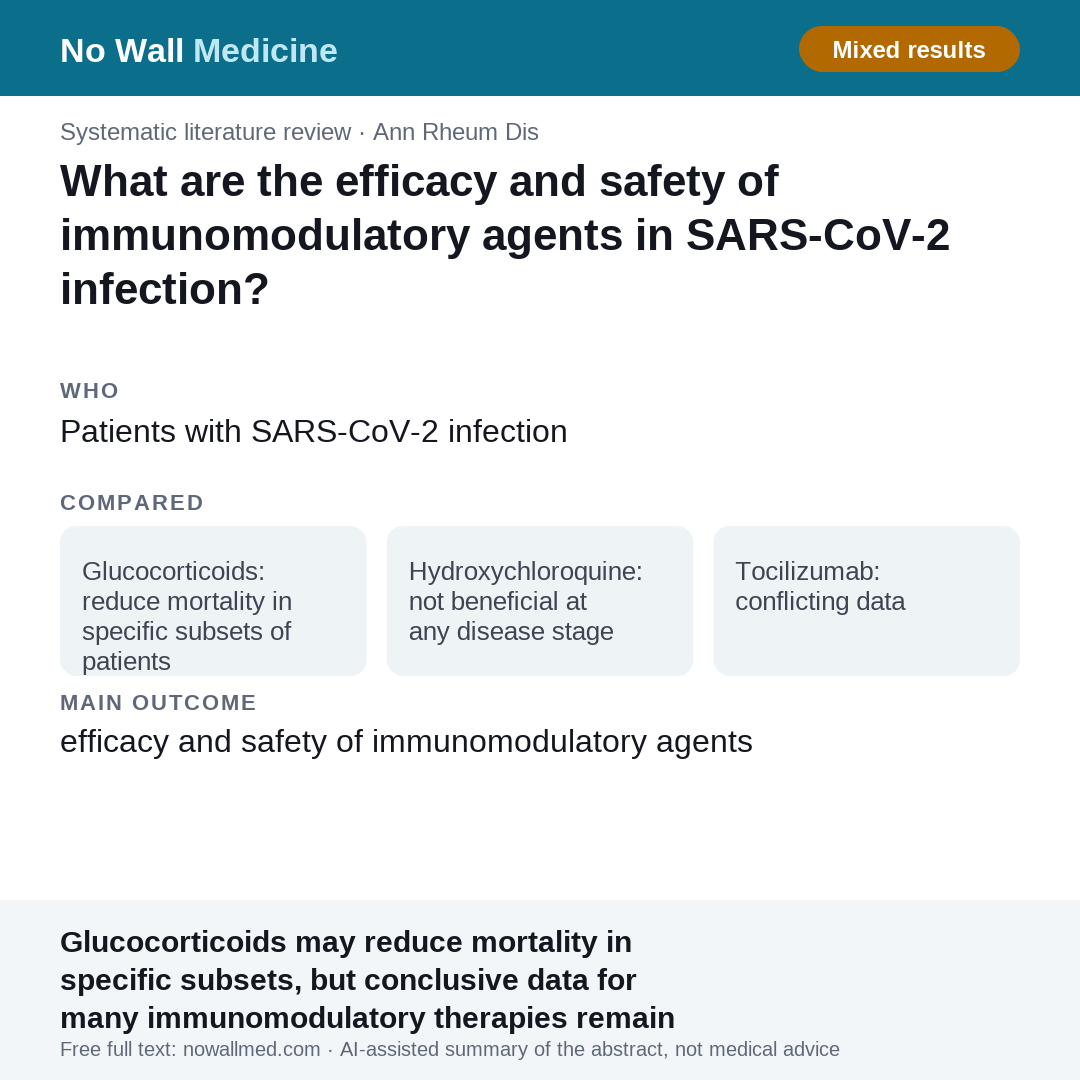
What are the efficacy and safety of immunomodulatory agents in SARS-CoV-2 infection?
Who
Patients with SARS-CoV-2 infection
Compared
Glucocorticoids: reduce mortality in specific subsets of patients
Hydroxychloroquine: not beneficial at any disease stage
Tocilizumab: conflicting data
Main outcome
efficacy and safety of immunomodulatory agents
Bottom line: Glucocorticoids may reduce mortality in specific subsets, but conclusive data for many immunomodulatory therapies remain scarce.
Limitation: Studies were at variable risk of bias and conclusive data are scarce.
Ann Rheum Dis · 2021-02-15Download image
Clinical question: What are the efficacy and safety of immunomodulatory agents in SARS-CoV-2 infection?
Why it matters: The efficacy and safety of various immunomodulatory agents for managing SARS-CoV-2 infection were not clearly established due to scarce and conflicting data.
Key points
- Researchers reviewed 401 eligible articles to summarize the efficacy and safety of various drugs used to manage the immune response in SARS-CoV-2 infection.
- Glucocorticoids, which are steroid medications that reduce inflammation, were associated with reduced mortality in specific patient subsets, while data for tocilizumab remained conflicting.
- Hydroxychloroquine was not found to be beneficial at any stage of the disease, and one randomized controlled trial for anakinra was negative.
Limitation the authors note: Studies included in the review were at variable risk of bias.
Headline and key points written with AI from the paper’s abstract, with every number checked against it. Read the paper before relying on them.
Was this summary helpful?
Abstract
Objective
To summarise the available information on efficacy and safety of immunomodulatory agents in SARS-CoV-2 infection. Methods
As part of a European League Against Rheumatism (EULAR) taskforce, a systematic literature search was conducted from January 2019 to 11 December 2020. Two reviewers independently identified eligible studies according to the Population, Intervention, Comparator and Outcome framework and extracted data on efficacy and safety of immunomodulatory agents used therapeutically in SARS-CoV-2 infection at any stage. The risk of bias was assessed with validated tools. Results
Of the 60 372 records, 401 articles were eligible for inclusion. Studies were at variable risk of bias. Randomised controlled trials (RCTs) were available for the following drugs: hydroxychloroquine (n=12), glucocorticoids (n=6), tocilizumab (n=4), convalescent plasma (n=4), interferon beta (n=2), intravenous immunoglobulins (IVIg) (n=2) and n=1 each for anakinra, baricitinib, colchicine, leflunomide, ruxolitinib, interferon kappa and vilobelimab. Glucocorticoids were able to reduce mortality in specific subsets of patients, while conflicting data were available about tocilizumab. Hydroxychloroquine was not beneficial at any disease stage, one RCT with anakinra was negative, one RCT with baricitinib+remdesivir was positive, and individual trials on some other compounds provided interesting, although preliminary, results. Conclusion
Although there is emerging evidence about immunomodulatory therapies for the management of COVID-19, conclusive data are scarce with some conflicting data. Since glucocorticoids seem to improve survival in some subsets of patients, RCTs comparing glucocorticoids alone versus glucocorticoids plus anticytokine/immunomodulatory treatment are warranted. This systematic literature review informed the initiative to formulate EULAR 'points to consider' on COVID-19 pathophysiology and immunomodulatory treatment from the rheumatology perspective.
Abstract reproduced under the article’s CC BY NC licence.
Subject terms
Cite this article
Alunno A, Najm A, Mariette X, De Marco G, Emmel J, Mason L. Immunomodulatory therapies for SARS-CoV-2 infection: a systematic literature review to inform EULAR points to consider. Ann Rheum Dis. 2021. doi:10.1136/annrheumdis-2020-219725
Spotted a mistake? Suggest a correction