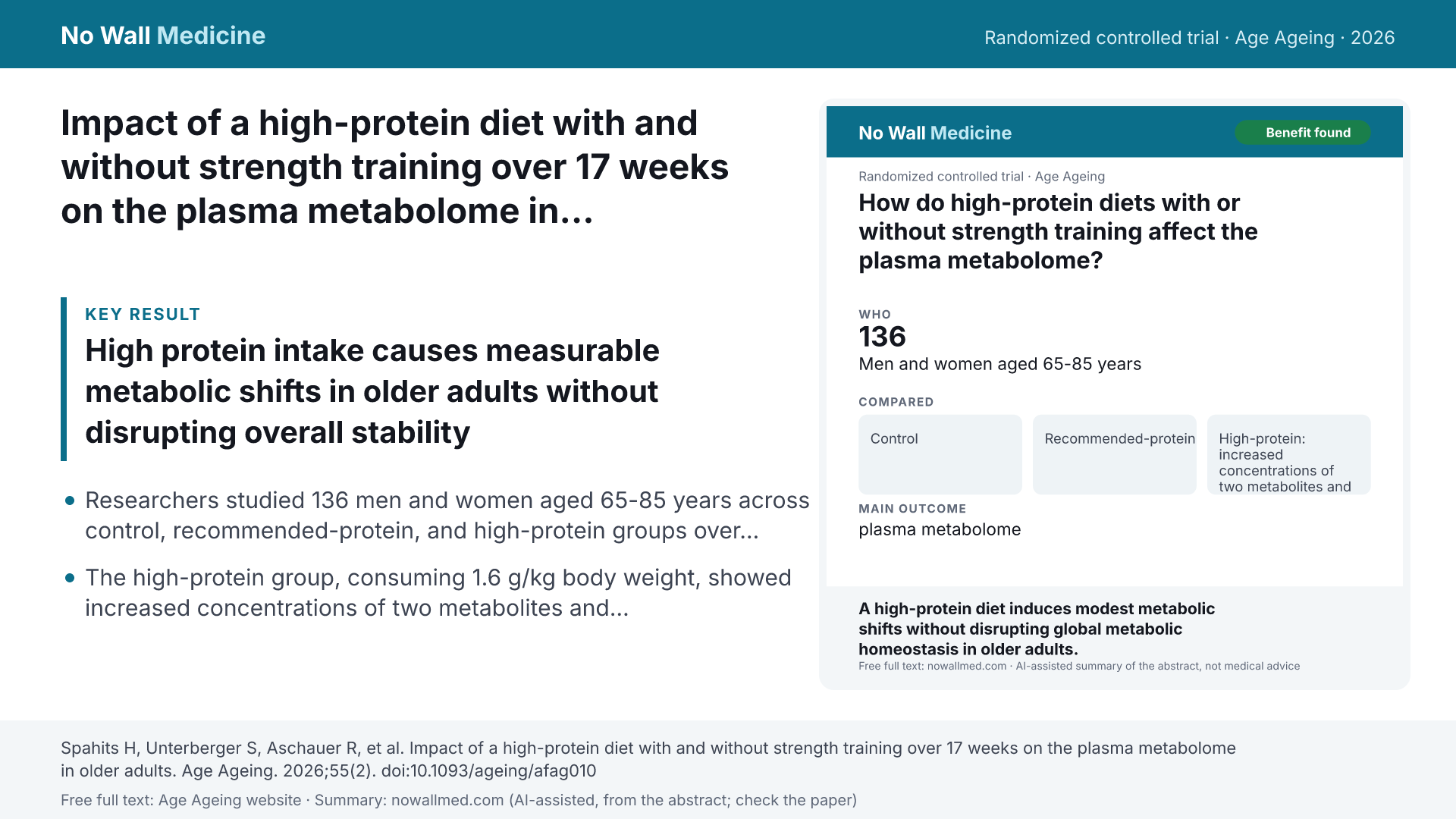
Impact of a high-protein diet with and without strength training over 17 weeks on the plasma metabolome in older adults
Key result: High protein intake causes measurable metabolic shifts in older adults without disrupting overall stability
Randomized controlled trialBenefit found
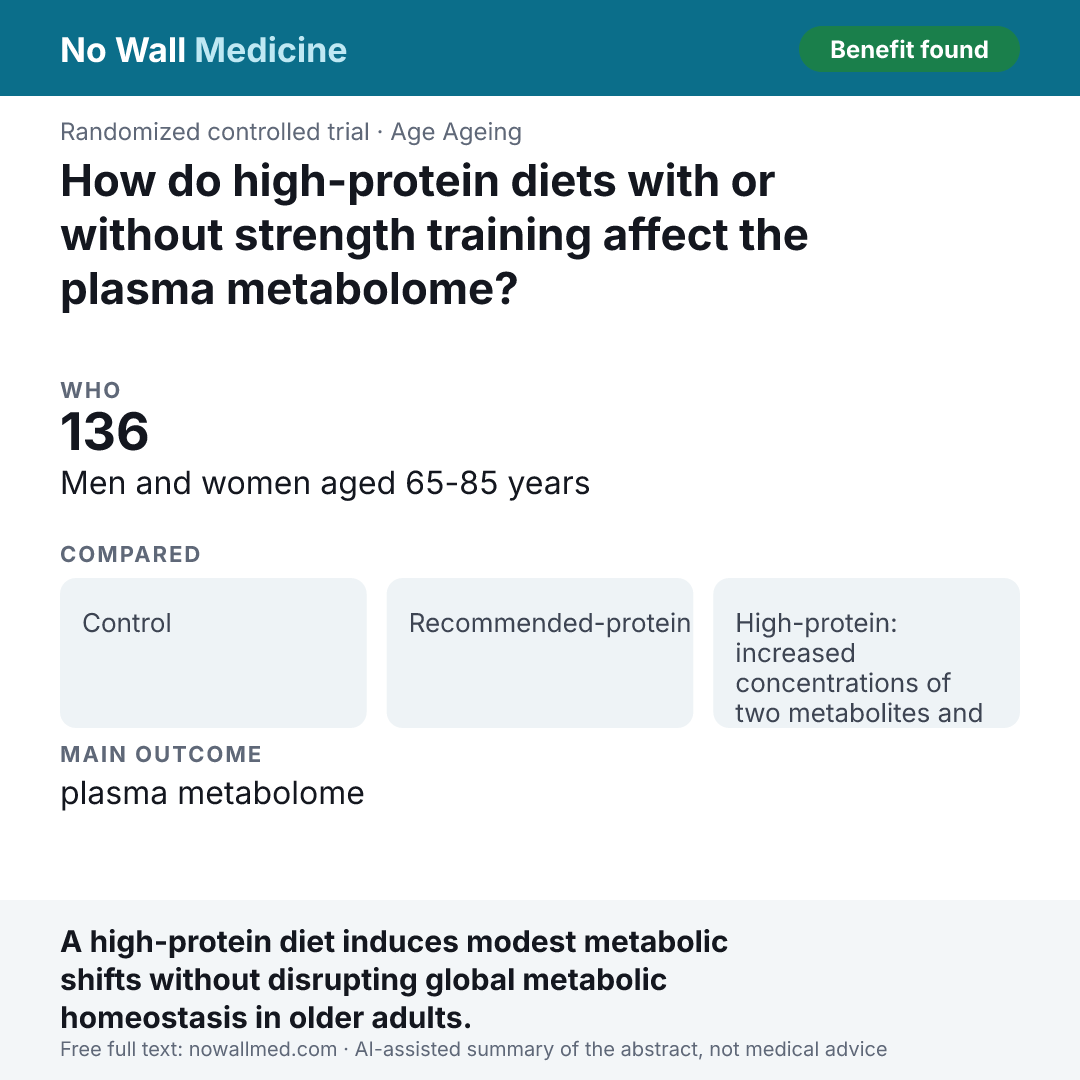
How do high-protein diets with or without strength training affect the plasma metabolome?
Who
136
Men and women aged 65-85 years
Compared
Control
Recommended-protein
High-protein: increased concentrations of two metabolites and reduced concentrations of 98 metabolites
Main outcome
plasma metabolome
Bottom line: A high-protein diet induces modest metabolic shifts without disrupting global metabolic homeostasis in older adults.
Age Ageing · 2026-02-05 · Save PNG
Key points
- Researchers studied 136 men and women aged 65-85 years across control, recommended-protein, and high-protein groups over 17 weeks.
- The high-protein group, consuming 1.6 g/kg body weight, showed increased concentrations of two metabolites and reduced concentrations of 98 metabolites compared to baseline.
- Most metabolic changes occurred during the dietary phase and were primarily related to lipids, energy, amino acids, heme degradation, and the urea cycle.
Why it matters: The long-term metabolic safety and precise systemic changes at the metabolome level in older adults remain uncharacterized.
Discussion prompts
- Would these patients look like yours? Who was left out?
- Is the main outcome one that matters to patients?
- Is the difference large enough to change what you do?
Cite: Spahits H, Unterberger S, Aschauer R, et al. Impact of a high-protein diet with and without strength training over 17 weeks on the plasma metabolome in older adults. Age Ageing. 2026;55(2). doi:10.1093/ageing/afag010
Free full text: Age Ageing website · Summary and visual abstract: nowallmed.com/a/impact-of-a-high-protein-diet-with-and-without-strength-training-over-4rmom2/ (AI-assisted from the abstract; check the paper before relying on it).