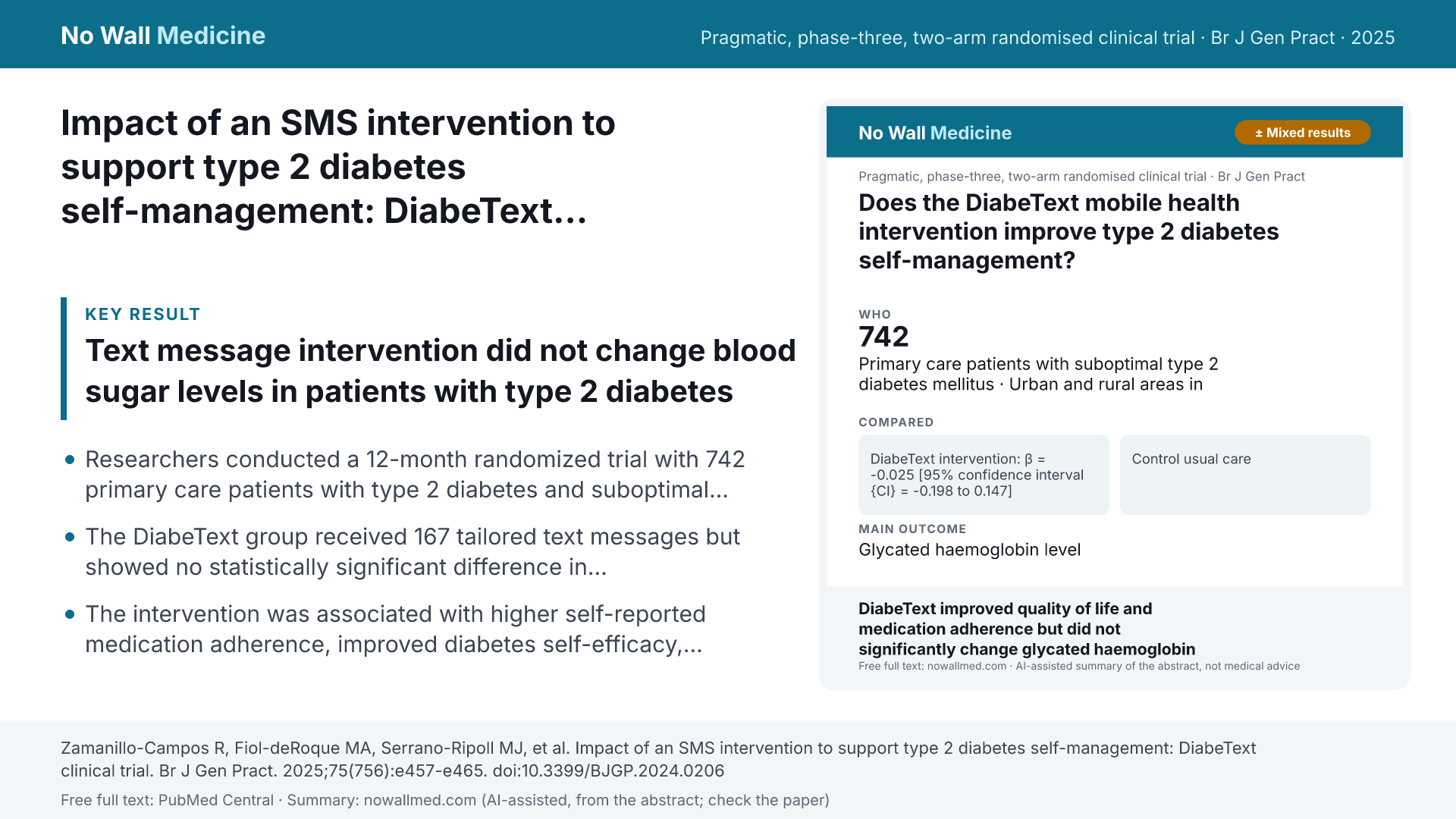
Impact of an SMS intervention to support type 2 diabetes self-management: DiabeText clinical trial
Key result: Text message intervention did not change blood sugar levels in patients with type 2 diabetes
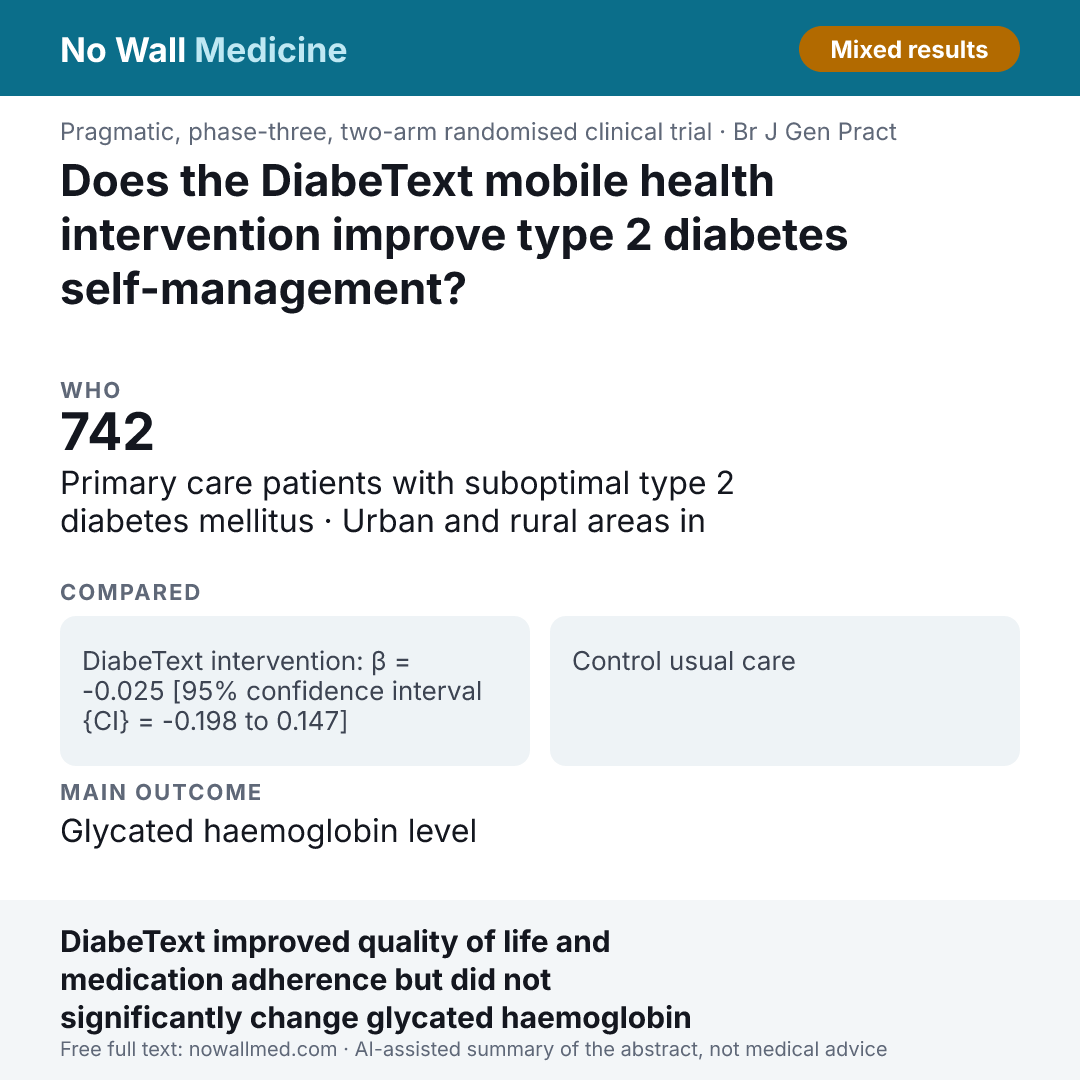
Pragmatic, phase-three, two-arm randomised clinical trialMixed results
Does the DiabeText mobile health intervention improve type 2 diabetes self-management?
Who
742
Primary care patients with suboptimal type 2 diabetes mellitus · Urban and rural areas in Balearic Islands, Spain
Compared
DiabeText intervention: β = -0.025 [95% confidence interval {CI} = -0.198 to 0.147]
Control usual care
Main outcome
Glycated haemoglobin level
Result: β = -0.025 (95% CI -0.198 to 0.147)
Bottom line: DiabeText improved quality of life and medication adherence but did not significantly change glycated haemoglobin levels.
Br J Gen Pract · 2025-06-26 · Save PNG
Key points
- Researchers conducted a 12-month randomized trial with 742 primary care patients with type 2 diabetes and suboptimal blood sugar control.
- The DiabeText group received 167 tailored text messages but showed no statistically significant difference in glycated haemoglobin levels compared to usual care.
- The intervention was associated with higher self-reported medication adherence, improved diabetes self-efficacy, and better health-related quality of life scores.
Discussion prompts
- Would these patients look like yours? Who was left out?
- Is the main outcome one that matters to patients?
- Is the difference large enough to change what you do?
Cite: Zamanillo-Campos R, Fiol-deRoque MA, Serrano-Ripoll MJ, et al. Impact of an SMS intervention to support type 2 diabetes self-management: DiabeText clinical trial. Br J Gen Pract. 2025;75(756):e457-e465. doi:10.3399/BJGP.2024.0206
Free full text: PubMed Central · Summary and visual abstract: nowallmed.com/a/impact-of-an-sms-intervention-to-support-type-2-diabetes-self-28txfo/ (AI-assisted from the abstract; check the paper before relying on it).