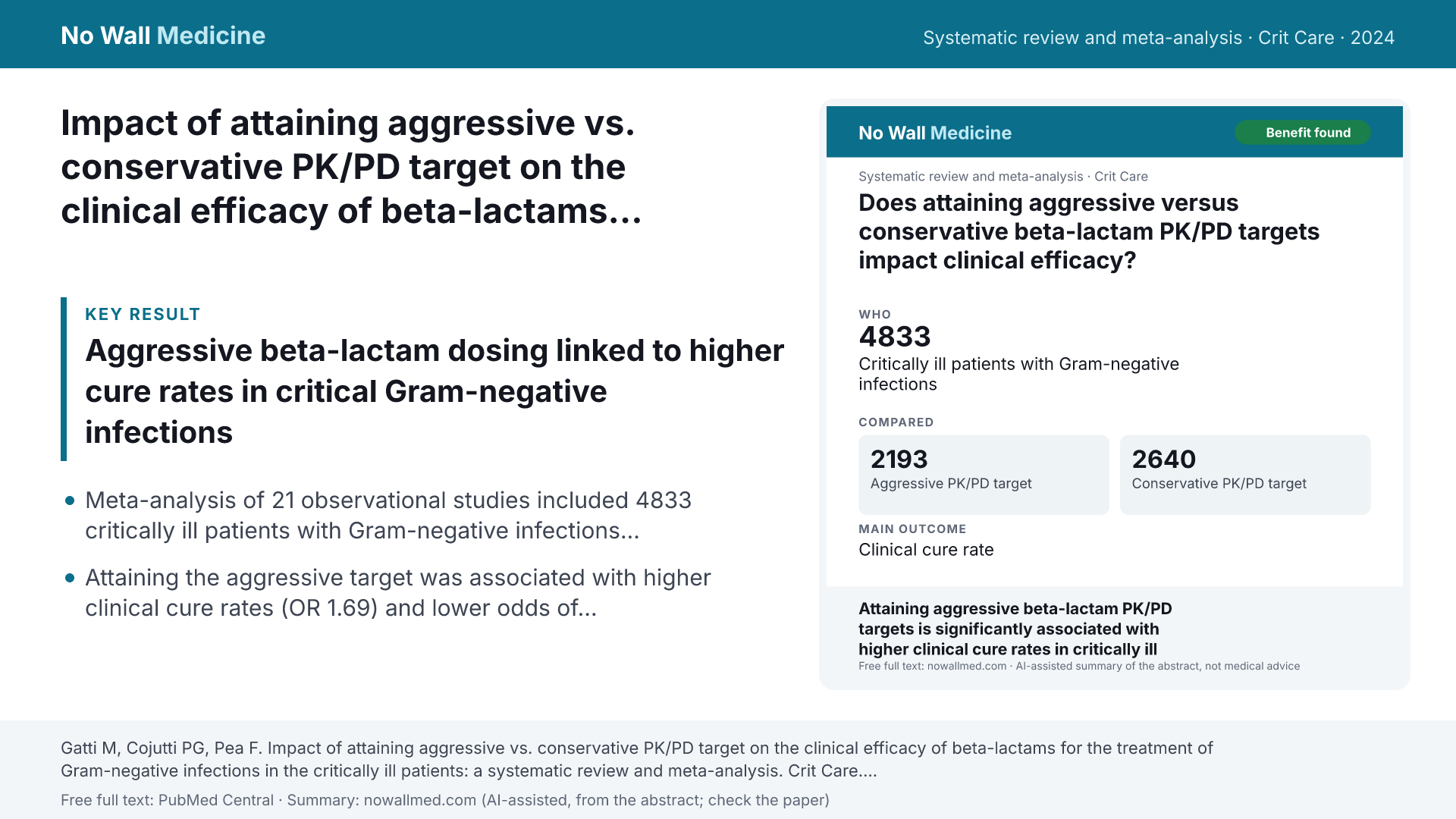
Aggressive beta-lactam dosing linked to higher cure rates in critical Gram-negative infections
Impact of attaining aggressive vs. conservative PK/PD target on the clinical efficacy of beta-lactams for the treatment of Gram-negative infections in the critically ill patients: a systematic review and meta-analysis
Systematic review and meta-analysisBenefit found
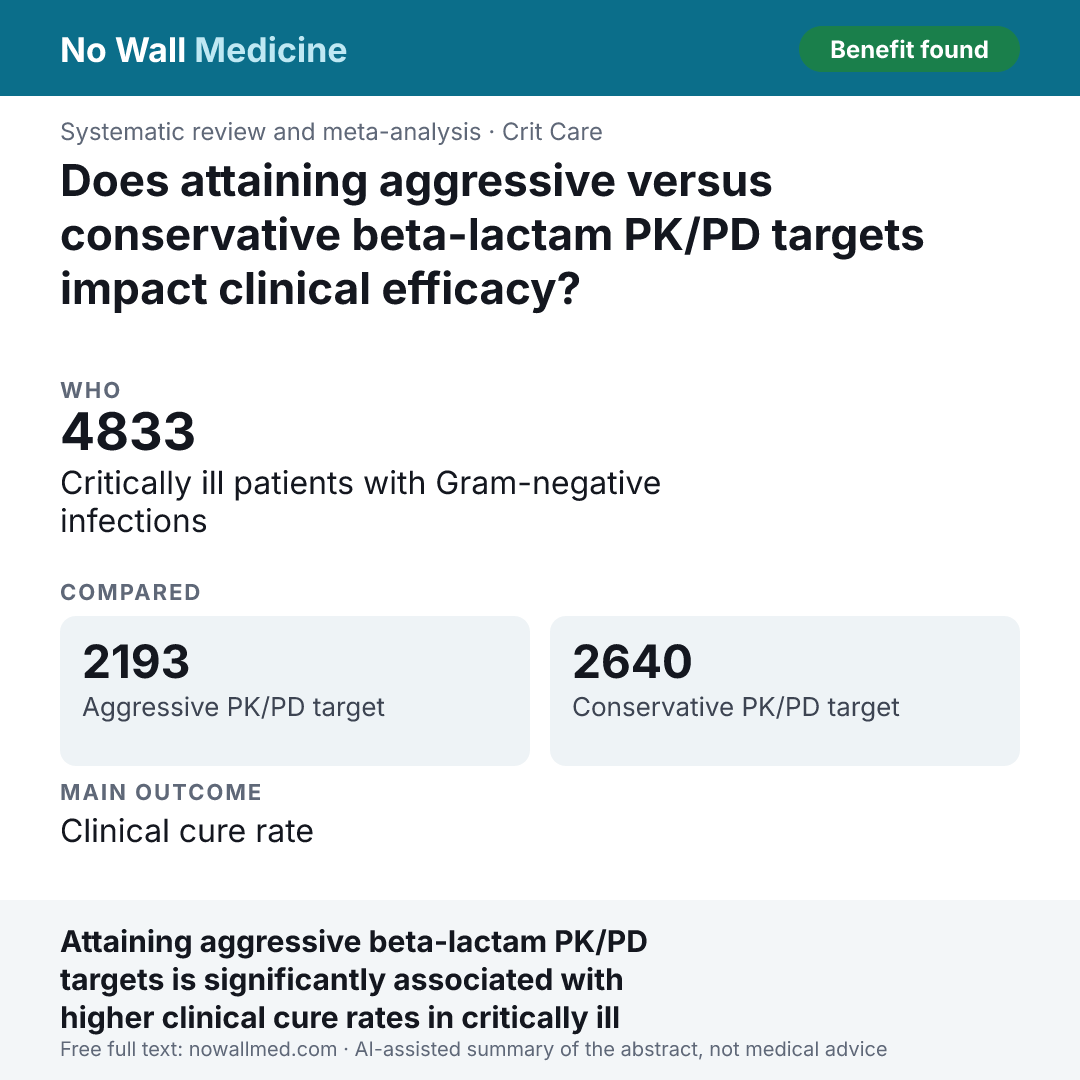
Does attaining aggressive versus conservative beta-lactam PK/PD targets impact clinical efficacy?
Who
4833
Critically ill patients with Gram-negative infections
Compared
2193Aggressive PK/PD target
2640Conservative PK/PD target
Main outcome
Clinical cure rate
Result: odds ratio 1.69 (95% CI 1.15-2.49)
Bottom line: Attaining aggressive beta-lactam PK/PD targets is significantly associated with higher clinical cure rates in critically ill patients.
Limitation: The risk of bias was moderate in 19 studies and severe in 2 studies.
Crit Care · 2024-04-16 · Save PNG
Clinical question: Does attaining aggressive versus conservative beta-lactam PK/PD targets impact clinical efficacy?
Why it matters: Applies to critically ill patients with Gram-negative infections; helps identify patients at higher risk of failing aggressive PK/PD targets.
Key points
- Meta-analysis of 21 observational studies included 4833 critically ill patients with Gram-negative infections comparing aggressive versus conservative PK/PD targets.
- Attaining the aggressive target was associated with higher clinical cure rates (OR 1.69) and lower odds of beta-lactam resistance development (OR 0.06).
- Male gender, BMI > 30 kg/m2, augmented renal clearance, and high MIC were linked to failure in attaining aggressive targets.
Limitation the authors note: Risk of bias was moderate in 19 studies and severe in the other 2.
Headline and key points written with AI from the paper’s abstract, with every number checked against it. Read the paper before relying on them.
Was this summary helpful?
Subject terms
Headline, design, result, key points, caveat and citation as plain text.
Cite this article
Gatti M, Cojutti PG, Pea F. Impact of attaining aggressive vs. conservative PK/PD target on the clinical efficacy of beta-lactams for the treatment of Gram-negative infections in the critically ill patients: a systematic review and meta-analysis. Crit Care. 2024;28(1):123. doi:10.1186/s13054-024-04911-5
Spotted a mistake? Suggest a correction