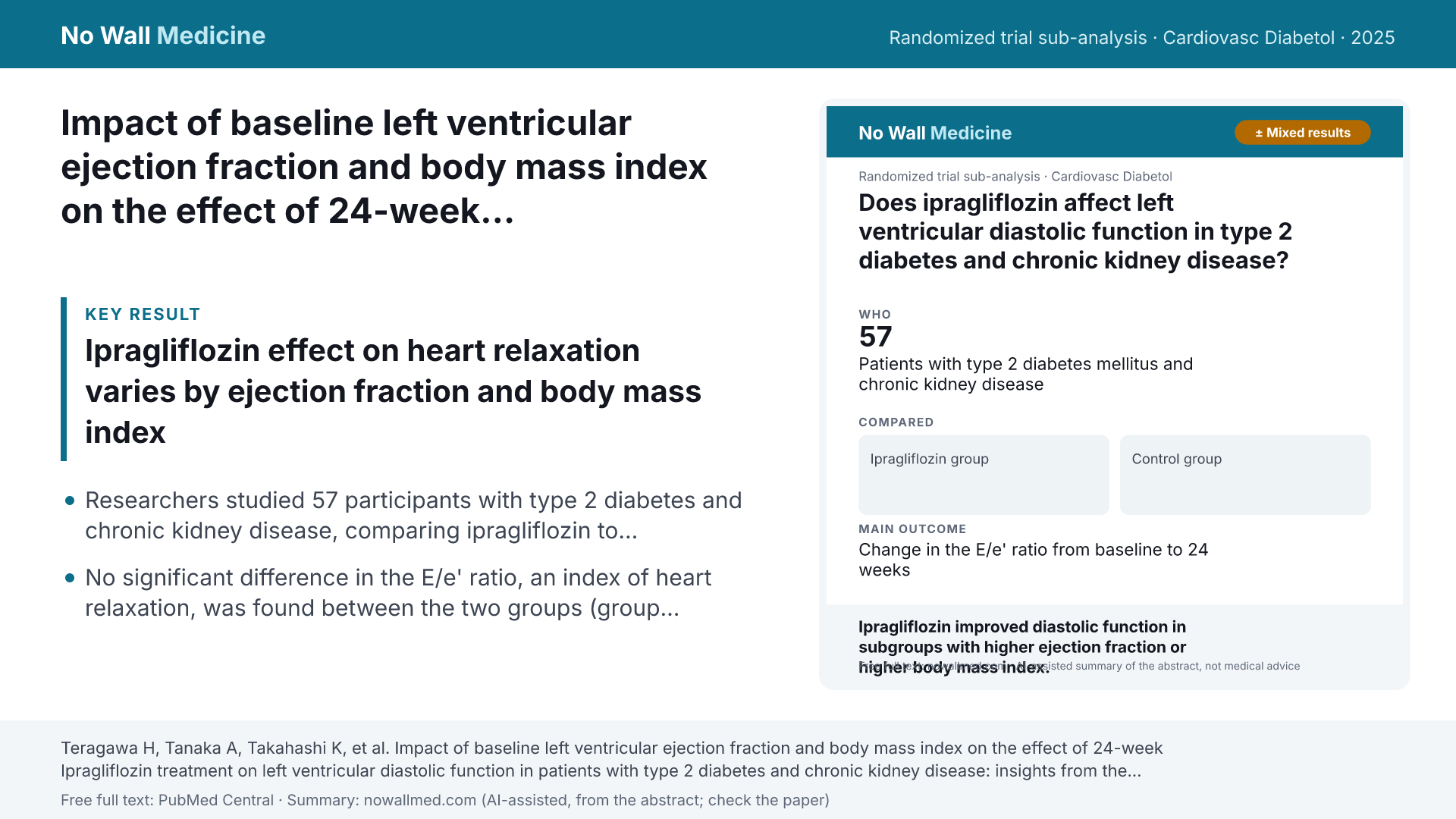
Ipragliflozin effect on heart relaxation varies by ejection fraction and body mass index
Impact of baseline left ventricular ejection fraction and body mass index on the effect of 24-week Ipragliflozin treatment on left ventricular diastolic function in patients with type 2 diabetes and chronic kidney disease: insights from the PROCEED trial
Randomized trial sub-analysisMixed results
Does ipragliflozin affect left ventricular diastolic function in type 2 diabetes and chronic kidney disease?
Who
57
Patients with type 2 diabetes mellitus and chronic kidney disease
Compared
Ipragliflozin group
Control group
Main outcome
Change in the E/e' ratio from baseline to 24 weeks
Result: group difference -0.82 (95% CI -2.44 to 0.81)
Bottom line: Ipragliflozin improved diastolic function in subgroups with higher ejection fraction or higher body mass index.
Cardiovasc Diabetol · 2025-05-02 · Save PNG
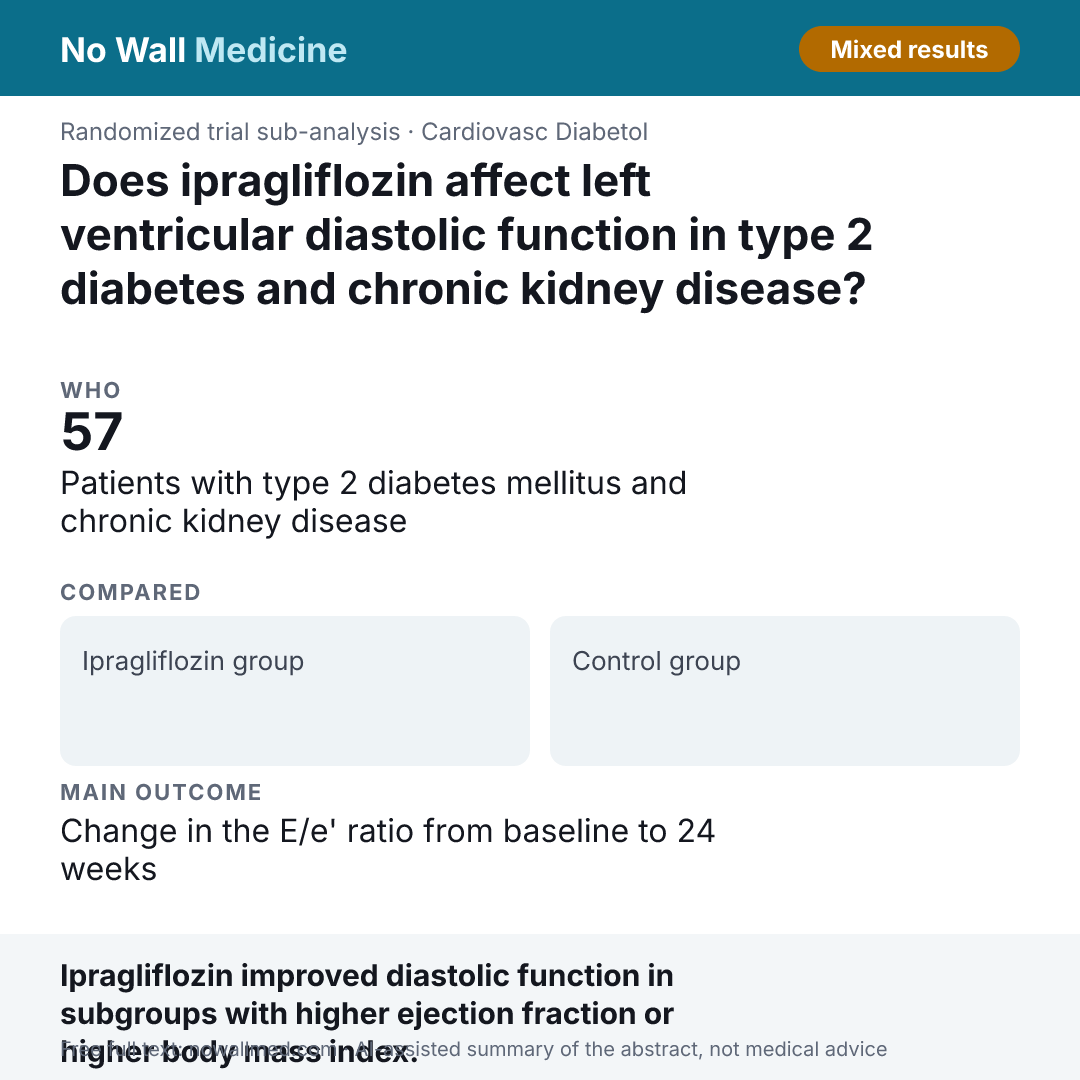
Clinical question: Does ipragliflozin affect left ventricular diastolic function in type 2 diabetes and chronic kidney disease?
Why it matters: Studies assessing the effects of sodium-glucose co-transporter 2 inhibitors on left ventricular diastolic function have produced conflicting results.
Key points
- Researchers studied 57 participants with type 2 diabetes and chronic kidney disease, comparing ipragliflozin to standard therapy over 24 weeks.
- No significant difference in the E/e' ratio, an index of heart relaxation, was found between the two groups (group difference: -0.82; P = 0.317).
- Ipragliflozin was associated with a reduction in the E/e' ratio in patients with a left ventricular ejection fraction ≥ 60% or a body mass index ≥ 25 kg/m2.
Headline and key points written with AI from the paper’s abstract, with every number checked against it. Read the paper before relying on them.
Was this summary helpful?
Subject terms
Headline, design, result, key points, caveat and citation as plain text.
Cite this article
Teragawa H, Tanaka A, Takahashi K, et al. Impact of baseline left ventricular ejection fraction and body mass index on the effect of 24-week Ipragliflozin treatment on left ventricular diastolic function in patients with type 2 diabetes and chronic kidney disease: insights from the PROCEED trial. Cardiovasc Diabetol. 2025;24(1):190. doi:10.1186/s12933-025-02745-1
Spotted a mistake? Suggest a correction