Cerebral embolic protection devices did not impact cognitive function after aortic valve implantation
Impact of Cerebral Embolic Protection on Cognitive Function After Transcatheter Aortic Valve Implantation: Data From the BHF PROTECT-TAVI Randomized Trial
Randomized trialNo clear difference
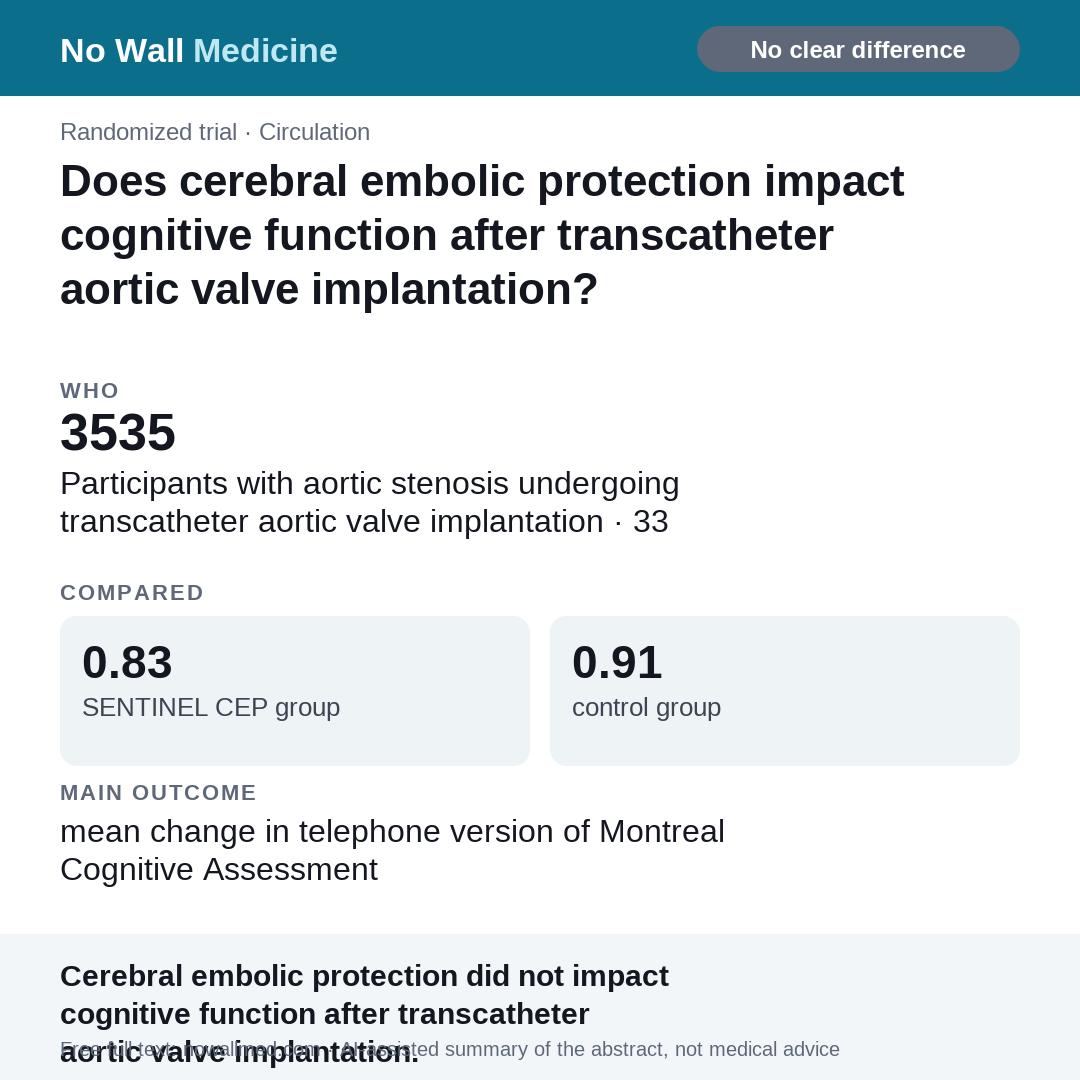
Does cerebral embolic protection impact cognitive function after transcatheter aortic valve implantation?
Who
3535
Participants with aortic stenosis undergoing transcatheter aortic valve implantation · 33 centers in the United Kingdom
Compared
0.83SENTINEL CEP group (95% CI, 0.70-0.96)
0.91control group (95% CI, 0.79-1.04)
Main outcome
mean change in telephone version of Montreal Cognitive Assessment
Result: -0.07 (95% CI, -0.22 to 0.09)
Bottom line: Cerebral embolic protection did not impact cognitive function after transcatheter aortic valve implantation.
Circulation · 2025-08-30Download image
Clinical question: Does cerebral embolic protection impact cognitive function after transcatheter aortic valve implantation?
Why it matters: It is unknown if using devices to capture debris during heart valve procedures can prevent declines in neurocognitive function.
Key points
- Researchers studied 3535 participants randomized to receive either a cerebral embolic protection device or no device during transcatheter aortic valve implantation.
- The mean change in Montreal Cognitive Assessment scores was 0.83 in the device group and 0.91 in the control group, showing no significant difference.
- A drop of 3 points or more on the cognitive assessment occurred in 8.7% of the device group and 8.0% of the control group.
Headline and key points written with AI from the paper’s abstract, with every number checked against it. Read the paper before relying on them.
Was this summary helpful?
Subject terms
Cite this article
Kennedy J, Blackman DJ, Dodd M, Poggesi A, Read L, Jamal Z. Impact of Cerebral Embolic Protection on Cognitive Function After Transcatheter Aortic Valve Implantation: Data From the BHF PROTECT-TAVI Randomized Trial. Circulation. 2025. doi:10.1161/CIRCULATIONAHA.125.076761
Spotted a mistake? Suggest a correction
Top studies every Monday
The week’s key trials and guidelines in your specialties, plus any topics you follow. By email, free.
Get the weekly digest