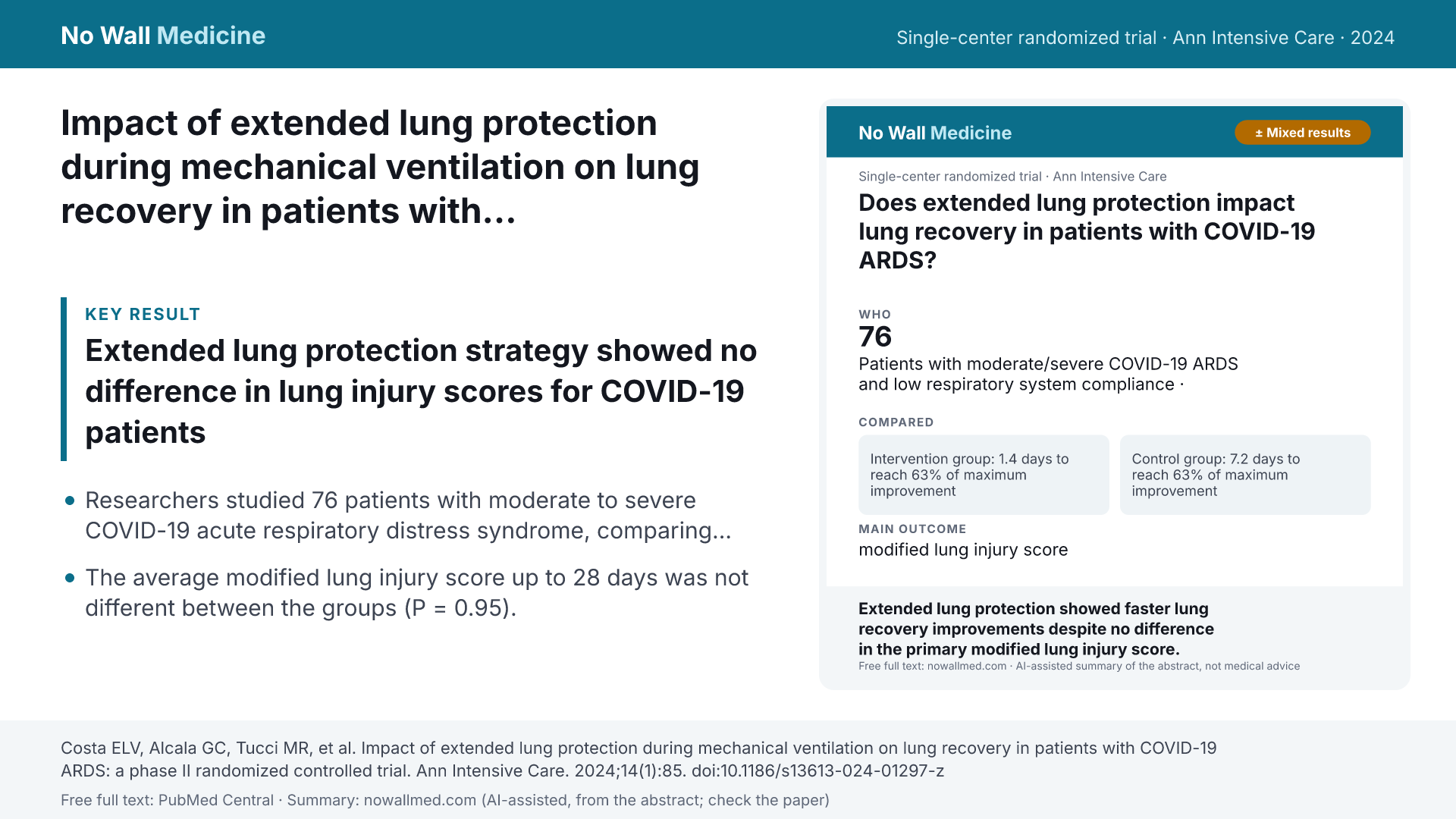
Impact of extended lung protection during mechanical ventilation on lung recovery in patients with COVID-19 ARDS: a phase II randomized controlled trial
Key result: Extended lung protection strategy showed no difference in lung injury scores for COVID-19 patients
Key points
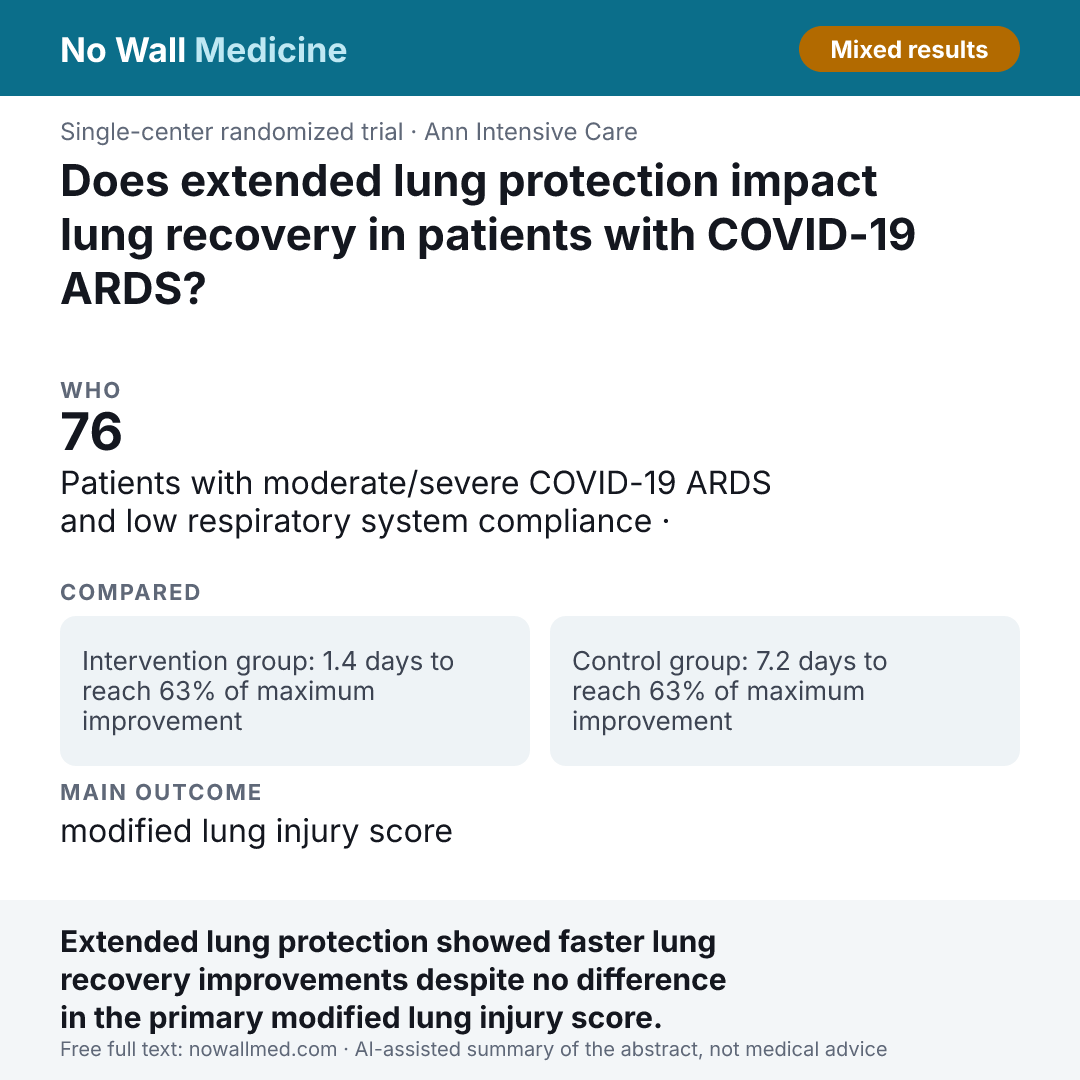
- Researchers studied 76 patients with moderate to severe COVID-19 acute respiratory distress syndrome, comparing a strategy using electrical impedance tomography to a standard low positive end-expiratory pressure strategy.
- The average modified lung injury score up to 28 days was not different between the groups (P = 0.95).
- The intervention group was associated with a faster improvement in lung injury scores (1.4 vs. 7.2 days to reach 63% of maximum improvement) and a shorter time to room-air breathing.
Why it matters: The optimal duration of lung protection and how to manage patient effort to prevent self-inflicted lung injury in COVID-19 patients remains undefined.
Limitation the authors note: The study ended prematurely after three consecutive months without patient enrollment because the pandemic subsided.
Discussion prompts
- Would these patients look like yours? Who was left out?
- Is the main outcome one that matters to patients?
- Is the difference large enough to change what you do?
Cite: Costa ELV, Alcala GC, Tucci MR, et al. Impact of extended lung protection during mechanical ventilation on lung recovery in patients with COVID-19 ARDS: a phase II randomized controlled trial. Ann Intensive Care. 2024;14(1):85. doi:10.1186/s13613-024-01297-z
Free full text: PubMed Central · Summary and visual abstract: nowallmed.com/a/impact-of-extended-lung-protection-during-mechanical-ventilation-on-bbt1cw/ (AI-assisted from the abstract; check the paper before relying on it).