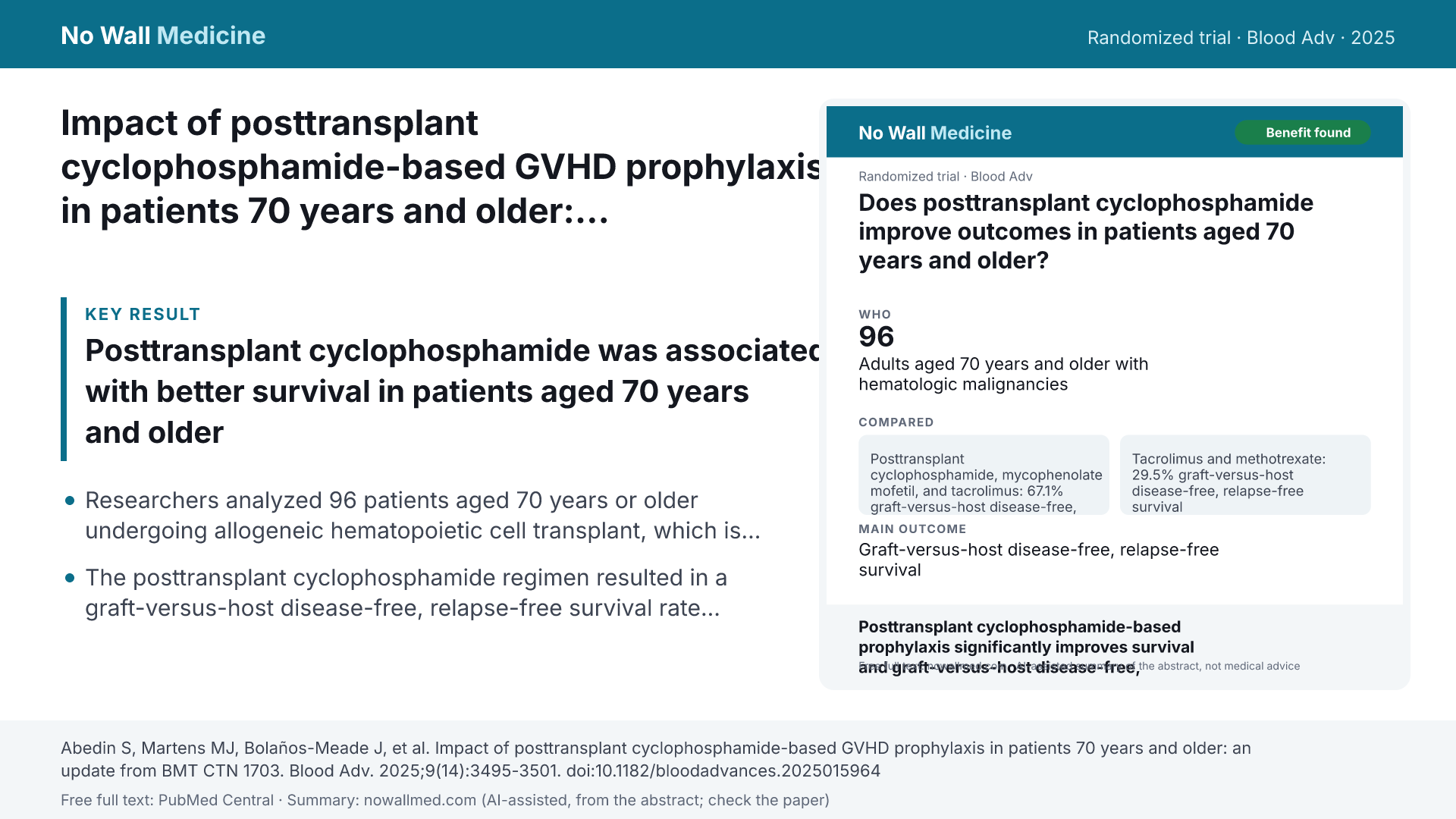
Posttransplant cyclophosphamide was associated with better survival in patients aged 70 years and older
Impact of posttransplant cyclophosphamide-based GVHD prophylaxis in patients 70 years and older: an update from BMT CTN 1703
Randomized trialBenefit found
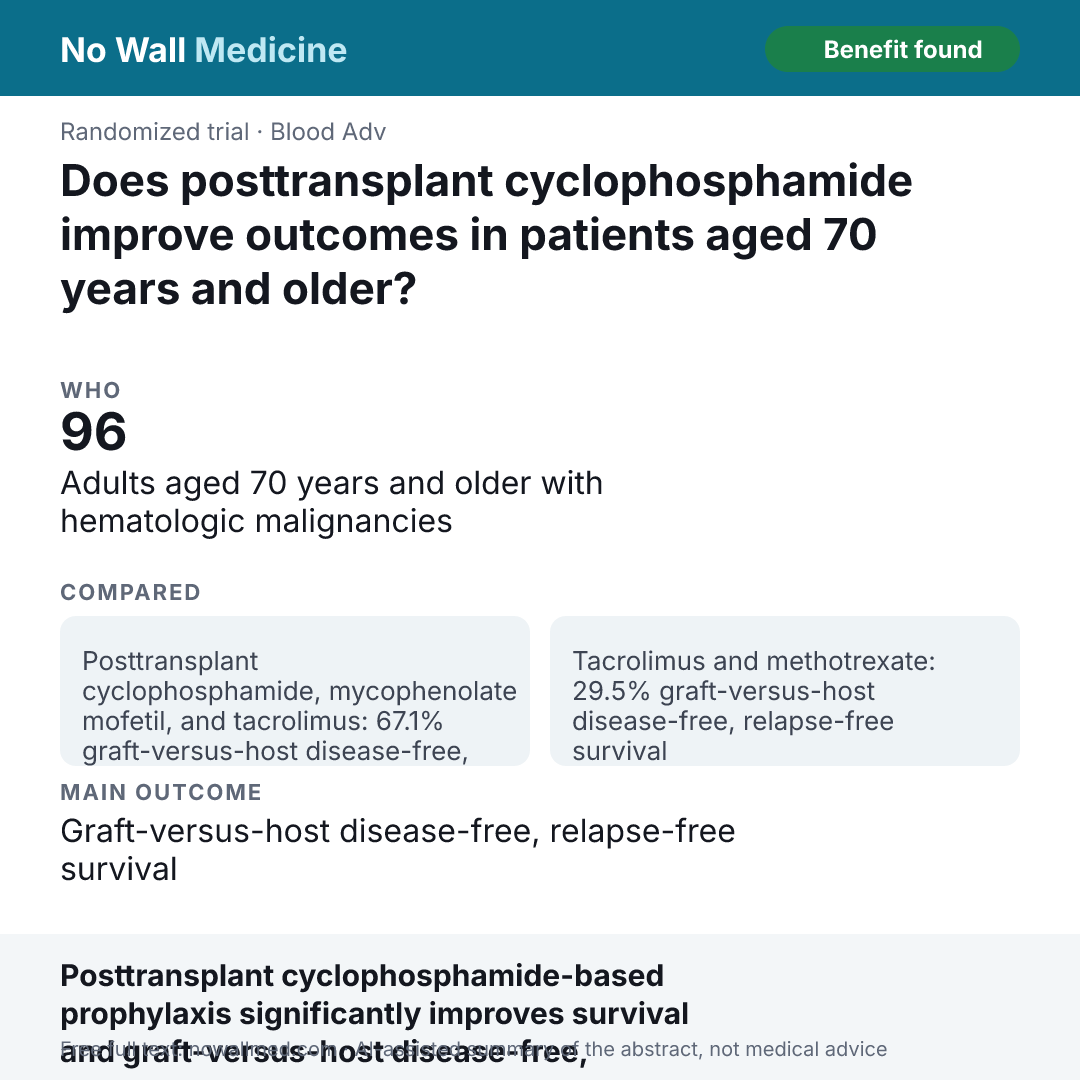
Does posttransplant cyclophosphamide improve outcomes in patients aged 70 years and older?
Who
96
Adults aged 70 years and older with hematologic malignancies
Compared
Posttransplant cyclophosphamide, mycophenolate mofetil, and tacrolimus: 67.1% graft-versus-host disease-free, relapse-free survival
Tacrolimus and methotrexate: 29.5% graft-versus-host disease-free, relapse-free survival
Main outcome
Graft-versus-host disease-free, relapse-free survival
Bottom line: Posttransplant cyclophosphamide-based prophylaxis significantly improves survival and graft-versus-host disease-free, relapse-free survival in older adults.
Blood Adv · 2025-04-30 · Save PNG
Same trial (NCT03959241)
Papers we list that report this registered trial, oldest first. Read a secondary analysis alongside the main results.
- Main results
Cyclophosphamide regimen improved GVHD-free survival at 1 year post-transplantation NEJM 2023-06 - Related analysis Benefit found
This paper Blood Adv 2025-04 - Related analysis No clear difference
Microbiome diversity at neutrophil engraftment was not associated with mortality after transplant Nat Med 2026-11
Clinical question: Does posttransplant cyclophosphamide improve outcomes in patients aged 70 years and older?
Why it matters: Graft-versus-host disease, where the new immune system attacks the body, is a major barrier to using stem cell transplants in older adults.
Key points
- Researchers analyzed 96 patients aged 70 years or older undergoing allogeneic hematopoietic cell transplant, which is a stem cell transplant, to compare two drug regimens.
- The posttransplant cyclophosphamide regimen resulted in a graft-versus-host disease-free, relapse-free survival rate of 67.1% compared to 29.5% for the tacrolimus and methotrexate group.
- Adjusted 1-year survival was 94.3% with posttransplant cyclophosphamide compared to 60.2% with tacrolimus and methotrexate.
Headline and key points written with AI from the paper’s abstract, with every number checked against it. Read the paper before relying on them.
Was this summary helpful?
Abstract
Allogeneic hematopoietic cell transplant (allo-HCT) is underutilized in adults aged ≥70 years. Morbidity, often driven by graft-versus-host disease (GVHD), is considered a major barrier to its use. The BMT CTN 1703 trial (ClinicalTrials.gov identifier: NCT03959241) randomly assigned adults with hematologic malignancies undergoing allo-HCT after reduced intensity conditioning to receive either posttransplant cyclophosphamide, mycophenolate mofetil, and tacrolimus (PTCy) or tacrolimus and methotrexate (Tac/MTX) for GVHD prophylaxis. Overall study results revealed superior GVHD-free, relapse-free survival (GRFS) with PTCy-based prophylaxis. This analysis explored the impact of PTCy in patients aged ≥70 years enrolled in BMT CTN 1703. We analyzed outcomes for 96 patients aged ≥70 years. PTCy maintained superiority for the primary end point with a GRFS rate of 67.1% compared with 29.5% with Tac/MTX (P = .001). GVHD control and improved immunosuppression-free survival contributed to a lower 1-year nonrelapse mortality (NRM) with PTCy. Furthermore, lower rates of relapse/progression were observed with PTCy, altogether resulting in significantly improved adjusted 1-year survival with PTCy at 94.3% vs 60.2% with Tac/MTX (P = .001). PTCy-based GVHD prophylaxis should be considered standard prophylaxis for older adults. Given low rates of NRM and excellent survival outcomes with this approach, there should be greater consideration for allo-HCT in older patients, particularly patients aged ≥70 years. This trial was registered at www.ClinicalTrials.gov as #NCT03959241.
Abstract reproduced under the article’s CC BY NC ND licence.
Subject terms
Headline, design, result, key points, caveat and citation as plain text.
Cite this article
Abedin S, Martens MJ, Bolaños-Meade J, et al. Impact of posttransplant cyclophosphamide-based GVHD prophylaxis in patients 70 years and older: an update from BMT CTN 1703. Blood Adv. 2025;9(14):3495-3501. doi:10.1182/bloodadvances.2025015964
Spotted a mistake? Suggest a correction