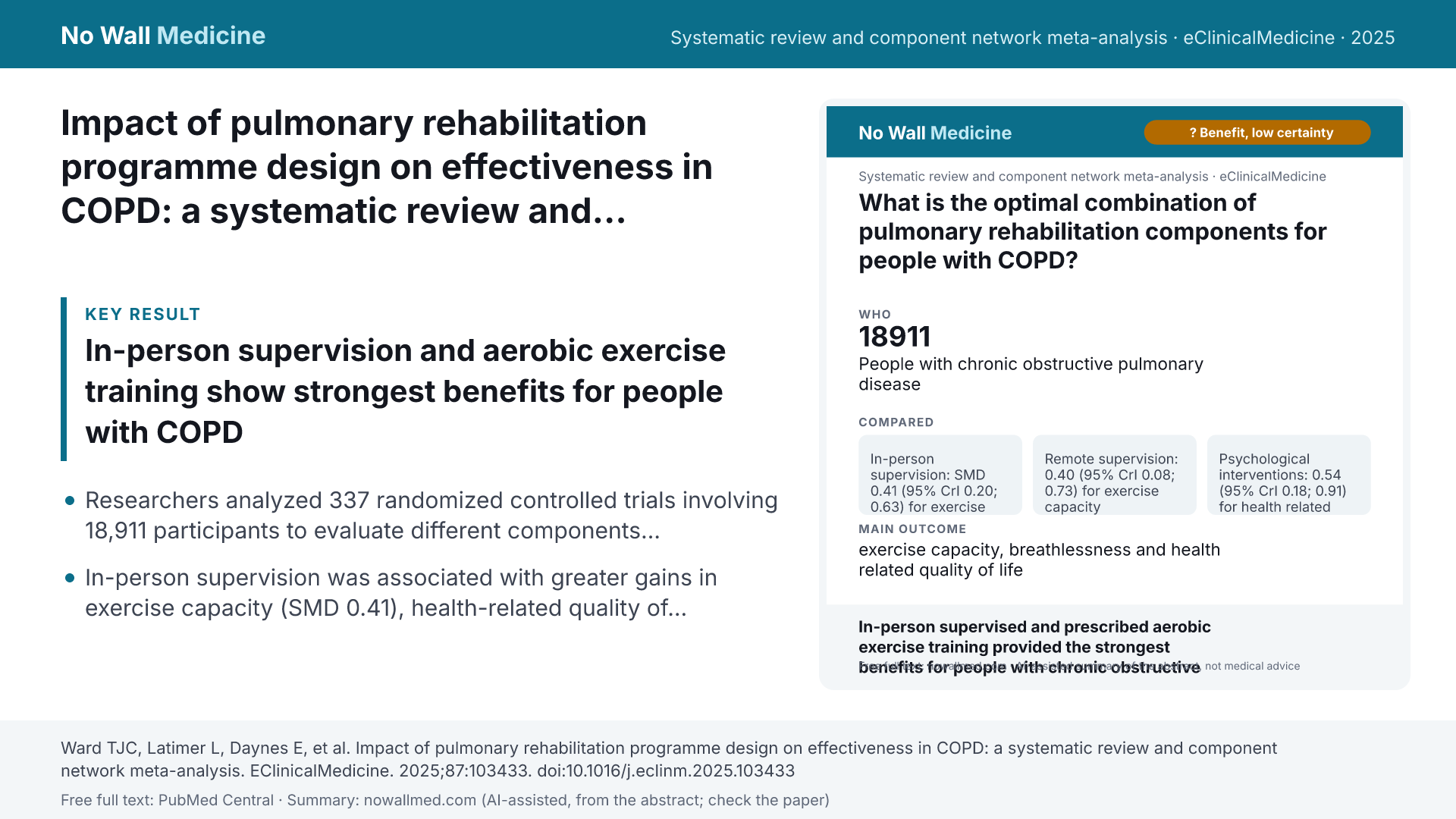
Impact of pulmonary rehabilitation programme design on effectiveness in COPD: a systematic review and component network meta-analysis
Key result: In-person supervision and aerobic exercise training show strongest benefits for people with COPD
Key points
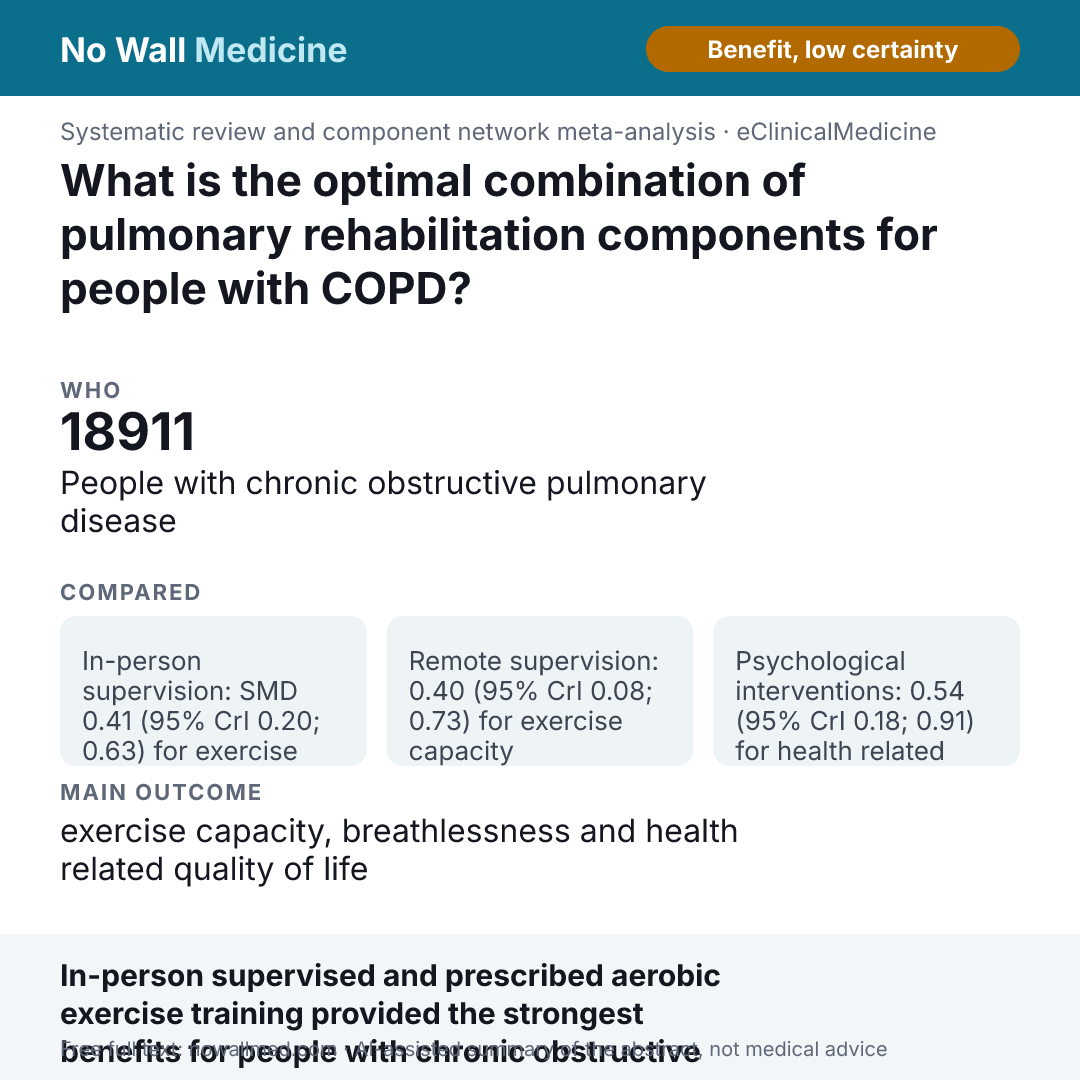
- Researchers analyzed 337 randomized controlled trials involving 18,911 participants to evaluate different components of pulmonary rehabilitation for chronic obstructive pulmonary disease.
- In-person supervision was associated with greater gains in exercise capacity (SMD 0.41), health-related quality of life (0.43), and breathlessness (0.31) compared to exercise alone.
- Aerobic training at high or very high intensity appeared most effective for all outcomes, while adding structured education did not improve any measured outcome.
Limitation the authors note: A high percentage of studies had a high risk of bias, including 60% for exercise capacity, 63% for health-related quality of life, and 59% for breathlessness.
Discussion prompts
- Would these patients look like yours? Who was left out?
- Is the main outcome one that matters to patients?
- Is the difference large enough to change what you do?
Cite: Ward TJC, Latimer L, Daynes E, et al. Impact of pulmonary rehabilitation programme design on effectiveness in COPD: a systematic review and component network meta-analysis. EClinicalMedicine. 2025;87:103433. doi:10.1016/j.eclinm.2025.103433
Free full text: PubMed Central · Summary and visual abstract: nowallmed.com/a/impact-of-pulmonary-rehabilitation-programme-design-on-effectiveness-gd7w3u/ (AI-assisted from the abstract; check the paper before relying on it).