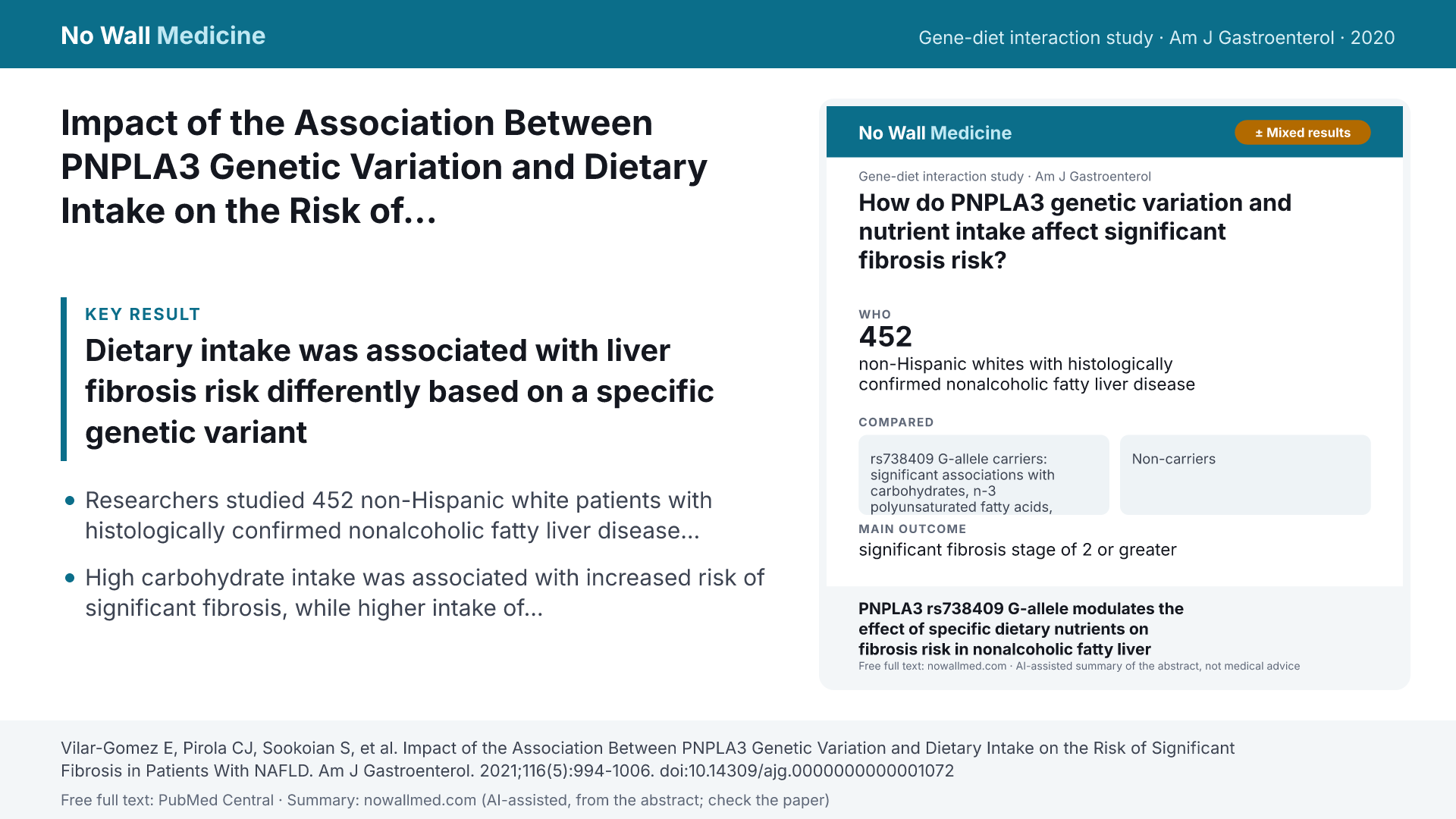
Dietary intake was associated with liver fibrosis risk differently based on a specific genetic variant
Impact of the Association Between PNPLA3 Genetic Variation and Dietary Intake on the Risk of Significant Fibrosis in Patients With NAFLD
Gene-diet interaction studyMixed results
How do PNPLA3 genetic variation and nutrient intake affect significant fibrosis risk?
Who
452
non-Hispanic whites with histologically confirmed nonalcoholic fatty liver disease
Compared
rs738409 G-allele carriers: significant associations with carbohydrates, n-3 polyunsaturated fatty acids, isoflavones, methionine, and choline
Non-carriers
Main outcome
significant fibrosis stage of 2 or greater
Bottom line: PNPLA3 rs738409 G-allele modulates the effect of specific dietary nutrients on fibrosis risk in nonalcoholic fatty liver disease.
Am J Gastroenterol · 2020-12-12 · Save PNG
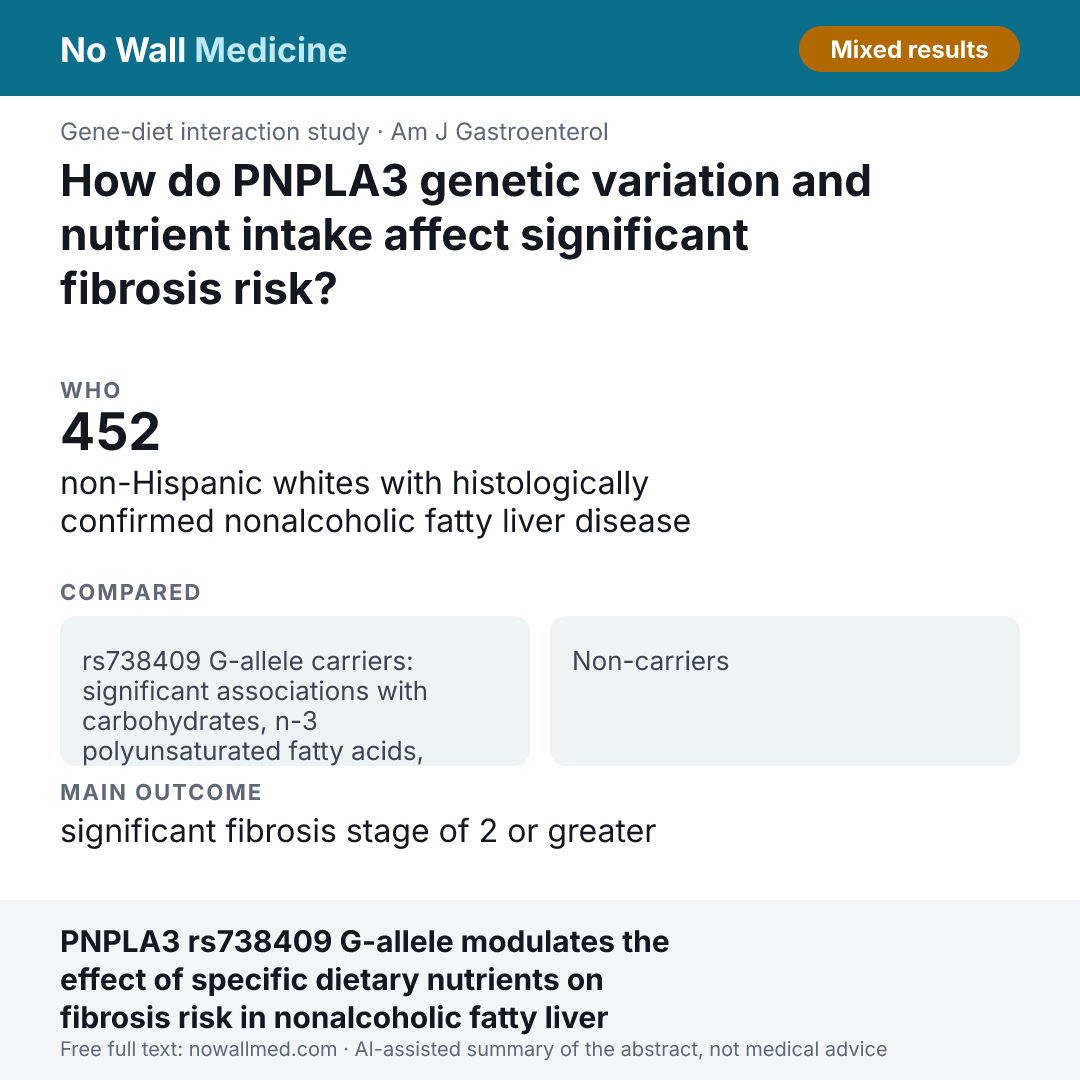
Clinical question: How do PNPLA3 genetic variation and nutrient intake affect significant fibrosis risk?
Key points
- Researchers studied 452 non-Hispanic white patients with histologically confirmed nonalcoholic fatty liver disease to measure how diet and the PNPLA3 gene variant related to liver scarring.
- High carbohydrate intake was associated with increased risk of significant fibrosis, while higher intake of n-3 polyunsaturated fatty acids, isoflavones, methionine, and choline was associated with lower risk.
- These dietary associations with significant fibrosis, defined as a stage of 2 or higher, were significant only among patients carrying the G-allele of the PNPLA3 gene variant.
Headline and key points written with AI from the paper’s abstract, with every number checked against it. Read the paper before relying on them.
Was this summary helpful?
Subject terms
Headline, design, result, key points, caveat and citation as plain text.
Cite this article
Vilar-Gomez E, Pirola CJ, Sookoian S, et al. Impact of the Association Between PNPLA3 Genetic Variation and Dietary Intake on the Risk of Significant Fibrosis in Patients With NAFLD. Am J Gastroenterol. 2020. doi:10.14309/ajg.0000000000001072
Spotted a mistake? Suggest a correction