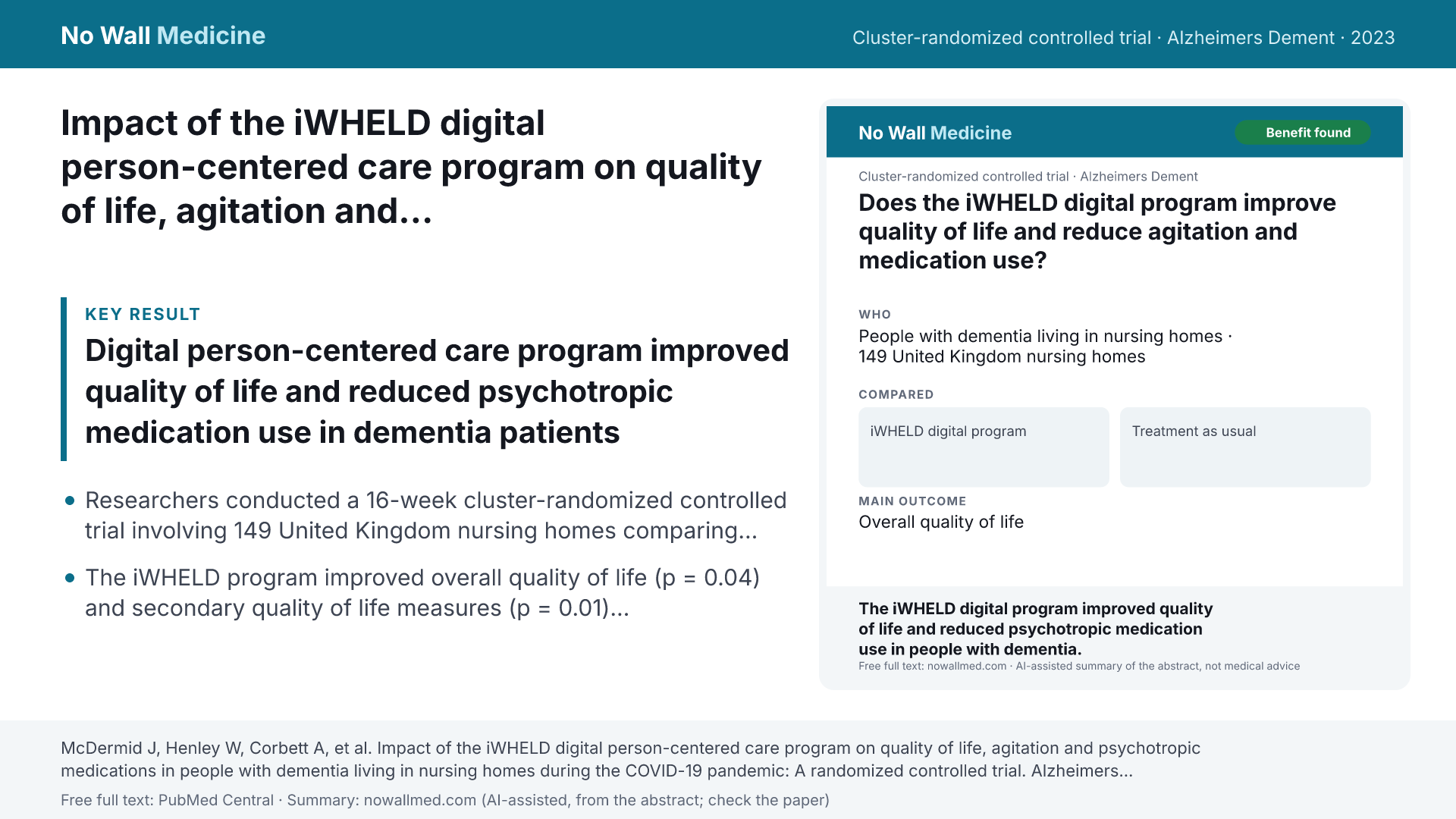
Digital person-centered care program improved quality of life and reduced psychotropic medication use in dementia patients
Impact of the iWHELD digital person-centered care program on quality of life, agitation and psychotropic medications in people with dementia living in nursing homes during the COVID-19 pandemic: A randomized controlled trial
Cluster-randomized controlled trialBenefit found
Does the iWHELD digital program improve quality of life and reduce agitation and medication use?
Who
People with dementia living in nursing homes · 149 United Kingdom nursing homes
Compared
iWHELD digital program
Treatment as usual
Main outcome
Overall quality of life
Bottom line: The iWHELD digital program improved quality of life and reduced psychotropic medication use in people with dementia.
Alzheimers Dement · 2023-12-20Download image
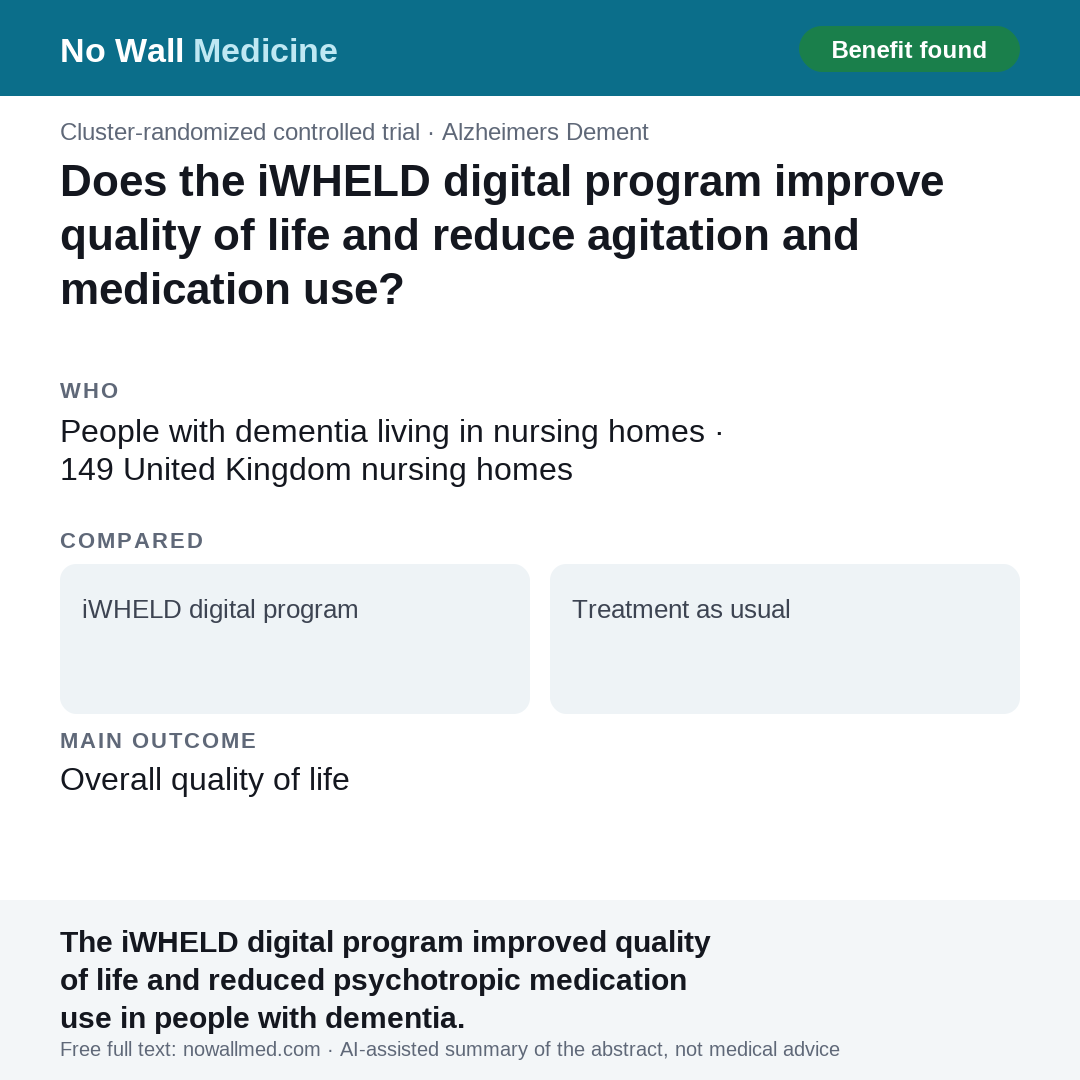
Clinical question: Does the iWHELD digital program improve quality of life and reduce agitation and medication use?
Why it matters: It was unknown if a digital person-centered care program could be effectively delivered remotely to improve well-being for people with dementia during the COVID-19 pandemic.
Key points
- Researchers conducted a 16-week cluster-randomized controlled trial involving 149 United Kingdom nursing homes comparing the iWHELD digital program to treatment as usual.
- The iWHELD program improved overall quality of life (p = 0.04) and secondary quality of life measures (p = 0.01) while reducing psychotropic medication use (p = 0.04).
- Benefits were observed in participants who contracted COVID-19, those with agitation at the start of the study, and those already taking psychotropic medications.
Headline and key points written with AI from the paper’s abstract, with every number checked against it. Read the paper before relying on them.
Was this summary helpful?
Subject terms
Cite this article
McDermid J, Henley W, Corbett A, et al. Impact of the iWHELD digital person-centered care program on quality of life, agitation and psychotropic medications in people with dementia living in nursing homes during the COVID-19 pandemic: A randomized controlled trial. Alzheimers Dement. 2023. doi:10.1002/alz.13582
Spotted a mistake? Suggest a correction