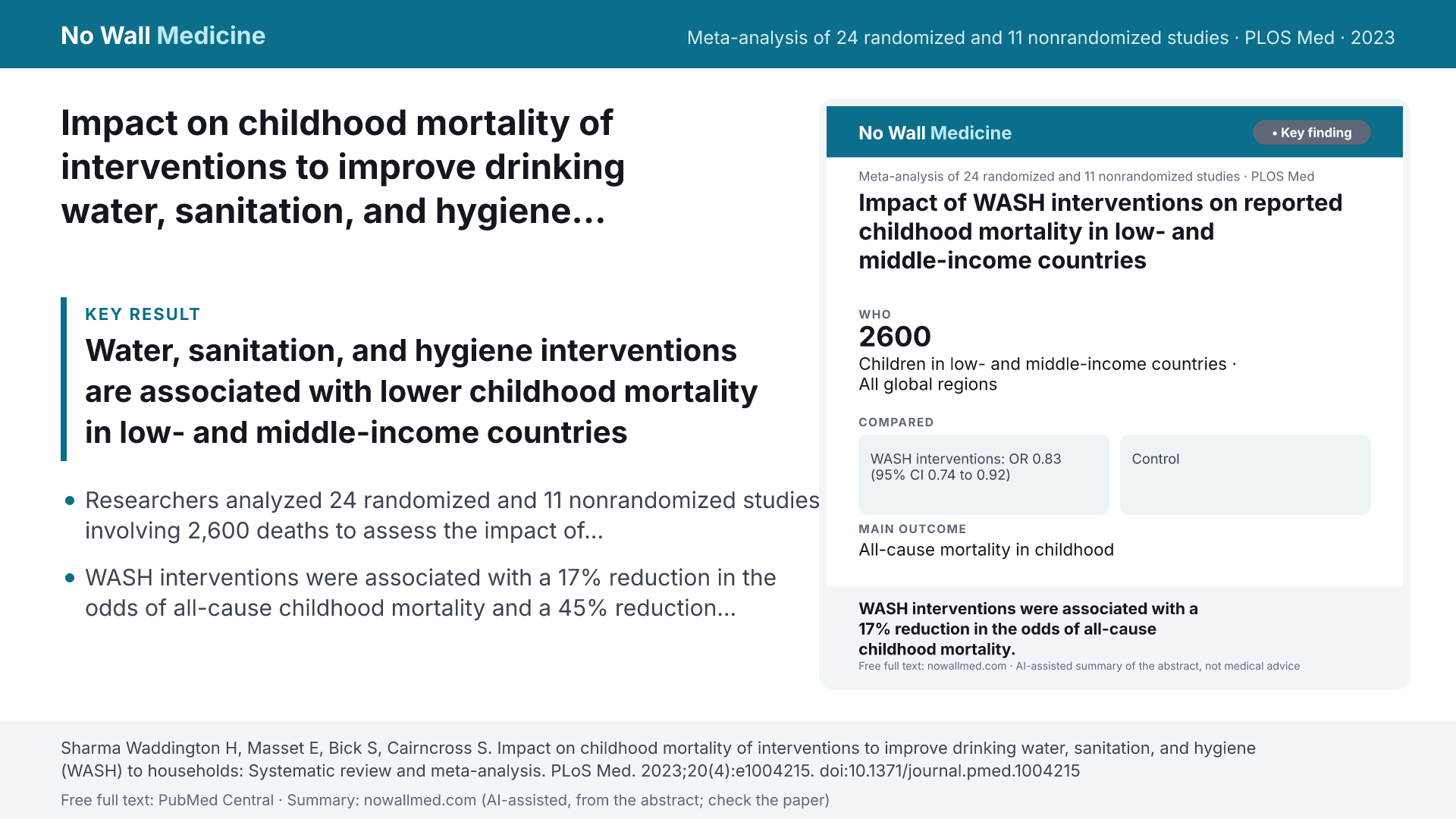
Water, sanitation, and hygiene interventions are associated with lower childhood mortality in low- and middle-income countries
Impact on childhood mortality of interventions to improve drinking water, sanitation, and hygiene (WASH) to households: Systematic review and meta-analysis
Why it matters: Current estimates of the health impacts of water, sanitation, and hygiene interventions often rely on self-reported illness, which may not capture long-term or severe effects.
Key points
- Researchers analyzed 24 randomized and 11 nonrandomized studies involving 2,600 deaths to assess the impact of water, sanitation, and hygiene interventions.
- WASH interventions were associated with a 17% reduction in the odds of all-cause childhood mortality and a 45% reduction in diarrhea mortality.
- Improved water quantity was most consistently linked to lower all-cause mortality, while community-wide sanitation was most consistently linked to lower diarrhea mortality.
Limitation the authors note: Around one-half of the included studies were assessed as being at moderate risk of bias, and no studies were found to be at low risk of bias.
Headline and key points written with AI from the paper’s abstract, with every number checked against it. Read the paper before relying on them.
Was this summary helpful?
Subject terms
Headline, design, result, key points, caveat and citation as plain text.
Cite this article
Sharma Waddington H, Masset E, Bick S, Cairncross S. Impact on childhood mortality of interventions to improve drinking water, sanitation, and hygiene (WASH) to households: Systematic review and meta-analysis. PLoS Med. 2023;20(4):e1004215. doi:10.1371/journal.pmed.1004215
Spotted a mistake? Suggest a correction